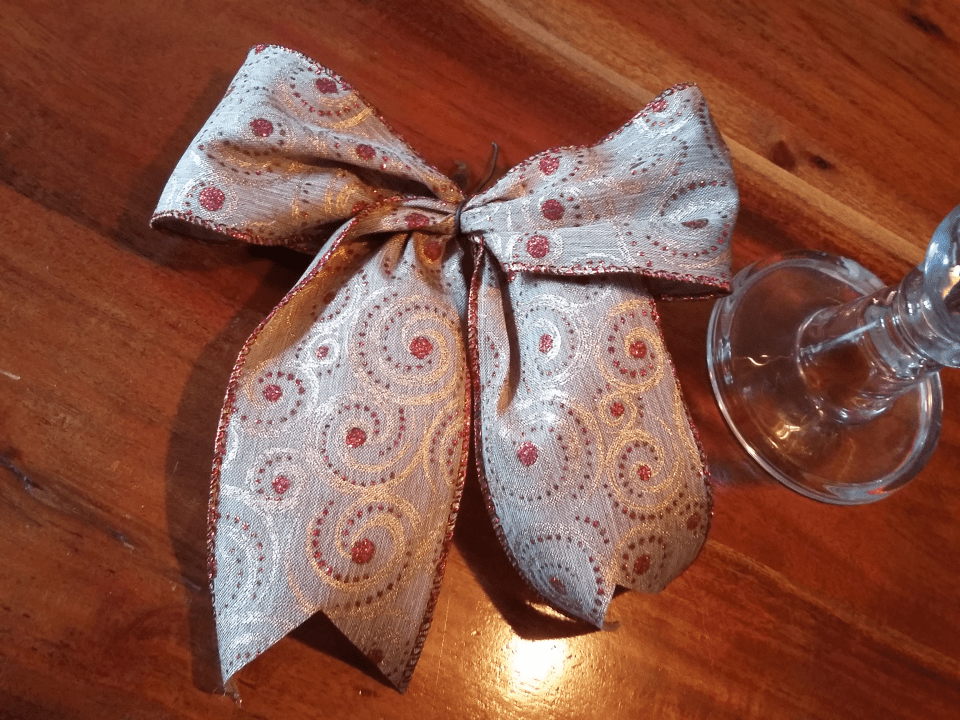
Spiral Sunday #16 – Christmas is over

Christmas bow 20170107_130103.png

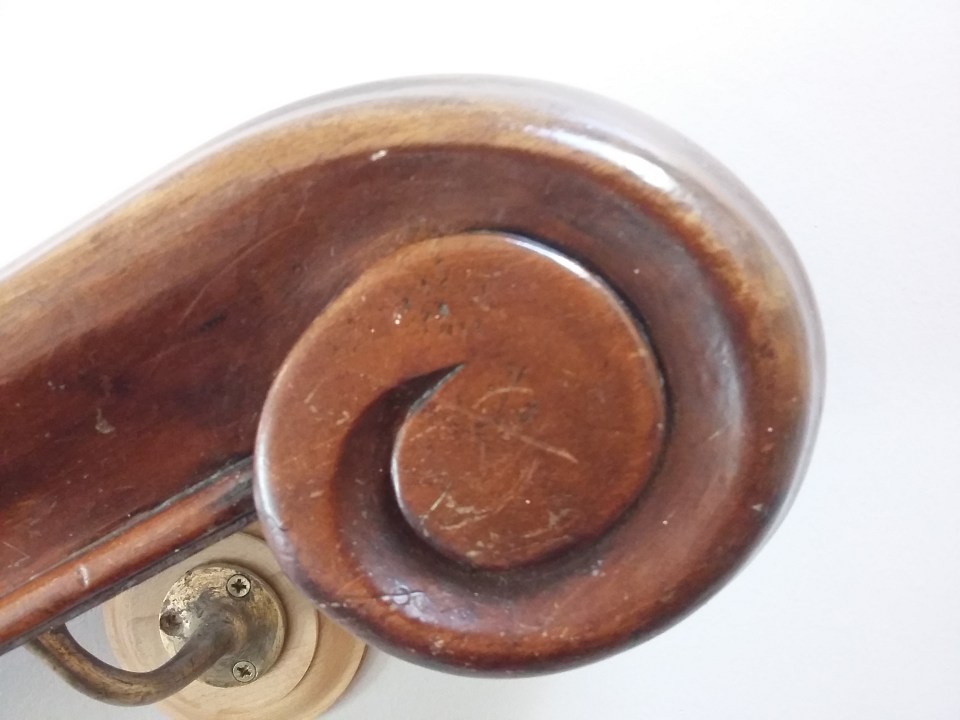
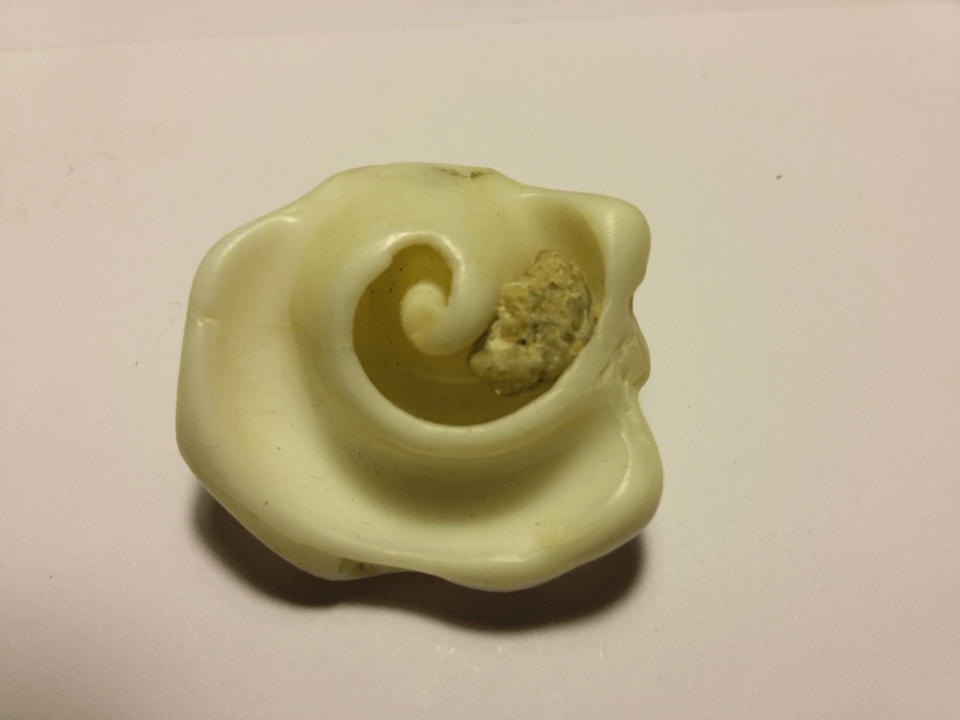
Yesterday we took down the Christmas decorations that have festooned the house this year.  Whilst I was taking apart the wreath we’d hung on the door I noticed for the first time that the bow had a lovely spiral design.  I thought it would make a nice Spiral Sunday for this year, and we’ll re-use it next year.

More on that wreath later in the week….

What’s the point of the h-index? UPDATED

UPDATE: I’ve increased the sample size of EEB scientists I used in the analysis.

——————————————————-

Over at the Dynamic Ecology blog yesterday, Jeremy Fox posted an interesting analysis of which metrics correlate with the chances of early career researchers in ecology and evolutionary biology (EEB) gaining an interview for an academic post in North America.   Spoiler alert: none of them correlate, except the number of job applications you submit.

These metrics include number of papers published, number of first author papers, number of large (>$100,000) grants held, number of years post-doc, and h-index.  Nada, zilch, nothing, nowt is significantly correlated.  Which is good: as Jeremy (and the stream of commenters) discuss, it means that interview panels are looking roundly at individuals and what they can offer a university department, and not relying on (sometimes dubious) metrics.

Which brings us to the h-index….  Jeremy linked to an old post of mine called “How does a scientist’s h-index change over time?“, a piece that was far and away my most viewed post last year (and second-most viewed post in 2015).  This suggests that there’s still a huge “appetite” for the h-index, in terms of understanding what it is and how it can/should (or cannot/should not) be used.  Even before the Dynamic Ecology post came out I was planning to update it and give examples where I think it might be useful, so this seems like a good time to do that.

Opinions on the h-index vary hugely.  Some of the links in my original post were to writings by scientists who really like the idea of being able to use it to track the academic impact of an individual (or at least some measure of it).  Others despise it, and indeed all academic metrics, as pernicious and potentially dangerous to science – see David Colquhoun’s video on this topic, for instance.

I’m somewhere in the middle – I recognise the weaknesses of the h-index, but I also think that it’s measuring something, even if the something that it’s measuring may not be directly translatable into a measure of “quality” or “impact”, and especially not “employability” or “worthy of promotion” (and I would certainly never countenance using the h-index as a the sole measure of the latter two).

So when is the h-index useful?  Well one use is as a personal tracker of one’s own standing or contribution within a field, assessing the trajectory of a career, and perhaps gauging when it’s time to apply for promotion (at least in the UK system which is a less transparent process than in North America, or at least that’s my impression).  To illustrate this I’ve collated the h-indexes and years since first publication for 72 EEB scientists using Google Scholar (GS).  I used GS rather than Web of Science (WoS) as, although GS is less conservative, WoS seems to be becoming noticeably less accurate; for example it’s recently assigned to me chapters on which I was not an author but which are included in a book that I co-edited.  Another advantage of GS, of course, is that it’s publicly available and not pay walled.

It’s long been known that a scientist’s h-index should increase over their professional lives, and indeed that’s what we find if we plot number of years since first publication against an individual’s h-index:

h-index-graph

It’s a fairly strong correlation, though with a lot of scatter (something Jeremy noted in his blog) and it suggests that EEB scholars accrue their h-index  at a rate of about 1.6 papers per year, on average, though with a big range (0.3 to 4.2 papers per year).  One (albeit fanciful*) way to think about this graph is that it’s analogous to a Hertzsprung–Russell (HR) diagram in astronomy, where, as they age, stars shift position predictably on a plot of colour versus magnitude.  In a similar way, as EEB scientists age professionally, their position on this plot moves in ways that may be predictable from their scientific output.

There’s a lot of structure in HR diagrams, including the famous Main Sequence, where most stars lie, as well as stellar evolutionary tracks for Giants, Super Giants, White Dwarfs, etc.  In this modest sample I think we’re starting to see similar structure, with individuals lying far above or below the “h-index Main Sequence”, indicating that they are accruing greater or fewer citations than might be expected.  UPDATE:  In particular, three individuals who are “Super Giants” (to use the astronomical terminology) and lie far above the Main Sequence.  Carlos Herrera makes an interesting point in the comments (below) about self-selection in GS which could mean that there are far fewer people with low h-indexes represented than we might expect.

One of the things that could be explored using these type of data is exactly why it is that this is happening: is it a question of where they are based, or their nationality, or where they publish, their sub-field, or what?  One easy analysis to do is to assess whether there is a difference between female and male scientists, as follows:

h-index-graph-mf

Previous research has suggested that women on average receive fewer citations for their papers than men (see this 2013 study in Nature for instance) and this graph gives some support to that idea, though I’ve not formally tested the difference between the two lines. What is also interesting is that the R-squared values are identical, indicating as much variation in female as male career trajectories, at least as measured in this way.

UPDATE:  These additional data suggest that the h-indexes of male and female researchers diverge over time, and that most of the difference is for mid to late career scientists.  It’s unclear to me why this might be the case, but we could speculate about factors such as career breaks to have children.  Note that I struggled to find female EEB scientists with an h-index larger than about 80 – if I’ve missed any please let me know.

The data set I used for this analysis is certainly not random and contains a lot of people I know personally or by reputation, so a larger, more systematic analysis could come to some rather different conclusions.  However I thought this was an interesting starting point and if anyone else wants to play with the data, you can download the anonymised spreadsheet here.


*I’m not at all convinced about this analogy myself and am happy for anyone to explain to me why it’s a very poor one 🙂  UPDATE:  Though Stephen Heard seems to like it.


Should scientists accept funding from agro-chemical companies? The devil’s in the details

Oxalis fly P1030303.png

The relationship between use of pesticides (particularly neonicotinoids) and the decline of pollinators is one that I’ve touched on a few times in this blog – see for example:  Bees and pesticides – a major new study just publishedButterflies and pesticides – a new study and a smoking gun; and Pesticides and pollinators: some new studies and contrasting conclusions.  It’s an important and controversial topic that’s unlikely to go away any time soon.  In an article in the New York Times, journalist Danny Hakim has given that particular pot a further stir by discussing Scientists Loved and Loathed by an Agrochemical Giant.

Although it’s been online since New Year’s Eve, the first I heard about the article was when an American colleague sent me a link this morning (the day it appeared in the printed version) and asked me if I had any thoughts and comments about one of the scientists featured – James Cresswell of the University of Exeter.  I’ve known and respected James for over 20 years and I think his contribution to this article provides a brave and open answer to the question I pose in the title of this post: should scientists accept funding from agro-chemical companies?

Please do read that article, it’s fascinating, if not entirely objective in its own right.  The tone and focus of the piece is best summed up by the one-sentence summary at the start, which incorporates a quote from Dave Goulson (University of Sussex):  “With corporate funding of research, “there’s no scientist who comes out of this unscathed””.  In fact that quote is taken rather out of context because Dave’s point was about perceptions of motives and biases, rather than actual corruption of the science and scientists concerned.

Having said that, the article does present a prima facie case that some scientists (though I emphasise not James himself) are playing fast-and-loose with the evidence related to pesticides and GM crops.

Back to perceptions.  Industry funding of university-led scientific research is incredibly common, far more common than the public probably realises.  There are three reasons for that.  First of all, universities are where many subject experts are based, of course.  Secondly, scientific research is expensive: it requires staff, facilities, equipment, funding for overheads, etc.  University researchers are therefore always hunting for money to enable them to carry out research (which in turn is linked to promotion success, career development, and so forth).  Thirdly, external income is an important performance indicator for universities and their constituent departments: James himself is quoted as saying “I was pressured enormously by my university to take that money”, a sentence that will resonate with many UK researchers.

In general the public’s perception (as far as I can tell) is that most of that research is not being corrupted by the industry funding that is attached to it.  In my own faculty at the University of Northampton, for instance, my colleagues have obtained industry funding for research and consultancy work in areas such as product design, lift engineering, materials science, leather processing, computer networks, app development, and so forth.  All controversy-free.

In much of the environmental sector that’s also the case: we’ve had funding from a large water utilities company to write a report on habitat management strategies for reducing rabbit densities close to water bodies, and one of my current research students is being funded by a solar farm company.  Likewise colleagues have been funded by wastes management companies to advise and research in that field.  None of this has generated any negative perceptions, with the possible exception of some aspects of wastes management where issues such as “waste-to-energy” remain controversial.

In other areas of environmental research, however, there have always been accusations of bias levelled at university researchers who are perceived to be industry shills, especially if they are not seen to be toeing a particular line.  I’m deliberately using that word – shill – because it’s something I was accused of being during a heated social media discussion of causes of pollinator declines.  A commenter claimed that I was an “industry shill” for daring to suggest that this was a complex topic, and that there were no easy answers to why (some) pollinators are declining, but that neonicotinoid pesticides were not the only cause.  “Which chemical company is funding your research?” she aggressively demanded to know.  I think I convinced her that I was not (and never have been) funded by chemical companies.  But it raised an interesting question: would I ever accept funding from such companies, if it was offered?

The simple answer is that I don’t know.  It depends what the money was for and what strings were attached in terms of non-disclosure, ownership of data, etc.  As the title of this post states, the devil’s in the details.  I know quite a number of researchers in my field who have had funding from Syngenta, Bayer, and other agro-chemical companies.  Some of these are colleagues with whom I have published research papers.  In general I have no reason to believe that the research conducted by any of these colleagues has been corrupted by their association with the funders.  However in one instance I had a disagreement with a colleague who was not (in my opinion) objective in how they wished to frame part of a paper’s discussion and who may (in my opinion) have been influenced by their association with a particular funder.  In the end this didn’t change the conclusions of the research (which was not itself industry funded) but it did make me pause to consider these subtle biases, which I’m sure could affect anyone*.  Again, perceptions are key here.

Money for the kind of research that’s done by colleagues and myself is always, always going to be in short supply and competitively pursued, and failure to obtain it will always be much more common than success.  Unless funding to address important ecological research questions from government (i.e. taxpayer money) and charities vastly increases, industry will be there to fund research in its own interests, and the perception of scientific bias will remain, whether or not it actually exists.


*I’m not prepared to say more about this particular example so please don’t ask.

Waxwings in Northants

p1030328

This afternoon I spent a very pleasant couple of hours watching a flock of 14 waxwings (Bombycilla garrulus) a beautiful and enigmatic bird  that I’ve mentioned before on this blog.  This flock has been hanging around the village of Roade just outside Northampton since the 29th December, feeding on a crop of rowan berries (Sorbus aucuparia var.) and amusing the locals.  As usual they were very confiding and unperturbed by neither traffic nor twitchers (which at one point, I was told, numbered around 40 people).  Feeding with the waxwings were a couple of blackbirds that may well have travelled down from the far north with them.  Here’s a few pictures:

P1030321.JPG

p1030327p1030318

p1030316

Spiral Sunday #15 – Happy New Year!

Chelsea spiral 20160524_082503.png

A Spiral Sunday for New Year’s Day!  This shot was taken at last year’s RHS Chelsea Flower Show where I was helping the British Ecological Society win a Silver Medal.  This is the water feature in Nick Bailey’s Beauty of Mathematics, one of my favourites from that year, and a garden in which Fibonacci spirals abounded, both in the plants and the hard landscaping.

Looking forward to RHS Chelsea 2017, the BES will be producing another display, and this time hunting for a Gold Medal.  I’ll let you know how it progresses.  Happy New Year to all of my readers!

Spiral Sunday #14 – Merry Christmas!

Christman bauble 20161225_180146.png

A double helping of Spiral Sunday for Christmas Day 2016 – two glass baubles on our Christmas tree with very different spiral forms.  In the first, the spiral is integral to the design, it is spiral in form.  In the second, molten coloured glass has been trailed in a spiral pattern on the surface to create the pattern.  Both very different, but both beautiful in their own way.

Merry Christmas everyone!

Christmas spiral 2 20161225_132730.png

Spiral Sunday #13 – a rope is a spiral, right?

Rope Bridge 20161217_092858.png

Spiral Sunday today shows a detail from a cast iron bridge that I photographed recently in Bristol.  As far  as I can gather the bridge commemorates the local rope making industry, which was vital for the shipping that used this port.  To make ropes like this you twist the fibres, forming a helix; which is, of course, a long spiral.  Right?

Rope Bridge 20161217_092910.png

Insect pollinators boost the market price of holly and mistletoe: a new study just published

Holly and mistletoe 20161211_103252.png

Each year I’ve always added at least one Christmas-themed biodiversity post to the blog, for example: Thank the insects for Christmas, A Christmas vignette, and Six Kingdoms for Christmas.  That’s partly because I really like Christmas as a winter festival, with its folklore and customs.  But it’s also because these are a great vehicle to demonstrate how pervasive and important is natural capital and the ecosystem services it provides to society.

This year I’ve gone one stage further and actually published some Christmassy research to back up the blog post.  Now, in a new study published in the Journal of Pollination Ecology, we have shown how important insect pollinators are in determining the market value of two of the most emblematic of Christmas plants: holly (Ilex aquifolium) and mistletoe (Viscum album).  Here’s the full reference with a link to the paper itself, which is open access:

Ollerton, J., Rouquette, J.R. & Breeze, T.D. (2016) Insect pollinators boost the market price of culturally important crops: holly, mistletoe and the spirit of Christmas. Journal of Pollination Ecology 19: 93-97

Holly and mistletoe are two seasonal crops that play a culturally important role as symbols of Christmas across the world, though both also have pre-Christian pagan roots. Now for the first time the role of insect pollinators in determining the commercial value of these plants has been investigated, using sales records going back over the last eleven years from Britain’s largest annual auction of holly and mistletoe, held every year in Worcestershire.

Analysis of the sales records of Nick Champion Auctions in Tenbury Wells shows that insect pollination raises the sale price of these crops by on average two to three times. This is because holly and mistletoe with berries is more sought after than material without berries, with wholesale buyers paying higher prices at auction. These berries in turn are the result of pollination by insects such as flies and bees: both holly and mistletoe are 100% dependent on insect pollination due to their having separate male and female plants.

There is some annual variation to the prices, and in years where berries are scarce (possibly due to low insect numbers) the price difference can be four-fold.

Due to concerns about pollinator declines and food security there is huge interest in the role of bees and other insects in supporting agriculture, and how we can value that role. However we believe that this is the first study showing that insect pollinators play a large part in determining the value of culturally symbolic, non-food crops. Almost all of the economic valuations of insect pollination to agriculture have focused on food crops such as beans, apples, cocoa, coffee, and so forth. Very little is known about how the value of non-food crops (fibres, construction materials, pharmaceuticals, ornamentals, etc.) is enhanced by insect pollination. This is an area where much more research is required.

But in the mean time, where better to end than with a bit of seasonal John Clare?

The shepherd, now no more afraid,
Since custom doth the chance bestow,
Starts up to kiss the giggling maid
Beneath the branch of mistletoe
That ‘neath each cottage beam is seen,
With pearl-like berries shining gay;
The shadow still of what hath been,
Which fashion yearly fades away.

The Shepherd’s Calendar (1827)

Spiral Sunday #11 – Spiralicious in Milton Keynes

Spiralicious 2 - 20161204_115716.png

This week’s Spiral Sunday post features a couple of shots I took today in Milton Keynes where we spent a tiring day Christmas shopping.  One of the outdoor stalls is selling a traditional baked sweet pastry from Transylvania, the name of which they have Anglicised to “Spiralicious”.  It’s made with a very neat spiral-shaped dough cutter, which was just begging to be photographed.

Spiralicious 1 20161204_115656.png