Tag Archives: Conservation

Bumper Big Garden Birdwatch this year!

P1120052

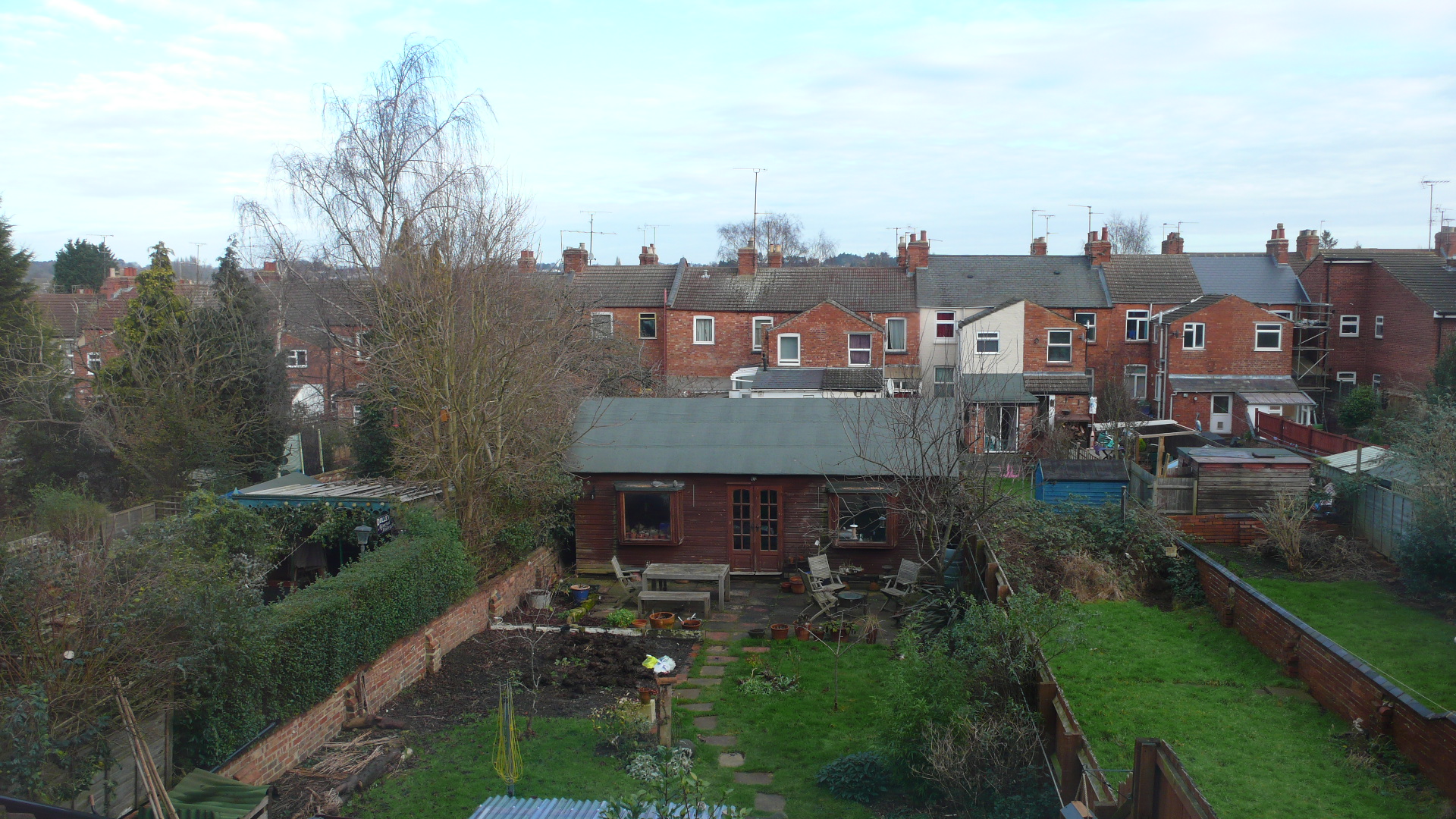
As I posted yesterday, this weekend is the RSPB’s Big Garden Birdwatch, the world’s largest wildlife-watching event, and one that’s been running for 36 years.  I completed my hour of surveying between 09:04 and 10:04 this morning, and it’s been a bumper year!  Armed with a notebook, binoculars, and a cup of coffee, I recorded all the different bird species I observed in the field of view from the tall silver birch to the left across to the patch of brambles on the right (my “garden”, as you can see, encompasses parts of my neighbours’ gardens too).

In 2013 (the first year I did the BGBW at this house) I recorded a disappointing 6 species; in 2014 it was 8 species; this year it’s been a whopping 15 species!  They were (in order of first observation, with numbers of birds):

Robin – 1

Collared dove – 3

Chaffinch – 4

Dunnock – 3

Magpie – 1

Blue tit – 4

Coal tit – 1

Lesser redpoll – 4

Blackbird – 4

Greenfinch – 5

Carrion crow – 1

Great tit – 2

Wood pigeon – 2

Goldfinch – 4

Blackcap – 1

Not bad for an urban garden!  Did you do the BGBW this weekend?  How many species did you count? Was it a higher count than last year?

Big Garden Birdwatch this weekend

2014-11-06 14.00.17

This weekend the RSPB will be running its annual Big Garden Birdwatch, a great example of citizen science in support of biodiversity monitoring.  No matter where your garden is or how small it might be, if you have time, please do get involved.  Even a return of zero birds is useful information because it tells us where birds are not occurring.

As I have for the past couple of years since we moved into this house, I’ll do my hour of watching on Sunday morning from the bedroom window.  Hopefully the current cold weather will persist and bring birds into the garden that are normally found out in the wider countryside.

Happy birding!

Garden chickens and biodiversity – some thoughts

2014-05-01 15.58.49

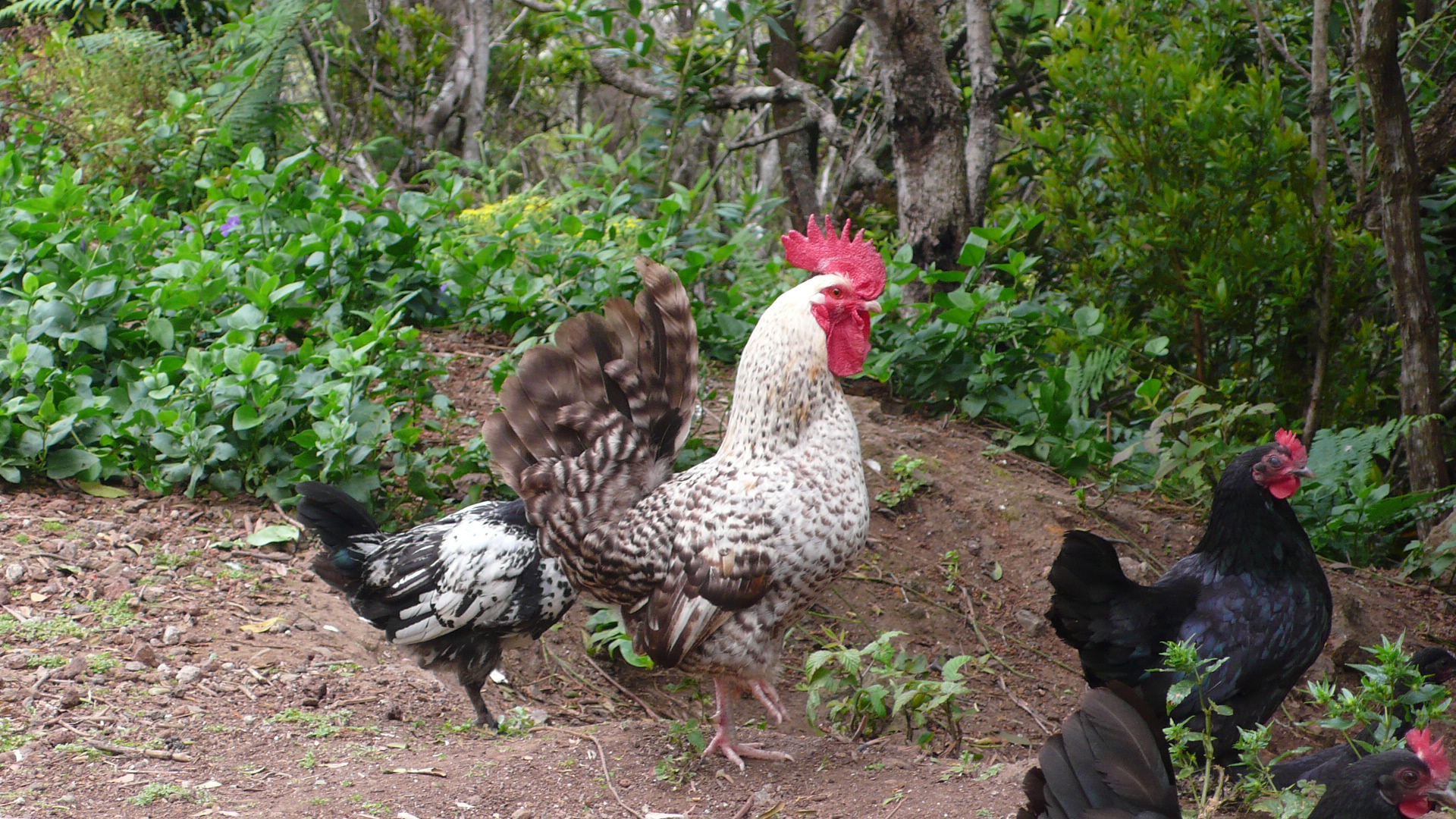
Keeping chickens as a hobby is very popular at the moment and many gardeners are finding space for a few chooks in their own patch.  It’s been particularly trendy amongst urban gardeners, ourselves included: we have a run with 6 hens that make us self sufficient in eggs and chicken shit (the latter a vital addition to our soil’s fertility).  They are also fascinating, relaxing animals to watch as they go about their chickeny business of scratching, pecking, clucking, and dust bathing.  They are intelligent, social, inquisitive birds, that I’d recommend to anyone who has the space to accommodate a decent sized run and (importantly) the time to look after them.

There are plenty of magazines, books and websites offering advice on keeping hens on a small scale.  One of the most active and interesting blogs is The Garden Smallholder which generally has some good advice and ideas.  Back in November, however, a post about preparing a new kitchen garden caught my attention, specifically the fact that the writer’s chickens were let out onto the plot and that:

Chickens are great at scratching and turning over soil with their enthusiastic feet, and excellent pest control too

Let’s think about that last point, that chickens provide “excellent pest control”.  It’s a statement that I’ve seen repeated many times in books and articles, and it usually doesn’t solicit any comments.  But the logic behind it is that hens can differentiate between “pests” and “non-pests” in a garden, that they will gobble up the slugs and cutworms, leaving behind the worms, beetles, spiders, and other beneficial (or neutral) invertebrates.  This is nonsense, of course: chickens will eat anything they find and do not differentiate between the different elements of soil biodiversity*.

For this reason we don’t allow our hens to free range on our vegetable patch: we want to keep the soil’s fauna intact, allowing the earthworms to aerate and turn over the soil, let the beetles eat the slugs, give ground-nesting bees some space in which to live, and so forth.  A few weeks of digging with chickens present would destroy all of that.

The vast majority of invertebrates that live in the soil are not pests and a significant  proportion are certainly good for our gardens (particularly the earthworms and carnivorous beetles).  Allowing your chickens to feed freely on these animals will significantly reduce your soil biodiversity, which is a bad thing in its own right (if we accept that these animals are a measure of your soil’s “health” and productivity), and could reduce the numbers of invertebrate-eating wildlife, such as thrushes, hedgehogs and toads, visiting your garden.

If you want your chickens to eat garden pests my advice would be to take the pests to them: scoop up several slugs with a trowel, throw them into their run, and watch the birds excitedly scramble for their treat.  But remember that slugs play a positive role in the garden too, demolishing huge amounts of garden waste in compost bins and (in our garden) eating up cat shit.  That’s a topic for a future post though.


*I made a comment to this effect on the Garden Smallholder post but the blog owner saw fit not to allow it to appear.  Draw your own conclusions from that.

Extinction of British bees and flower-visiting wasps – a new assessment of rates and causes

Extinction of species is perhaps the most fundamental assault that we as humans can inflict on the rest of the natural world.  Extinctions take a range of forms, from the loss of a whole species (such as the sad case of the St Helena Giant Earwig, recently declared extinct by the IUCN), down to extirpation of local populations.

For an island nation such as Britain, extinctions at a country level are highly significant because there is limited opportunity for species to disperse across the sea and re-colonise areas where they previously lived.  In a new research paper published this week in the journal Science we have addressed the subject of pollinator declines in the UK and asked the following questions:

1.  How many bee and flower-visiting wasp species have gone extinct in the UK?

2.  Is the rate of extinction (e.g. number of species per decade) constant or variable over time?

3.  Can we interpret any patterns in relation to broader societal changes, for example in agricultural policy, conservation strategies, etc?

The research is a collaboration between myself and University of Northampton colleagues Dr Robin Crockett and Dr Hilary Erenler, together with Mike Edwards from the Bees, Wasps & Ants Recording Society (BWARS), the c. 500,000 records of which were used in these analyses.  This is probably the most extensive data set on these insects available for any country and an important resource.

The answer to the first question is that 23 species of bees and flower-visiting wasps have gone extinct, ranging in time from the crabronid wasp Lestica clypeata (last observed in 1853) to the solitary bee Andrena lathyri (not seen since 1990).  All of these species still occur on mainland Europe, so these were country-level extinctions, not species extinctions.

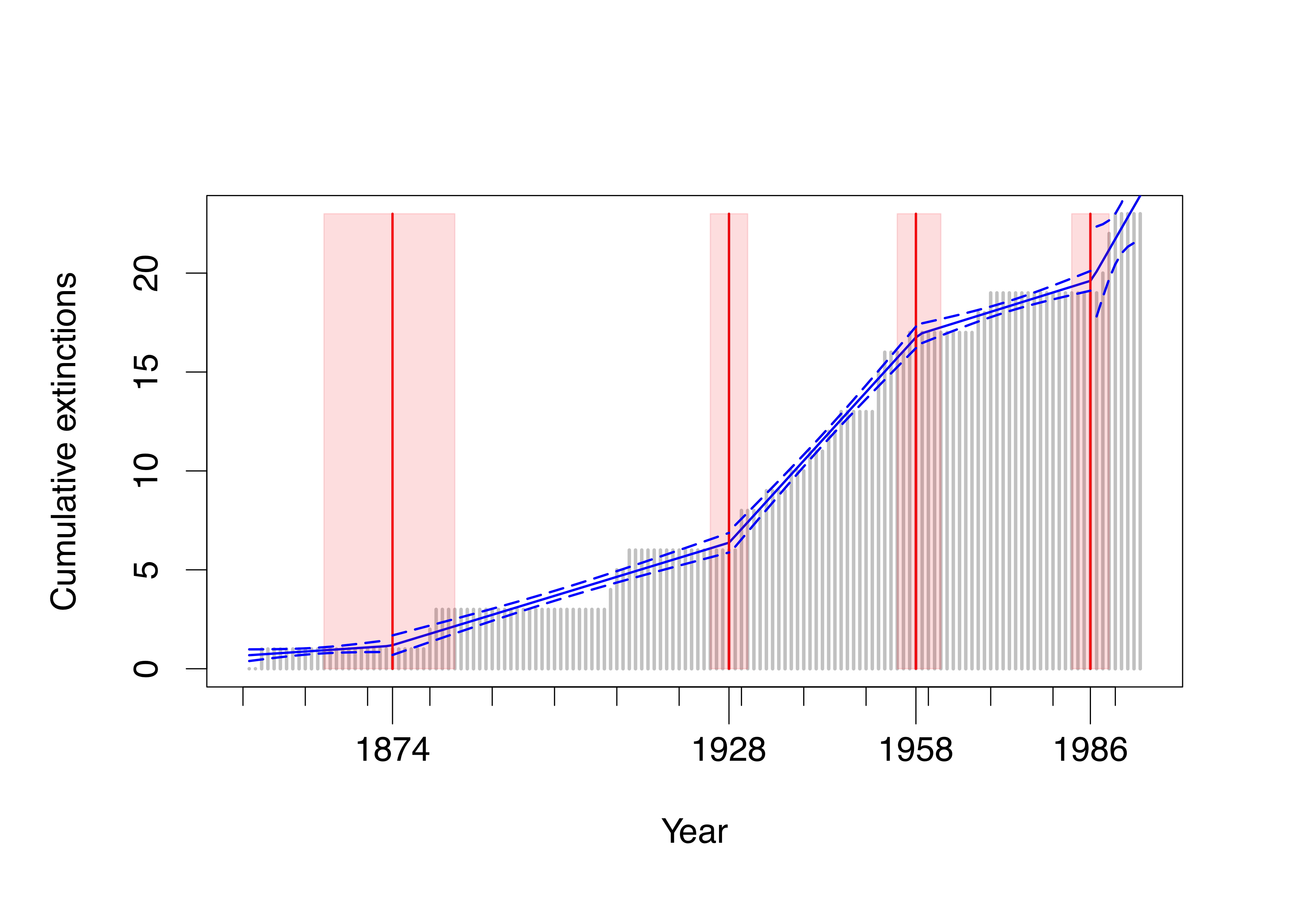
The answer to questions 2 and 3 is that the rate of extinction is highly variable, and by using a novel statistical approach adapted by Robin to analyse the changing rate over time, we found that the main period of species loss followed changes to agricultural policy and practice just after the First World War.  This is much earlier than previously believed: until now it has usually been the Second World War and the subsequent Common Agricultural Policy which have been seen as the main drivers of pollinator loss.  This figure produced by Robin shows the results in detail:
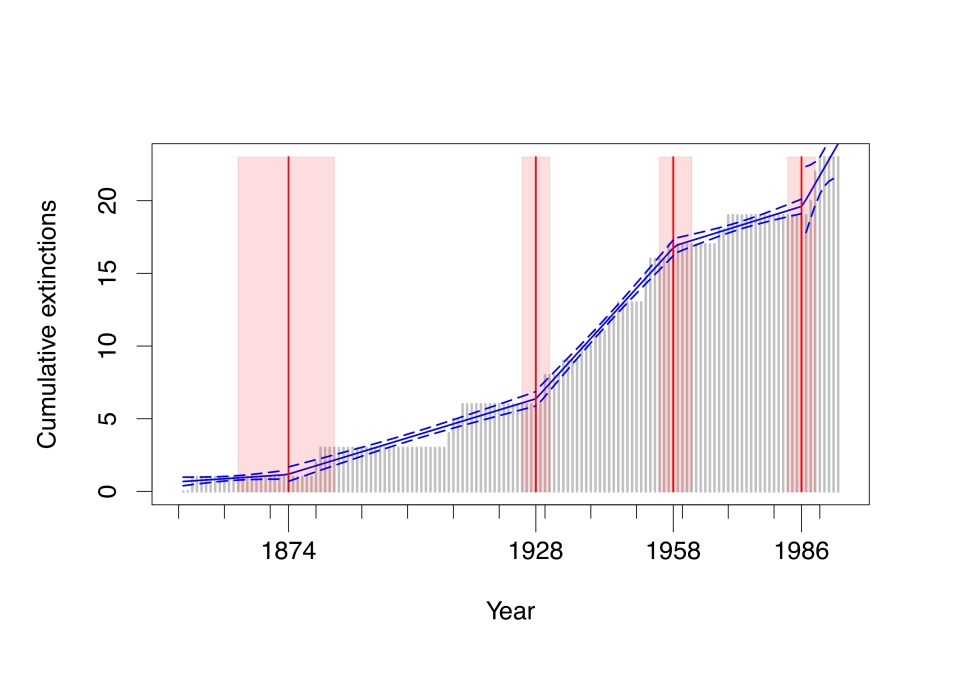
Figure 2 colour

The four periods marked in red are the points where we estimate the rate of extinction changed (with 99% confidence intervals shown in pink).  The most rapid rate of extinction (shown by the solid blue piecewise regression lines and dashed 99% confidence intervals) is from the late 1920s to the late 1950s.  This, we believe, is the cumulative effect of agricultural changes precipitated and then augmented by the First and the Second World Wars, respectively.

The period of extinction from the late 19th into the early 20th centuries was probably caused by increased import of South American guano as soil fertilizer which increased grass productivity at the expense of wild flower diversity.  This reduced reliance on strict rotational cropping, including fallow periods with nectar- and pollen-rich weeds, and N-fixing legume years.  However it was the invention of the Haber Process in 1909, allowing industrial manufacture of inorganic nitrogen fertilizers for the first time, that fundamentally affected British agriculture.

The slow down of the rate of extinction from the early 1960s to the mid 1980s is not easily explained given the continued intensification of farming, encouraged by Common Agricultural Policy subsidies.  It could be due to the most sensitive species having been already lost, or because of conservation initiatives including the establishment of more nature reserves by organisations such as the Wildlife Trusts and the RSPB, habitat restoration and management by groups such as the British Trust for Conservation Volunteers, more farmers going organic, etc.  Or it could be a combination of both, and/or factors we’ve not yet thought of.

The final period of extinctions from 1986 to 1994, where the rate seems to increase, could be seen as evidence against the slowing in the rate of decline of pollinators in north west Europe found by Carvalheiro et al. (2013).  However  we need to be cautious here as there’s a large confidence interval around the calculated extinction rate.  The four extinctions between 1988-1990 could be an isolated cluster, or the start of a further period of relatively high extinction rate.  Only time will tell!

Bees, wasps and other pollinating insects are absolutely vital to the functioning of our natural ecosystems and for a great many agricultural crops.  We’ve known for some time that these insects are declining in Britain but now we can see how historical agricultural changes have caused species to become extinct. The big question is whether these extinctions have stopped or whether they will continue in the future. The species that have been lost to Britain still survive on the Continent and there is the possibility of natural re-colonisation or artificial reintroduction, both of which have occurred in recent years.  However in order for this to be successful we must restore as much natural habitat as possible within our farmland, which after all covers some 70% of the British land surface.  The irony of our findings, of course, is that pollinators are vital for agriculture, as the UK Government’s National Pollinator Strategy recognises.

Studies such as this illustrates the importance of maintaining the year-on-year effort of recording natural history data – the research simply wouldn’t have been possible without the BWARS records, which are mainly collected by amateur naturalists.

The full citation for the paper is:  Ollerton, J., Erenler, H., Edwards, M. & Crockett, R. (2014) Extinctions of aculeate pollinators in Britain and the role of large-scale agricultural changes. Science 346:1360-1362.  I’m happy to send a PDF to anyone who requests a copy for personal use. 

Notes:

1.  We define “extinction” as ≥ 20 years since the last recorded occurrence of the species in Britain, which is why the data stop at 1994.

2.  We have excluded single early records of species that cannot be verified as representing stable breeding populations.

3. Analyses were performed using the ‘segmented’ library in R (www.r-project.org)

4.  Thanks to Robin Crockett for the figure and the analyses, and Hilary Erenler and Mike Edwards for their input into the study.

Winter visit to Wicken Fen

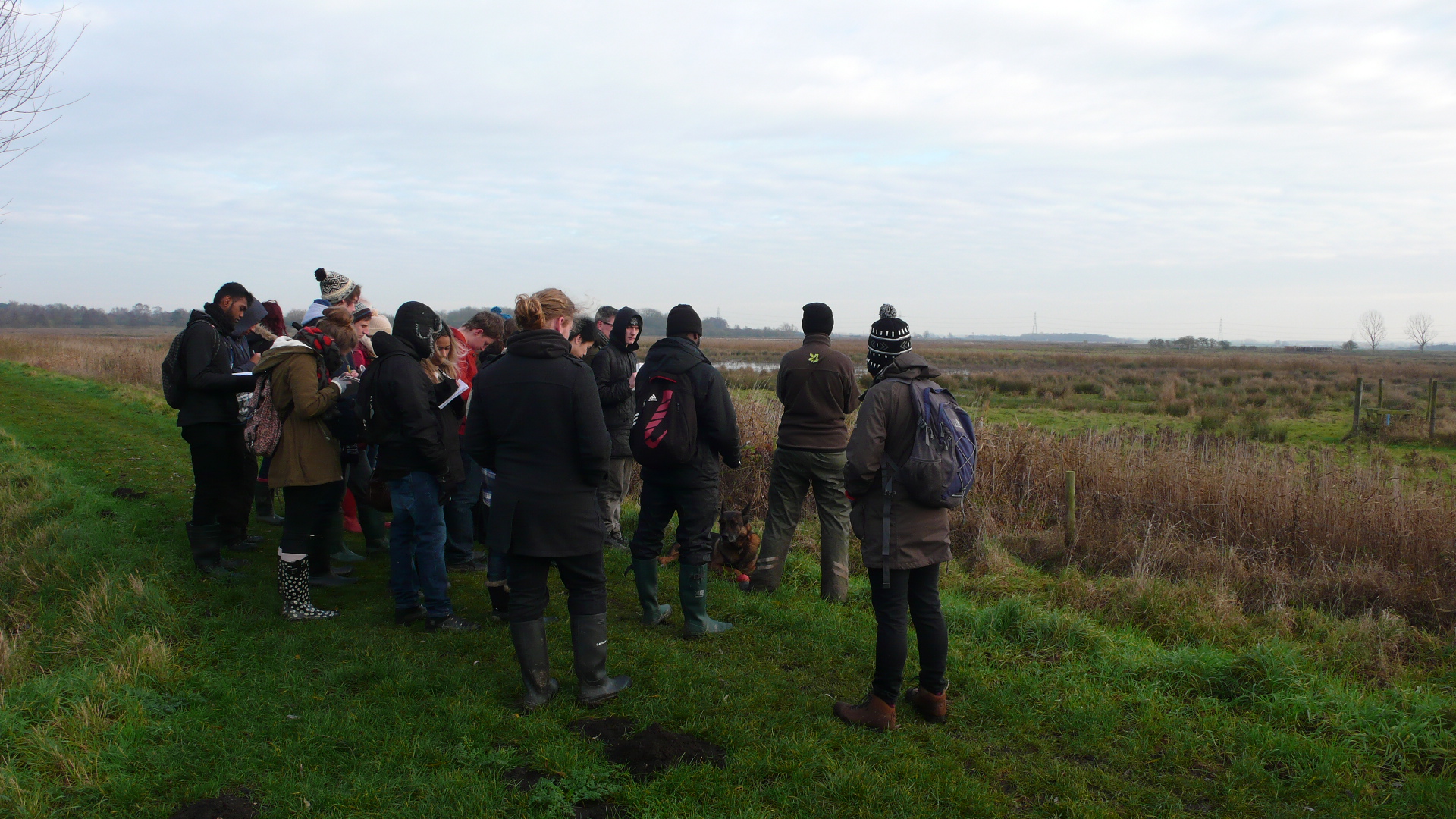
P1120027

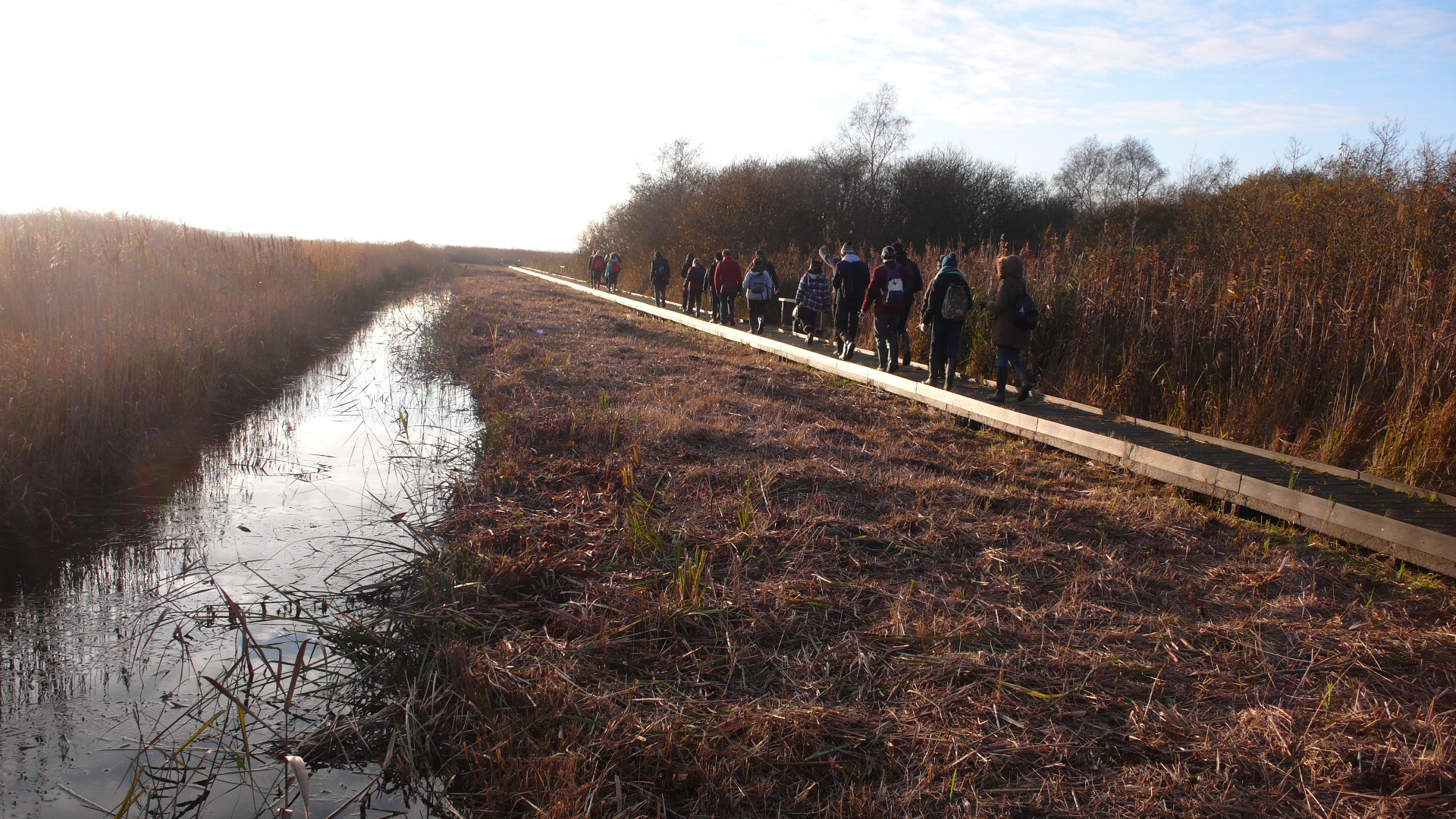
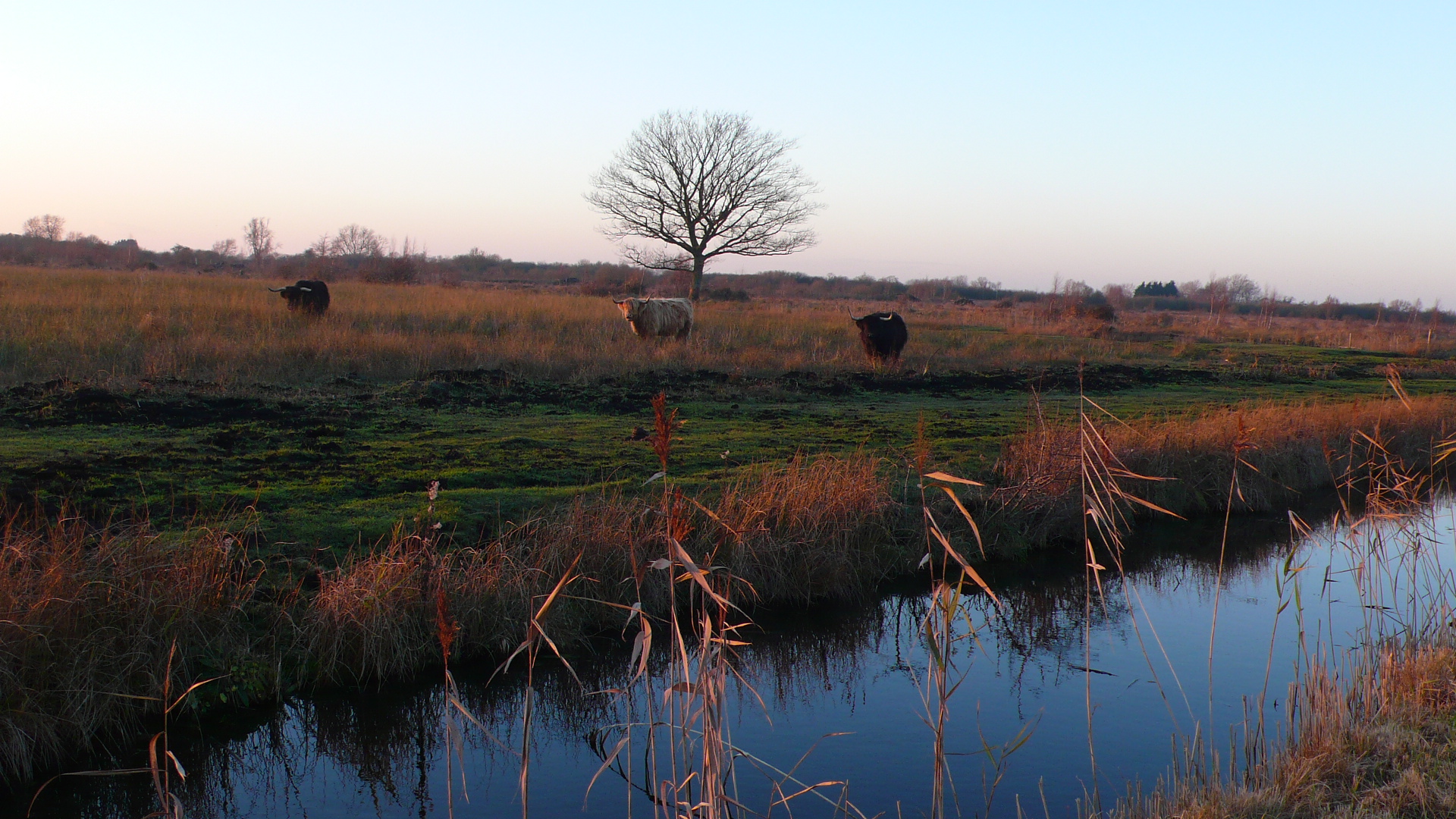
If it’s winter, it must be time for the annual second year undergraduate field trip to Wicken Fen, a yearly pilgrimage that’s been run by my colleague Dr Janet Jackson for many years now.  The purpose of the trip is to show our ecology and environmental science students an example of large-scale habitat conservation and restoration in action, at one of England’s oldest nature reserves.  I try to go along and help out when I can, though I missed it last year because of my trip to Brazil.  It was more than a fair swap, though there’s something about Wicken’s stark winter beauty that always makes for a memorable day.

2014-12-05 12.07.59

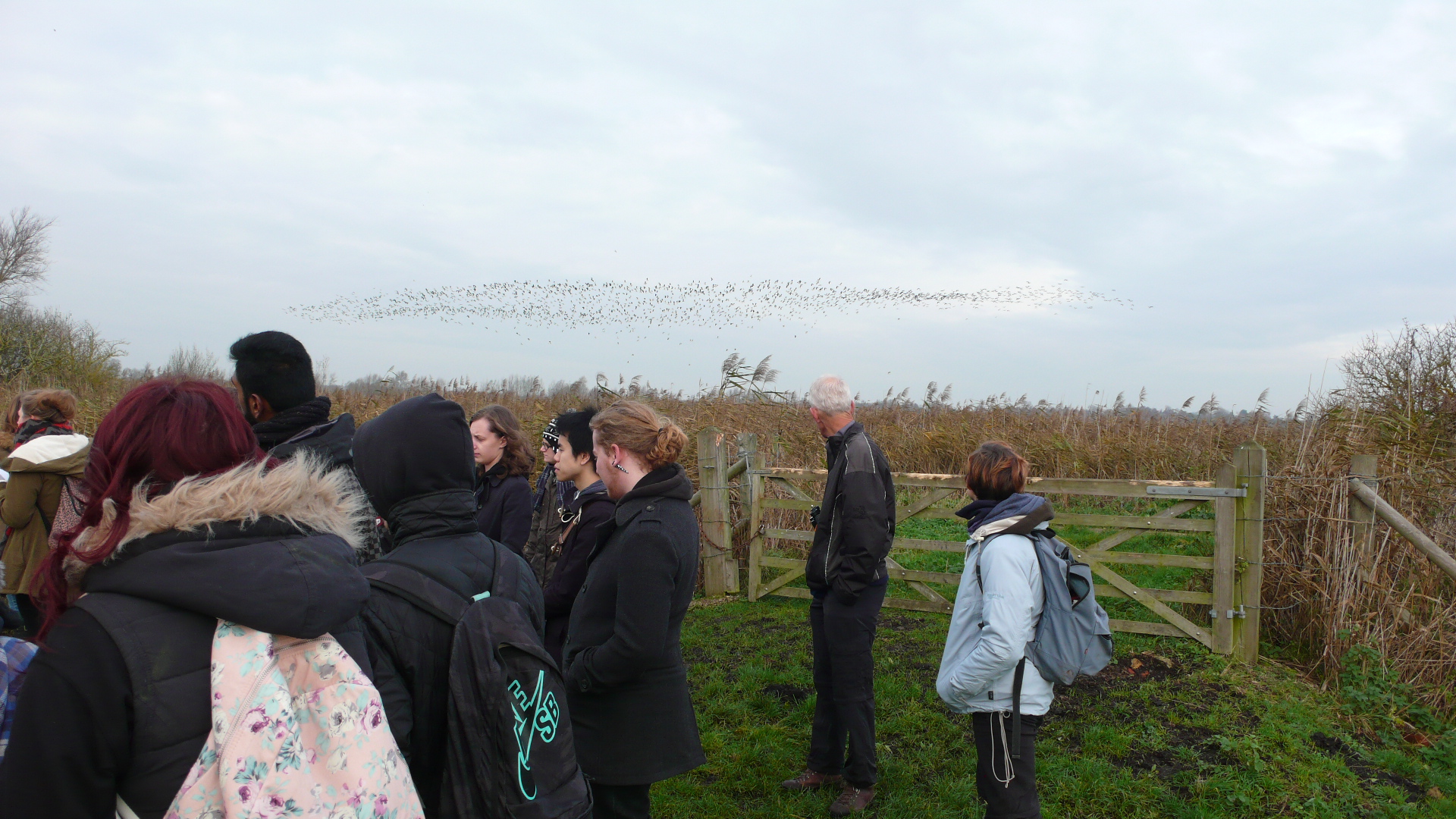
The National Trusts’s nature reserve at Wicken Fen is one of the few remaining patches of the wetland habitat that once covered most of East Anglia.  There’s little of it left (less than 1% of the original area) but large-scale, long-term initiatives such as the Great Fen project and the Wicken Fen Vision are trying to increase this by restoring the farmland surrounding the remaining patches.  This is important landscape-scale conservation because the fenland habitat is rich in biodiversity.  Wicken Fen alone is reckoned to host more than 8,300 species of macro-organisms, most of which are invertebrates, including more than a thousand each of flies and beetles.  There’s also an impressive list of birds that use the site either for breeding or over-wintering, and on our day trip we managed to see 31 species*, highlights of which were a pair of Hen Harriers, a lone hunting Barn Owl at dusk, and a huge flock of Lapwing and Golden Plover that provided a backdrop to our guided tour.

P1120025

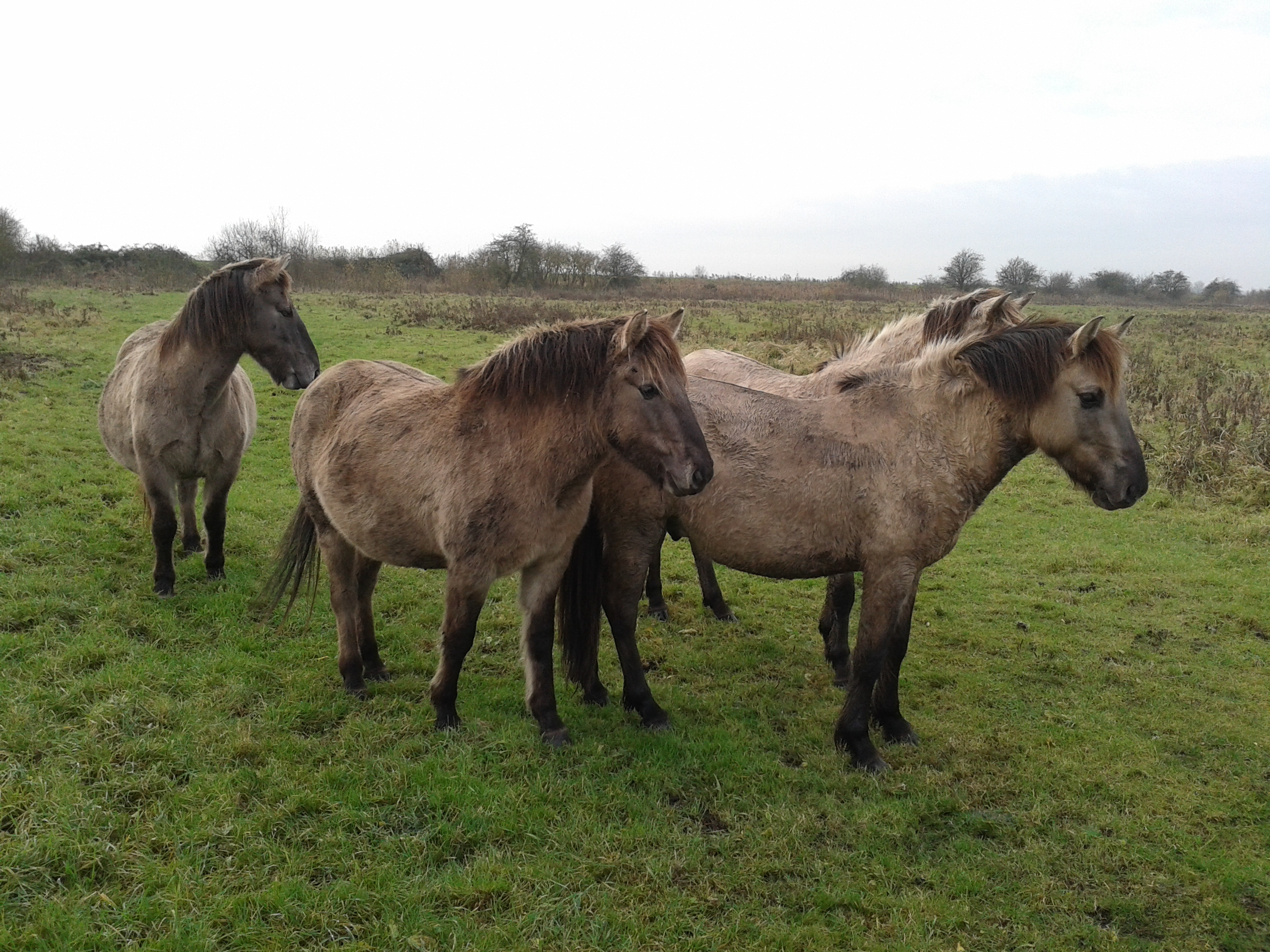
Another great highlight which impressed both students and staff was a close encounter with some Konik Polski ponies which were curious and friendly, and yet more or less wild, as they stay out on the Fen all year round with no shelter and the minimum of human intervention.

Konic ponies

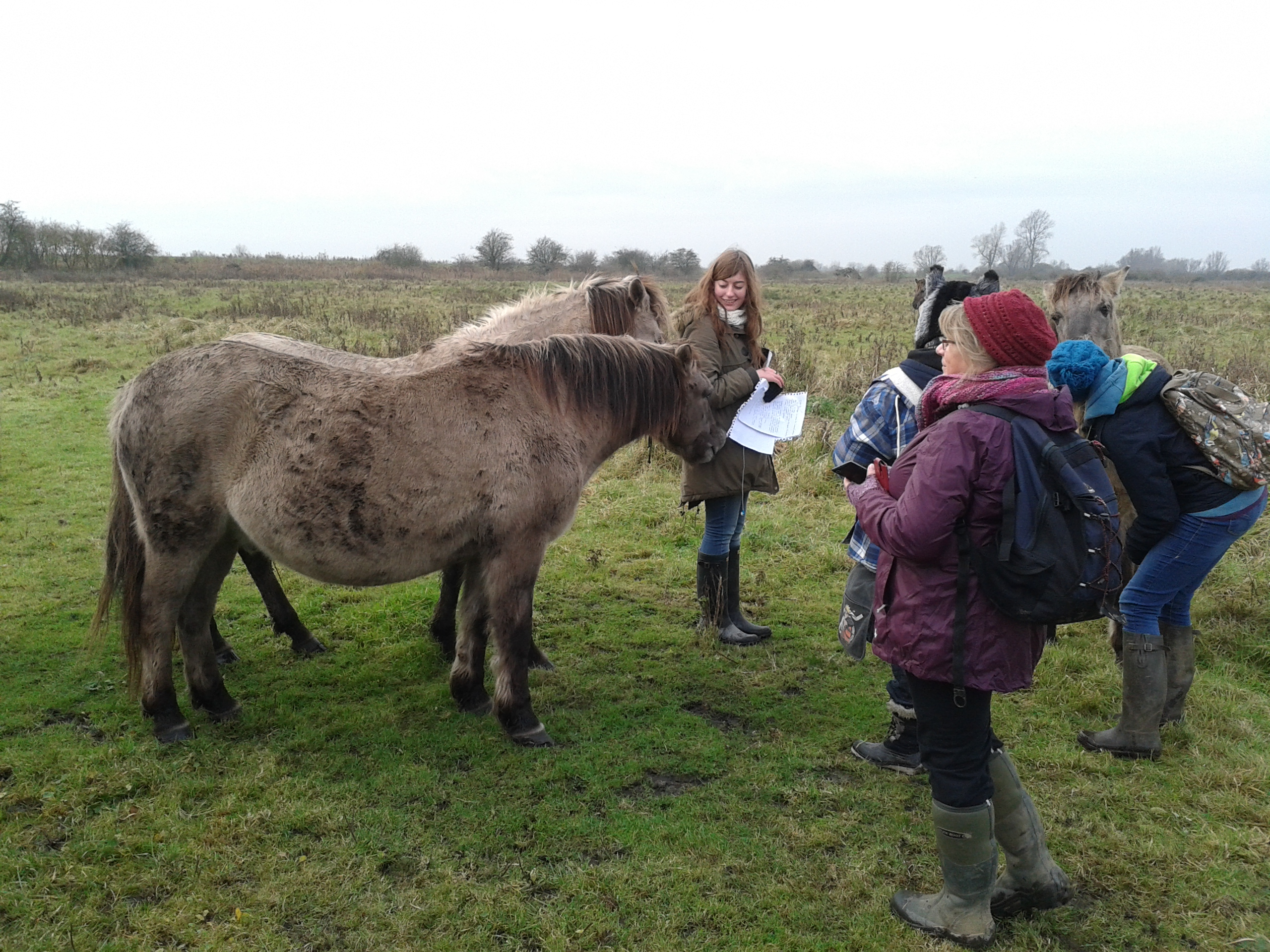
Everyone was enchanted by these hardy little horses and it was a struggle to get the students to move on with the tour!

Konic ponies with Janet

As Carol Laidlaw, conservation grazing warden at Wicken Fen explained to us, these ponies, together with the tough highland cattle, are a vital part of Wicken Fen’s ecology.  Their grazing prevents woody plants from colonising, and this, together with their physical presence in the landscape, leaving hoof marks and dung piles, opens up both small patches and larger areas for colonisation by plants.  For anyone interested in reading more about the grazing animals I can recommend Carol’s excellent article on the project.

P1120033

Although the day was cold it was not the frozen landscape we normally encounter and there were even a few plants still in flower.  It’s been a mild winter so far – how long will that continue?  If you’ve never visited Wicken Fen I can recommend it as a day trip whatever the season or weather, there’s always fascinating wildlife to see.

2014-12-05 15.57.39

*Bird list for the trip was: Collared Dove, House Sparrow, Blackbird, Kestrel, Fieldfare, Goldfinch, Cormorant, Grey Heron, Magpie, Lapwing, Golden Plover, Carrion Crow, Snipe, Hen Harrier, Wigeon, Great Tit, Blue Tit, Feral Pigeon, Starling, Wood Pigeon, Robin, Chaffinch, Wren, Shoveler, Tufted Duck, Coot, Mallard, Common Gull, Herring Gull, Jackdaw, Barn Owl.  Plus chickens being kept in the garden of one of the local cottages!

Biodiversity conservation pays its way – Nature Improvement Areas are boosting wildlife, communities and economy

P1100101

This is the text from a national press release that’s been sent out today by the Nene Valley Nature Improvement Area:

Wildlife, communities and local economies are reaping the benefits of England’s new Nature Improvement Areas, according to a report published last week (14th November).  The Nene Valley is one of these twelve Nature Improvement Areas (NIAs) set up by the government in 2012, which have helped farmers to access EU grants, made valuable contributions towards university research and boosted the £210 billion rural economy.

They’ve also attracted outside investment – more than £730,000 from business partners and £7.8 million from NGOs and not-for-profit organisations.  Environment Secretary Elizabeth Truss said:

“A healthy environment and a healthy economy go hand in hand. These Nature Improvement Areas show how protecting our precious wildlife and outstanding landscapes can help grow our £30 billion rural tourism industry and create more jobs for hardworking people as part of our long term economic plan.”

Almost 19,000 hectares of threatened habitat – equivalent to 23,000 football pitches- have been created or restored since the NIAs were set up with £7.5 million of government funding.  Volunteers have spent 24,300 days – or 66 years in total – surveying wildlife and improving habitats, and more than 11,000 people have taken part in educational visits.

These wild habitats are now bigger, better connected, and more widespread, enabling wildlife such as butterflies and water voles to thrive.

The Nene Valley NIA covers an area of 41,000 hectares running through the heart of Northamptonshire and skirting Huntingdonshire to the eastern fringes of Peterborough. It includes the River Nene and its tributaries, gravel pits, reservoirs and much of the floodplain. Heather Procter, Nene Valley Project Manager said:

“In the Nene Valley we must find a careful balance between the pressures for development, tourism and recreation and the valuable wildlife that the valley is increasingly known for.  Through the NIA we have so far ensured that 1,500ha of farmland is managed in a more environmentally-friendly way, created over 100ha of wildflower meadow, and engaged communities in the future of their local environment. As we work towards the end of this round of Government support for NIAs in March 2015, we urge the Minister to build on the good work already achieved through NIAs, and provide leadership and support for existing and new NIA projects into the future.”

NIAs were first announced in the Natural Environment White Paper, the first government White Paper on the environment for 20 years, with the aim of creating 12 initial areas to reconnect nature on a significant scale through local partnerships.

The NIA partnerships have improved access to the countryside, creating new public footpaths and connecting a network of paths which will span 540km by 2015.

The NIA partnerships are on track to restore, create, enhance and maintain a further 5,500 hectares by 2015, joining up people and communities with their landscapes.

But the vision doesn’t end there. In the Nene Valley there are plans to continue to protect and enhance the landscape for the benefit of wildlife, people and the economy for years to come. Local people can help us to form our plans for 2015-20 by adding their thoughts to the interactive map on the Nene Valley NIA website http://www.nenevalleynia.org/my-nene-valley.

ENDS

Notes for Editors

The report is: Monitoring and Evaluation of Nature Improvement Areas Year 2 (2013-14) Progress Report (Defra Research Project WC1061) and can be downloaded from WC1061.

The 12 Nature Improvement Areas (NIAs) are:

Birmingham and Black Country
Dearne Valley
Humberhead Levels
Marlborough Downs
Meres and Mosses of the Marches
Morecambe Bay Limestone and Wetlands
Nene Valley
Northern Devon
South Downs Way Ahead
The Dark Peak

The Greater Thames Marshes
Wild Purbeck

  1. The Nature Improvement Areas (NIAs) Programme, with funding of £7.5 million, was established, as announced by Defra in the Natural Environment White Paper (2011). This project has been supported by Defra, DCLG, Environment Agency, Forestry Commission and Natural England.
  1. Defra launched a competition to fund an initial 12 NIAs in July 2011, judged by a panel led by Professor Sir John Lawton. Seventy-six applications were received. The Nene Valley is one of the 12 successful partnerships that started work in April 2012.
  1. NIAs are large, discrete areas that will deliver a step change in nature conservation, where a local partnership has a shared vision for their natural environment. The partnership will plan and deliver significant improvements for wildlife and people through the sustainable use of natural resources, restoring and creating wildlife habitats, connecting local sites and joining up local action. http://www.naturalengland.org.uk
  1. It is not the intention for NIAs to stifle sustainable development. It is a matter for local authorities to decide what weight they wish to give to NIAs in their local plans.
  1. The Nene Valley NIA is a partnership project of more than 20 organisations in Northamptonshire, Huntingdonshire and Peterborough and covers over 41,000 hectares including countryside, urban fringe and town centres:  www.nenevalleynia.org

Media Contact

For more information, interview requests and photographs of the Nene Valley and its wildlife please contact Heather Procter, Nene Valley Project Manager, heather.procter@wildlifebcn.org or 01604 774032.

A Westminster pollinator seminar and The Great British Big Bee Count

20141028_180450

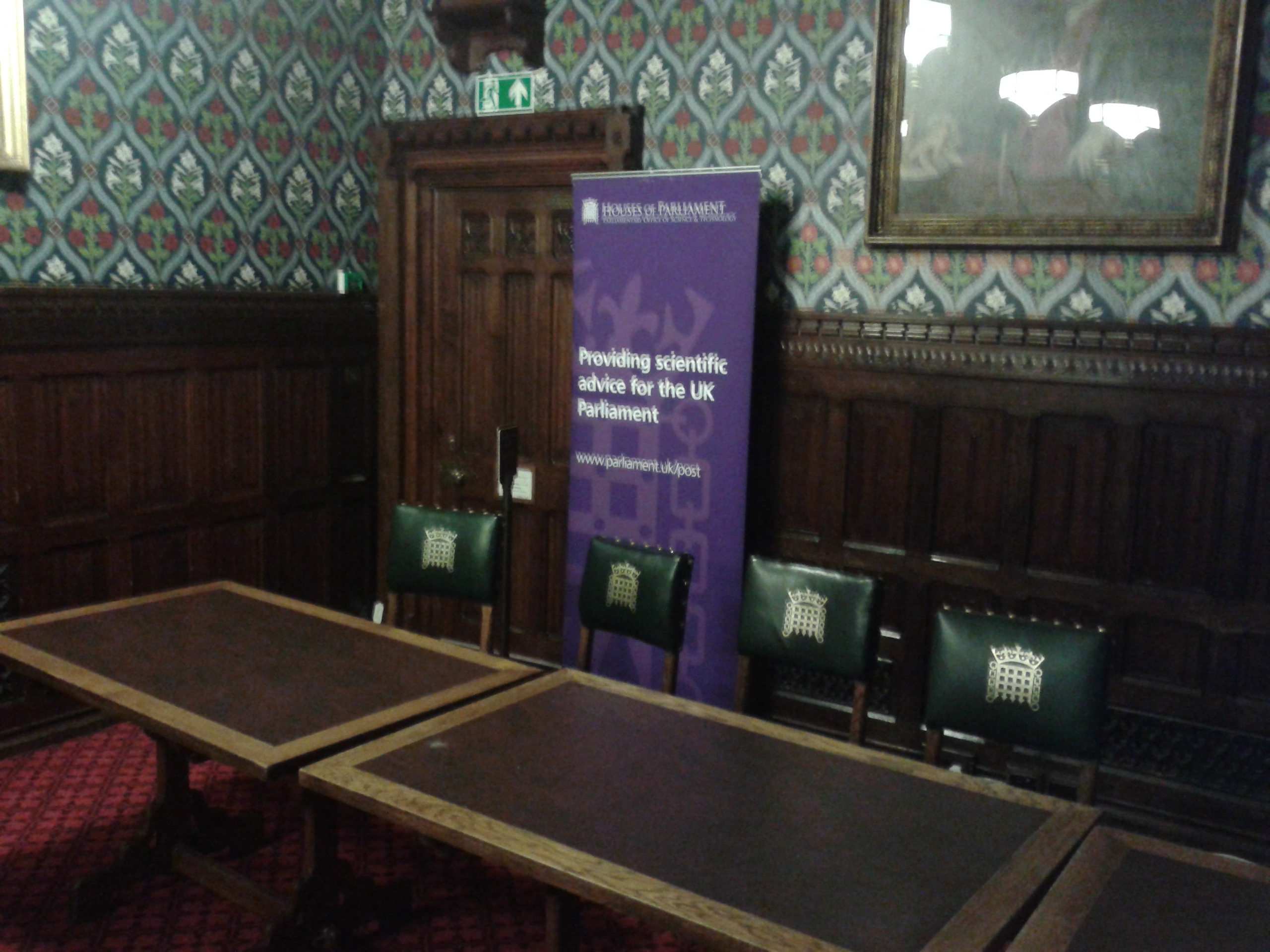
In the run up to Defra’s publication of a National Pollinator Strategy, due for release some time before Christmas, the Parliamentary Office for Science & Technology yesterday ran a two hour seminar at Westminster.  It was a full meeting in one of the small rooms, and apparently over-subscribed which doesn’t surprise me: there’s huge interest in pollinator conservation in the UK at the moment.  So it would have been better moved to a larger room to allow more scientists, practitioners, MPs, civil servants and other interested parties to attend.  In any case it was a useful couple of hours, with some interesting updates on what’s happening in relation to British pollinators.

The event was chaired by Sarah Newton MP and was kicked off by Adam Vanbergen from the Centre for Ecology and Hydrology who got everyone up to speed by giving an overview of the science of pollination, pollinator diversity, and the issues affecting pollinator populations.  In the process he cited our “How many flowering plants are animal pollinated?” paper which has fast become the default citation to use as evidence to support the ecological importance of biotic pollen transfer.  That’s hugely gratifying and is what it was designed to do.  We now have additional data with wider geographical coverage and I hope to update that analysis in the near future.  A lot of the information Adam was using can be found on the Insect Pollinators Initiative website.

Adam’s talk was followed by a presentation by Simon Potts from the University of Reading who discussed how we value pollination as an ecosystem service and how we can safeguard pollinator abundance and diversity.  There were some stark statistics on the economic contribution of pollinators to crops such as apples, including data from a study by Garratt et al. (2014) which suggests that both quality and quantity of apples could be improved by having more pollinators in British orchards.  Perhaps another way of viewing those data is that the UK apple industry is already experiencing the kind of pollinator deficit that conservationists have predicted?

Jane Memmott from Bristol University was next, presenting the preliminary results of the Urban Pollinators Initiative which is the first comprehensive study of the distribution of pollinators in large British cities.  The data look really exciting and it will be great to see the results finally published as it will make for an interesting comparison with Muzafar’s data on solitary bees in Northampton, the first manuscript from which has recently been submitted to a journal.

Finally Chris Connolly from Dundee University talked about pesticides in a presentation entitled “Why pick on the neonicotinoids?” and provided some disturbing statistics on how little we really know about what happens when the c. 350 types of pesticides (plus about 700 herbicides and fungicides) that we use in modern British agriculture combine in the environment to produce synergistic effects.  It’s also worrying that there is little understanding of the amounts of pesticides being applied because systematic data are not collated.  Chris is a neuroscientist working mainly in a medical context and gave the analogy of how combinations of therapeutic drugs can have unforeseen (even deadly) side effects.  Chris also used an image of Nigel Farage to illustrate a point which was a brave thing to do in the Houses of Parliament in the current political climate, but which got him a big laugh.

There followed 30 minutes of questions and discussion, and I managed to get in a plug for the Biodiversity Index when making a point of how difficult it is to get business to engage with biodiversity.  That led to an interesting conversation afterwards with a consultant that I need to follow up later today.

Out into the unseasonably warm London air by about 6.30pm, there were people standing outside pubs and sitting at cafe tables, as if we were in southern Europe rather than England in late October.  It reinforced some of the things I discussed in a post earlier this summer about climate change and current weather patterns.

Coincidentally (or not) Friends of the Earth released the results of their Great British Bee Count, a Citizen Science project designed to augment the monitoring work being done by specialist groups such as the Bees, Ants and Wasps Recording Society (BWARS).  I have mixed feelings about the Great British Bee Count.  On the one hand it’s great to engage the public in campaigns that raise the awareness of the importance of pollinators, and to get them out looking at bees.  But the reality is that the 832,110 records submitted to the count have very limited scientific value, despite what Friends of the Earth might claim.  That’s because it is very, very difficult to identify bees to even broad groups unless you’ve had some training, and (apart from some distinctive species) impossible to identify to species level unless you are a specialist.  I’ve been studying pollinators for 25 years and there are whole groups within our c. 250 native species that I have great problems identifying, and defer to the opinion of real specialists such as Stuart Roberts, chair of BWARS.

Stuart has made public his concerns at the quality of the data being submitted to the Great British Bee Count, and the fact that records cannot be checked because no photograph was taken and (worse) there are no specimens to compare.  The issues are neatly embodied in the fact that four species which were  recorded from Northern Ireland (Tawny mining bee, Hairy-footed flower bee, Red mason bee, and Tree bumblebee) have never previously been seen in Ireland and can all be confused with other similar species.  Of particular concern is the fact that Friends of the Earth expects the National Biodiversity Network Gateway to archive the data.  If that happens the Great British Bee Count data MUST be kept separate from the high quality, verified data on bee distributions that NBN already possesses, otherwise it will completely devalue the latter.  By all means let’s get the public engaged with pollinators and biodiversity more broadly, which is one of the purposes of this blog after all!  But let’s also be realistic about what can be achieved by these kinds of campaigns.

20141028_180501


Nature Improvement Area Annual Forum 2014 – influencing the future of conservation in England

NIA Forum - Sept 2014

The Nature Improvement Area (NIA) Annual Forum took place in London yesterday and the Nene Valley NIA was well represented, with five of us from the University of Northampton attending, plus representatives from our partners in the Wildlife Trust, the River Nene Regional Park, the RSPB, and the River Restoration Centre.  It was an opportunity to see and hear what the twelve NIAs have achieved in the two and a half years since their inception, to compare notes, and (importantly) to think about the future of the NIAs.

The NIAs, as I’ve mentioned before, were meant to be pilot, flagship schemes to show how the future of conservation in England could become bigger, better and more connected across large swathes of landscape.  Their origin lies in the Lawton Report and Professor Sir John Lawton kicked off the day with a general introduction that, from the very beginning, brought up the one thing on everybody’s mind that day: the financial sustainability of the NIAs. The money runs out in March 2015, so where do we go from there?  All of the NIAs (ourselves included) have been applying for funding to continue the good work being done, but, as John Lawton, pointed out, if the Government is serous about the NIAs and wishes them to continue, there needs to be an investment of public money.  I deliberately use the term “investment” because we know that the natural environment of our islands plays a significant role in public health and the national economy more broadly.

John Lawton’s introduction was followed by a short speech by Lord de Mauley, Parliamentary Under Secretary of State for natural environment and science (who, incidentally, gave a nod in his speech to the National Pollinator Strategy). The Minister said a lot of the right things, how impressed he was with the NIA programme, that the government was committed to it in practice (but not necessarily financially), etc., etc.  There followed another speech by Andrew Sells, Chair of Natural England, who listed some of the achievements of the NIAs (see below), including the fact that for every £1 of Government funding, £3.50 was leveraged from other sources to support the activities of NIAs across the country.

There was an opportunity to ask questions of the first two speakers, plus representatives from the Environment Agency and Forestry Commission, the first of which came from our own Oliver Burke who asked about the government’s vision of the future of the NIAs.  All of the panel agree that there was a future, they just were not sure what it was, though there was commitment from Natural England (NE) and the Environment Agency (EA) that their staff would continue to advise and support NIA activities as part of their core activities.  That’s promising though perhaps not surprising given the nature of most of the partnerships, involving organisations that the NE and the EA would normally work with anyway.

The question I wanted to ask, had I found the right form of words, would have been about the current Government’s poor record on the environment.  But by the time I worked out a way of saying it that didn’t make it sound like a simple attack on the coalition, the opportunity was over.  A whistle-stop tour by the Minister and his coterie of the displays set out by the NIAs followed, which John Lawton later said had visibly impressed Lord de Mauley.  Amongst the achievements of the twelve NIAs, after only two years of activity, are:

  • Tens of thousand of hectares of priority and other habitats created, restored and/or improved in condition
  • Hundreds of kilometres of boundary and linear habitat (e.g. hedgerows) restored/created/improved
  • Tens of thousands of days of volunteer time devoted to the NIAs
  • Thousands of  people participating in educational visits.
  • Thousands of hectares of habitat managed specifically for ecosystem services such as improving water quality.

After lunch there were further talks including one from Simon Smith about the Cotswolds Ecological Networks project which had been one of the 70 applicants for NIA funding, was unsuccessful, and (impressively) went ahead with the project anyway as an “unofficial” NIA.  The Nene Valley NIA’s interactive website and photography competition was also highlighted in a talk by Helen Ashley from Dialogue by Design, and Dr Andy Stott from Defra discussed the monitoring and evaluation report for year 2 of the NIA programme.

Later in the afternoon we had a workshop at which, in small groups, we brainstormed some pressing questions, including (not surprisingly) innovative funding streams, and using the evidence base to demonstrate the effectiveness of the NIAs.  With regard to the latter it would seem sensible to use independent, long-term monitoring data such as the repeated species counts done by Butterfly Conservation (e.g. Big Butterfly Count) and the British Trust for Ornithology (e.g. Breeding Bird Survey) to verify whether or not the NIAs are being effective, though this of course requires that surveys have historically taken place within the NIAs (something that is certainly true for the Nene Valley NIA).  This would require quite a bit of coordination with the NGOs concerned, but should be doable.  I’d happily develop such a project if there’s someone out there with funding!

And then, with some final, supportive words from John Lawton, the day was over and we started to disperse out into an unseasonably warm mid-September London.  Several of us from the Nene Valley and the RSPB decamped to a great local pub (The Lord John Russell) to discuss the day.  One of the topics that everyone was talking about was, of course, the Scottish Referendum.  As I write this the country is absorbing the news that Scotland is to remain part of the UK.  As far as I’m concerned that’s a very good thing because (amongst other reasons) I think that a vote for independence would have negatively affected conservation in the British Isles.  Political focus of all government departments would move from environmental issues and on to trying to manage the split, which would take up a huge amount of time and resources that could be better spent elsewhere.  And NGOs such as the RSPB would have to devote time and resources to considering how they manage and fund their organisations, given their cross-border roles. That could have been to the detriment of Scottish conservation given that most of the funding is flowing south to north (which is purely a function of population size – there are many times more members in England and Wales than in Scotland).

Thank you Scotland, you’ve done the right thing.  And thank you to all 12 NIAs, you’ve shown the Government how successful large-scale nature conservation can be: let us hope they take notice.


Bad news for British biodiversity and a comment on ecosystem services

2014-08-16 15.36.53

Two related things have caught my eye this morning that I think deserve a quick blog entry.  The first is that Julia Leventon has posted an interesting piece on her frustrations with the ecosystem services concept over on the Ideas for Sustainability blog.  Go and read it – Julia raises some important points about the mismatch between our ever-more sophisticated concepts of ecosystem services and what it means to actually manage/support them within our society.  One of the things she said really struck me as it chimes with what I feel is a weakness of the current ecosystem services research agenda.  Julia says that:

I feel somewhat as though we are distracting ourselves by creating ever more complex physical constructs that require even more detailed physical understandings, and ever more complex chains of structures, processes, services and benefits.”

This I completely agree with. The underlying science (ecology/biodiversity/natural history/call it what you will) of ecosystem services is hugely complex, even for a reasonably well defined service such as crop pollination. As someone who has studied pollination ecology for 25 years I know how little we truly understand – yet this is supposed to be one of the more “straightforward” ecosystem services!

But to implement the ecosystem services concept within society we don’t need to know the finer details and dynamics of the species/communities/ecosystems involved (as interesting as they are). What we require is as much natural and semi-natural habitat within a landscape as is possible, appropriately managed (or left alone), and with as few anthropogenic stressors on it as possible (e.g. pesticides and other pollutants).  And we’ve known that for many years, long before ecosystem services was coined as a term in the 1980s.

Yet governments and agri-business consistently fail to deliver this basic requirement and our natural environment is becoming ever-less diverse and hospitable to the biodiversity that sustains ecosystem services.  See for example the latest bit of bad news regarding species-rich meadows in the UK, which are still declining long after it was pointed out that over 90% had disappeared: legislation designed to protect these grasslands seems to have had the opposite effect.  These are exactly the same kinds of habitats that are considered most important for the pollinators that agriculture relies upon!

The concept of ecosystem services, in my opinion, is a valuable one for focusing attention on the importance of the natural world, though there are others who disagree.  But the concept does not have to become mired down in the “ever more complex physical constructs” that Julia describes in her post. Let’s keep it simple and focus on what’s important rather than disappearing into a conceptual black hole that excludes practitioners, government, business and the public*.


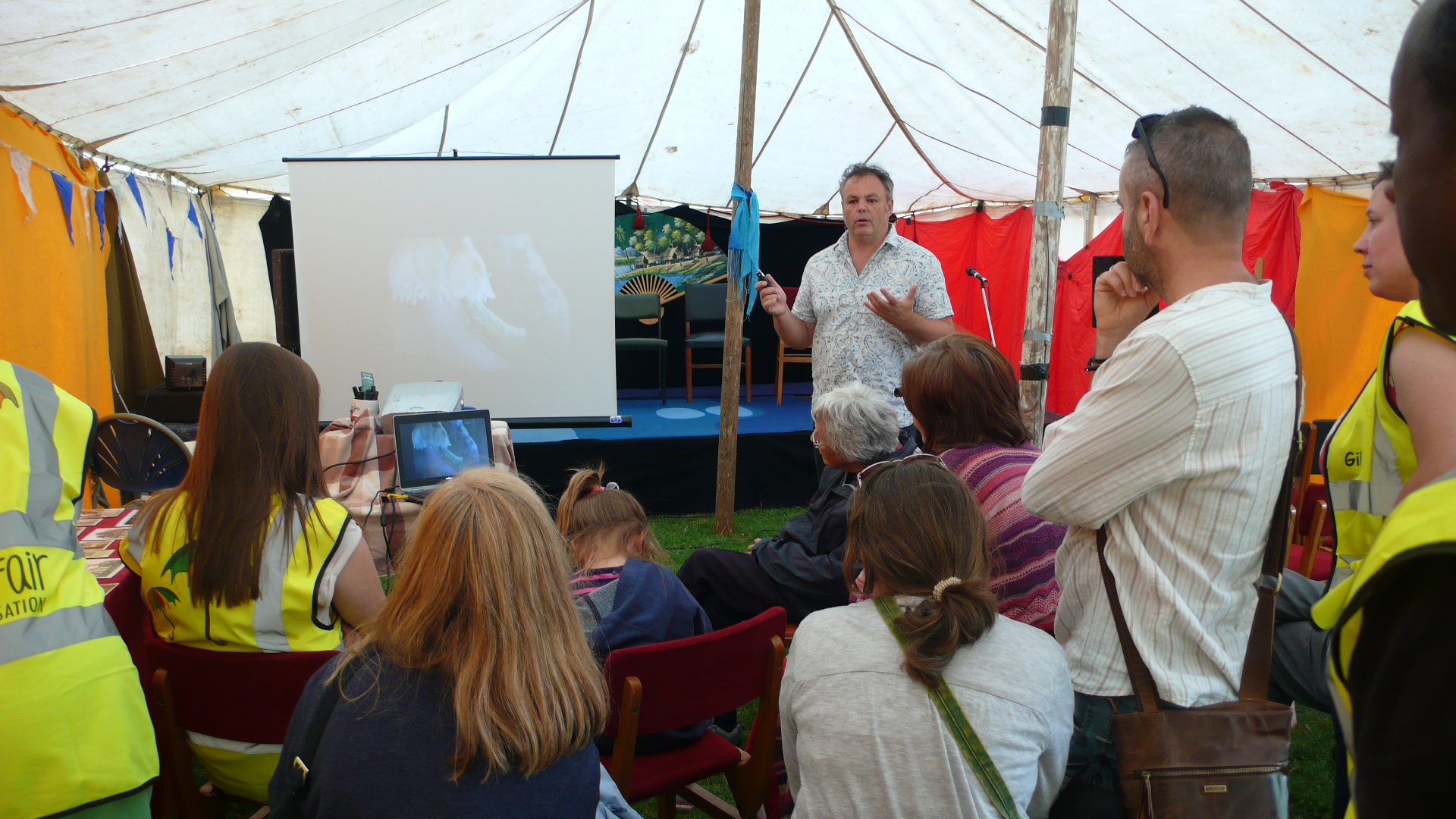
*The photograph above was taken a couple of weeks ago at Northampton’s Umbrella Fair, where I presented an over view of the importance of pollinators, and the idea of ecosystem services, to a small, [ahem] “mixed” audience, which included restless kids and incomprehensible drunks, in a marquee which was too light for the laptop projector to work.  But if even one of those who attended “got” the idea of ecosystem services I consider my job well done!