Category Archives: University of Northampton

To Dream a River

The notion of streams and rivers as the veins and arteries of a nation, bringing life giving fluids to the country’s urban hearts, is an overplayed one for sure.  But it’s accurate nonetheless, even if these fluids contain biodiversity enough to give any blood disease specialist palpitations.   Given their importance it is therefore odd (I’m tempted to write “suicidal”)  that in Britain we have a history of our towns turning their backs, both metaphorically and literally, on our rivers, ignoring their cultural, social, biological and frankly life sustaining importance.  I’ve mentioned the brewery and sewage effluent entering the River Wear at Sunderland in an earlier posting.  As the pollution went in so there was a  gradual receding of business, industry and habitation away from the river.  There seems to be a correlation between the use and value of a river and the condition of its water and biodiversity: as rivers become ignored and disconnected from urban centres, so they become dumping grounds for whatever can be flushed or piped into them.

This process of riparian neglect was repeated throughout the twentieth century across the country and Northampton’s River Nene is no exception.  From its central place in the town’s commercial activities in the nineteenth century, with its links to the Grand Union Canal and to the North Sea, the Nene has declined in both importance to the town and in its ability to support wildlife, at least in the stretch running through the town and just down river.  Much of the ecological quality of water in this stretch is considered “moderate” to “poor” against the criteria set out by the Water Framework Directive, the main driver of European (and therefore UK) water management.

Against this backdrop of neglect and  river decline, recently a group of us went for a seven mile hike along the River Nene, from the western fringes of Northampton at Duston Mill, through the centre of the town, out to Billing Mill.   The trek was organised by a former student of ours, Neil Monaghan, now working for the River Nene Regional Park (RNRP).  The purpose of this walk was (quoting Neil’s brief for the day) “to inform the Northampton Enterprise Zone River Nene Re-naturalisation Study” by “identify[ing] issues and opportunities for works in-stream and in areas influencing the watercourse which would be likely to facilitate improvements (or at least negate degradation) through land use change or water management”.  My particular interest in this relates to the work we are doing as part of the Nene Valley Nature Improvement Area (NIA) project I’ve mentioned before. Also taking part in the hike were representatives from most of the groups with an interest in the River Nene’s ecology, water quality and flood risk management, including my university colleagues Duncan McCollin & Chris Holt; another former student Hugh Bunker, now working for the Environment Agency (EA); independent consultant ecologist Steve Brayshaw; Heather Ball and Oliver Burke from the Wildlife Trust; Martin Janes from the River Restoration Centre; and other staff from RNRP, the EA, Northants County Council and Northampton Borough Council.  All in all, a wide range of interests and expertise, giving their own perspectives on the River Nene.

Although I’d visited parts of the area that we walked, I’d never before hiked this whole stretch.  It was a revelation.  We passed some really pleasant stretches of river and lake close to commercial centres in Northampton that I know well, in the sense of “drive there, buy things, drive away”.  But I was wholly ignorant of just how close the river is to some of these points.

One of the reasons why it’s easy to lose track of the water courses and lakes, is that it is so geographically complex.  Take a look at the Nene Valley on Google Earth and what you’ll see what I mean.  The aerial view reveals a network of river branches, tributaries, canals and lakes, traced across the landscape.  Some of these seem to have no obvious starting point, or end abruptly.  At one point a lower lying stream passes under the river via a siphon.  It’s very confusing for a predominantly terrestrial ecologist!  The whole area is historically prone to flooding, as Chris has discussed in some of his published research and so understanding the dynamics of the whole catchment is an important task for the Environment Agency and local government.

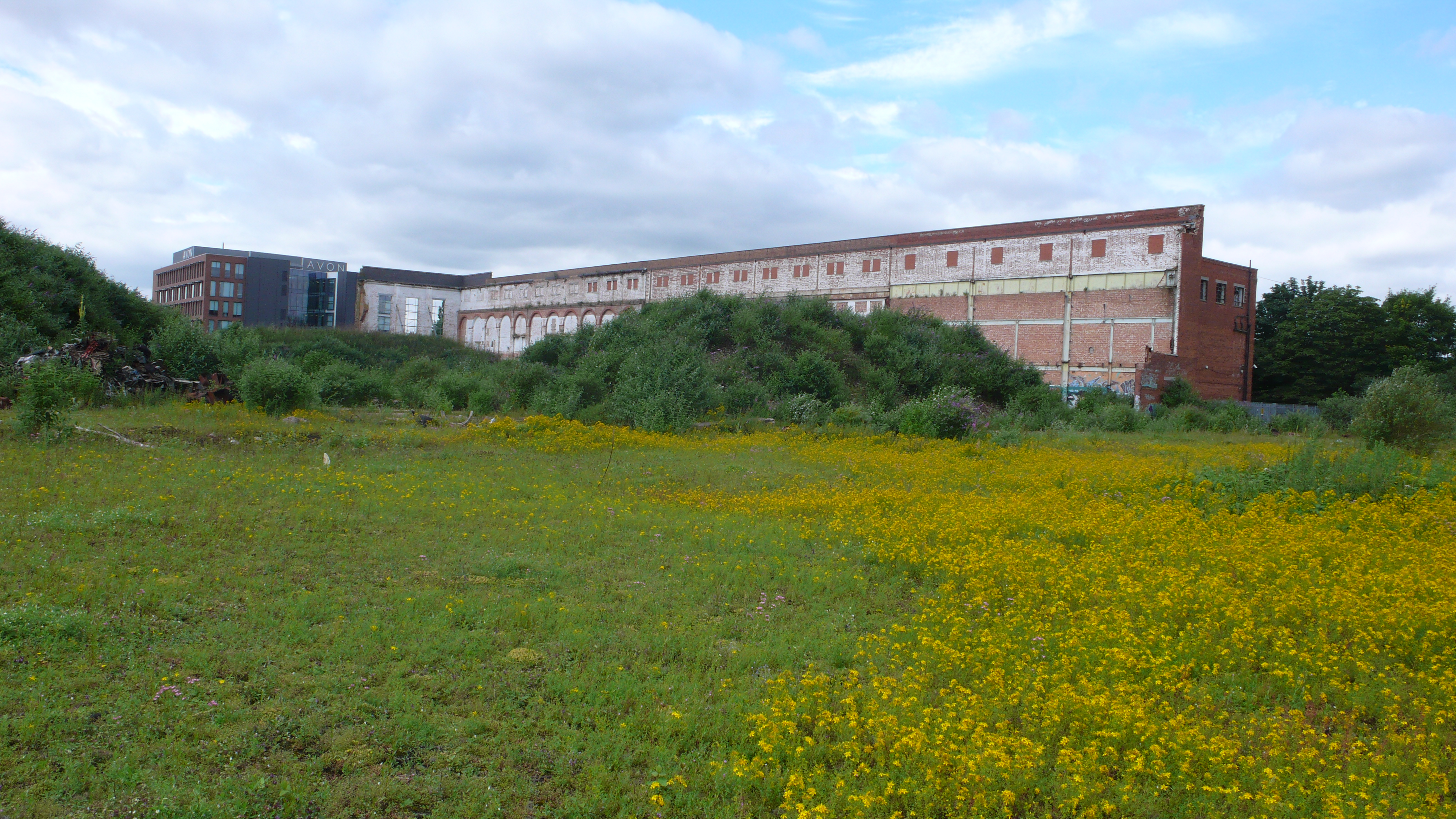
Away from the river, one of the highlights of the trip was a guerrilla visit to a post-industrial site that is posited as the new campus for the university.  It’s actually the site of the former Northampton power station and like many abandoned brownfields across the country, it has developed its own ecological community of invasive alien plants (for example buddleia, in abundance) and native species, many of them normally at home on dry grasslands.  One section was described by Steve, half seriously, as “urban tundra” as it was dominated by a species of lichen from the genus Cladonia.   

Our main attention was the River Nene, of course, never far from the path that we walked.  Further down the course we came to the Northampton Washlands, an area of low lying grassland and flooded gravel pits that serves to store flood water when the river overtops its banks.  It’s also an internationally important site for migratory birds such as lapwing and golden plover, and is part of the recently designated  Special Protection Area (SPA).  It was another highlight in a day of exploration and surprises.

The dream of a river which can support biodiversity, provide drinking water, allow a wide range of recreation, and be flood managed, is a hugely ambitious one.  But there are many people and organisations working hard to see it flourish because the River Nene is a  vital part of the life of the town and the county.  And without dreams, what are we….?

Scientists Must Write (and Speak and Listen and Review and Edit)

“Scientists Must Write” was the title of a book published back in the late 1970s by a former tutor of mine, Robert Barrass, at what was then Sunderland Polytechnic (now the University of Sunderland).  I had assumed the book was now a long gone publishing memory and no longer available.  But it turns out that Robert updated it in the early 2000s and it’s still in print.  Almost 30 years (30!) later I can clearly remember Robert impressing upon us the importance of good writing skills for scientists-in-training.  At the time I was as far from being a professional scientist as it’s possible to be and so didn’t fully grasp this, but nonetheless what he said chimed with my own notions that writing was important, even for a scientist.

Nowadays I realise that it’s not just the writing of standard, academic papers, book chapters and books which  is essential: writing of all kinds is a necessary facet of the life of a research active scientist.   This June sees the publication of two contrasting articles that illustrate this point.  The Royal Horticultural Society’s journal The Plantsman has published a piece entitled “The Importance of Native Pollinators“, whilst the historical journal Notes and Records of the Royal Society has published my paper on “John Tweedie and Charles Darwin in Buenos Aires“.  Neither of these is standard academic fare, at least for me.  The first is a popular article aimed largely at gardeners and others interested in understanding more about pollinator conservation.  The second, whilst academic and rigourously peer reviewed, is primarily historical rather than scientific.

Why am I writing popular conservation articles and historical papers?  Largely for different reasons, though they are linked by my overall fascination with biodiversity.  The Plantsman article is an example of taking ideas and findings from the LBRG‘s research and presenting it to a wider audience who might, at the least, find it interesting and hopefully useful.  One might describe it as “popular science” though I don’t really like the term: it suggests that it’s somehow different to “real” science, which is not the case: it’s really only the format of the presentation which is different.

The John Tweedie/Charles Darwin paper reflects my desire to understand where our scientific knowledge of biodiversity comes from.  As scientists and conservationists, we draw conclusions about species’ distributions, conservation threats, extinctions, and so forth, based on information from specimens that have been collected by people like Tweedie and Darwin, and curated at places such as Kew and the Natural History Museum.  By its nature it’s a historical process and historical research helps us to understand how we arrived at our current understanding.  The only reason we know that 23 species of bee have gone extinct in England since about 1800 for example, as I cite in my Plantsman article, is that over the past two centuries specimens and observations have been recorded and analysed.  This is an ongoing process, exemplified by the BWARS project mapping the spread of Bombus hypnorum   the most recent addition to the UK’s native bee list.

As well as writing we scientists gain much from listening to what others in our field have to say and a well attended, and very interesting, meeting in London last week launched the British Ecological Society’s Macroecology Special Interest Group .  The range of talks spanned community structure, interaction networks, ecosystem services, latitudinal gradients and disease biology, all at the large spatial and temporal macroecological scales covered by this subdiscipline of ecology.  Or is it really a multidisciplinary field, a merging of old fashioned biogeography with more modern ecological approaches?  Who knows, perhaps this is sterile semantics; as I mentioned to one of the organisers in the pub afterwards, “macroecology” seems to me to be more about a philosophy of approach rather than a field in itself.

Formal teaching has largely finished for the time being, so in addition to research activities and university administrative work, much of the remainder of the last couple of weeks seems to have been taken up with editorial and peer reviewing duties for journals, including PLoS ONE, for which I’m an academic editor. This can be time consuming and thankless, but is absolutely vital if the whole system of scientific publishing is not to grind to a halt.  Scientists must write, but that writing is supported by a body of individuals who act as peer reviewers, editors, proof readers, and so forth.  Collectively that eats up a lot of scientist-hours and is something we should never take for granted.

Darwin’s Unrequited Isle (part 2)

During our field trip to Tenerife the two vehicles covered over 900km each, which is not bad on an island only about 80 km in length along its main axis.  We experienced temperatures that ranged in one day from a few degrees above freezing to the mid 20s centigrade.  Up in the laurel forest I mentioned last week the weather was cold and foggy, whilst in the Malpais de Güímar it was hot and dry and we sunburned.  We put in long, tiring days of walking transects, identifying, measuring and recording plants, and observing bee and bird behaviour.  And there were ticks that had to be picked off skin in one of the barrancos we visited.  The Romantic Adventurer within me would therefore like to believe that the aching limbs and upset stomach I suffered when we got back to the UK were due to some exotic virus passed on by these blood sucking arachnids.  However the Cynical Traveller thinks it was more likely to be due to a hamburger of dubious age and temperature that I ate at Tenerife Sur airport on the way home.

The Tenerife Field course was hard work but great fun and I think (I hope!) the students learned a lot.  At the very least they have now experienced just how diverse habitats can be on a small oceanic island.  In that diversity rests both the beauty of Tenerife and part of its scientific interest.  This variability in habitats is a result of its altitude (Tenerife is the second highest oceanic island in the world after Hawaii), subtropical latitude, climate, proximity to Africa, and geological history.  In a single day one can travel from high alpine habitats, through sub-alpine desert scrub and pine forest, into succulent dominated low altitude desert scrub, back up to laurel forest (a form of subtropical rainforest), as well as distinct deep valley and strandline vegetation.

Add to this the occasional hurricanes and forest fires that tear across parts of the island, not to mention volcanic eruptions, plus the human impact, and it makes for a rather dynamic environment at a range of time scales.  These processes probably add to the overall biodiversity, as predicted by the intermediate disturbance hypothesis, plus formation of new land area can select for novel proto-species.  It begs the question of whether volcanic oceanic islands are more diverse than their coralline counterparts, which we might expect to be less dynamic environments.  Has anyone investigated this?  That’s one of the things that keeps my interest in biodiversity going: there are too many questions for a single lifetime.

I’m hoping that “Darwin’s Unrequited Isle” will take off as a new name to refer to Tenerife, replacing the Island of Eternal Spring cliché it currently holds (and shares with Madeira).  Especially as many of the days we were there were spring-like only in the sense that they were wholly unpredictable.   On the roof of Tenerife, in Las Canadas, our car thermometer registered 3 degrees centigrade at 1100am.  And it snowed.  I’ve never experienced that at this time of the year.  We’ve had torrential rains storms but never snow.  In late April.  In the “Island of Eternal Spring”.   I’m not complaining though, it all adds to the fascination of this most interesting of islands and is why we come back year after year.  It’s also better conditions than my colleagues Duncan McCollin and Janet Jackson endured with those students who elected to do field work in Northamptonshire rather than Tenerife.  For most of the time we were away it poured with rain back home, turning the drought-imposed hosepipe bans into flood warnings in some places.

Needless to say, the day of the snow was the day we were due to make some observations of bee behaviour.  By and large bees don’t like snow and low temperatures ground most of them.  So that planned activity was delayed until later in the day when it finally warmed up sufficiently for them to start flying.

This theme of variability in the weather, on a day-to-day basis and compared to previous years, was a recurring one all week.  Tuesday was hot, as I recounted in my previous blog.  But Wednesday was a huge contrast as we headed up into the cold, wet laurel forests of the Anagas Mountains.  It’s always a little chilly on this part of the island due to the prevailing moisture-laden trade winds, but this year was colder and foggier than I can remember.  The students collected data on the distribution of plants up a vertical cliff face that we can compare to similar data from another site collected last year.  I’m intrigued by the way succulent plant groups such as Aeonium and Monanthes are able to survive on these water limited, nutrient poor environments, vertical versions of the desert scrub lower down the mountains.  These succulents add to local plant species richness within the forest and provide nectar and pollen resources when they flower, increasing the overall levels of biodiversity of an already diverse habitat.

As well as studying plant diversity we also did some work with the animals of Tenerife.  The bees I’ve already mentioned, but for the first time we also made some observations of how bird behaviour changes in tourist areas compared to more isolated spots.  Even within a very short distance, no more than a few hundred metres, it’s clear that bird diversity, abundance and range of observed behaviours were greater in the areas where tourists congregate to barbecue and relax.  We did some similar work with lizards for a few years and found that they were bolder close to tourist car stops than further away.  Humans can impact the life of this island in very subtle ways.

We also spent a morning with volunteers from the Atlantic Whale Foundation (AWF) on one of their trips out to record individual whale and dolphin activity off the south west coast.  The AWF piggy backs on one of the commercial whale watching boats and the students are encouraged to think about the synergies and tensions between the conservation-motivated scientific observation of the AWF and the commercial motivations of the tourist boats.  It gets to the heart of what “eco-tourism” is all about and the point at which it does more harm than good.  The only strong opinion that I have about it is that the value of eco-tourism is context dependent; some activities are better than others in some circumstances but not others.  Regardless, the trip is always popular with the students (except one year when a student spent the whole time aboard with her eyes closed, suffering chronic sea sickness) and this year was exceptional, with great views of bottle nosed dolphins and pilot whales, as well as long distance spottings of common dolphins and a 20m fin whale.

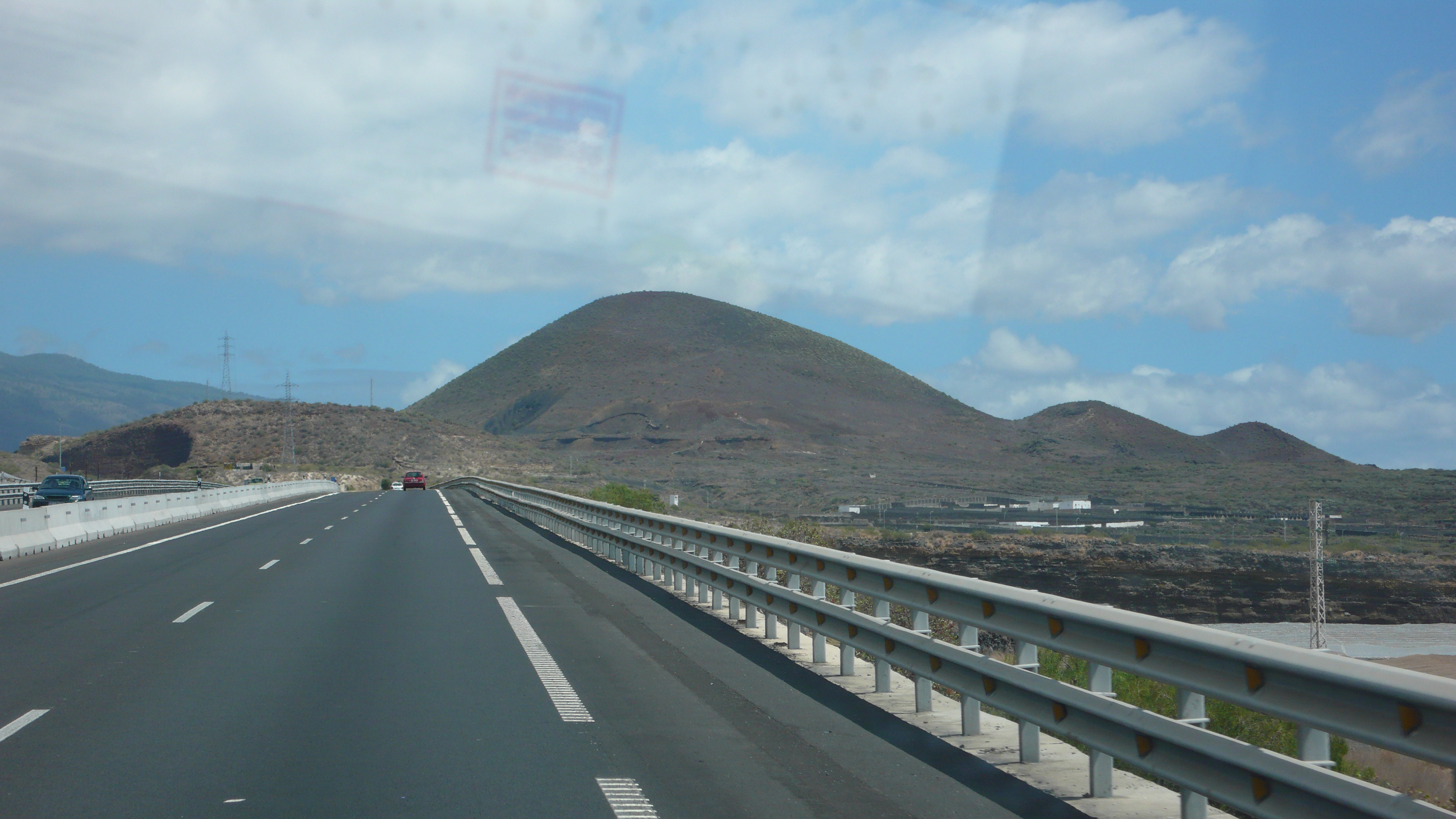
The final day of the trip, prior to getting to the airport, is traditionally spent at the Pyramids of Güímar ethnographic park where the students discover some of Thor Heyerdahl’s left field views about possible pre-Columbian links between Canarian, Mediterranean and New World peoples.  Whatever the truth behind the origin and function of these enigmatic structures, the visit is a pleasant way to end the field course.  Nestled within the protective bowl of the Güímar Valley, I often wonder if it’s a coincidence that the Güímar structures look out towards the three cinder cones adjacent to the Güímar Badlands.  Approaching from the south along the TF1 road, these hills take the form of a heavily pregnant woman lying on her back.  Was it of symbolic significance to the ancient Tenerifeans in the days prior to the Spanish conquest?  I like to think so though we probably will never know.

A small grant from the British Ecological Society means that I’ll be back in Tenerife at the end of May for ten days to do some follow up field work.  Hamburgers will be avoided.

Darwin’s Unrequited Isle (part 1)

A busy week of biodiversity-related activities terminated last Friday in a frantic rush to make sure everything was organised for this week’s field course in Tenerife.  The field course has been running for 10 years and has proven to be both popular with students and productive, generating data for a couple of research papers, with more in the pipeline.

Tenerife is an extraordinary island as Charles Darwin recognised; it’s the place that Darwin really wanted to go to when he embarked on H.M.S. Beagle, though he never made it due to the Beagle having to be quarantined before anyone was allowed onto the island.  The captain decided to sail away and Darwin was devastated.  Hopefully the rest of his trip made up for it, but it’s interesting to speculate whether Darwin’s ideas about evolution may have taken a different path had he been able to visit the Canary Islands, in many ways an Atlantic analogue of the Galapagos……but I’m getting ahead of myself…..this week I hope (time willing) to post some updates about out Tenerifean activities.  But back to last week.

The comments sections below the articles on the Times Higher Education Supplement are frequently mires of vile, obnoxious trolling that would embarrass even Shrek.  However an interesting article by Alice Bell has raised a debate about what exactly it is that scientists (and other academics) should be writing.  Widening science communication should also include giving talks about one’s work to a non-specialist audience.  Which is exactly what I did on Wednesday evening when I spoke to an audience of 65 beekeepers, gardeners and farmers in South Warwickshire.  They were very attentive and asked some insightful questions for about 40 minutes after I’d finished speaking, stopping only when someone mentioned that the tea and biscuits were ready.   All told it was a 90 mile round trip through heavy rain but worth it for such an engaging audience.

Earlier that morning I had been interviewed by BBC Radio Northampton  about a report that has just been released indicating that the “native” [sic] Black Honey Bee variety is more common in the British Isles than previously thought.  Lovely.   Good news for the beekeepers I told them.  Now let’s pay a bit more attention to our 250 REALLY native bees, many of which have declined numbers, and 23 of which have gone extinct since 1800.  Not to mention the butterflies (though there’s recently been some good news as far as they are concerned too) and the hoverflies and other pollinators.

Thursday was Think Tank day for the SEED project and I took part in the biodiversity session, which was ably chaired and coordinated by Gareth.  It went as well as we could have wished and hopefully some concrete partnerships are going to come out of it.  But ultimately it was a talking shop and biodiversity should be about doing and experiencing more than talking.  Which brings us back to Tenerife.

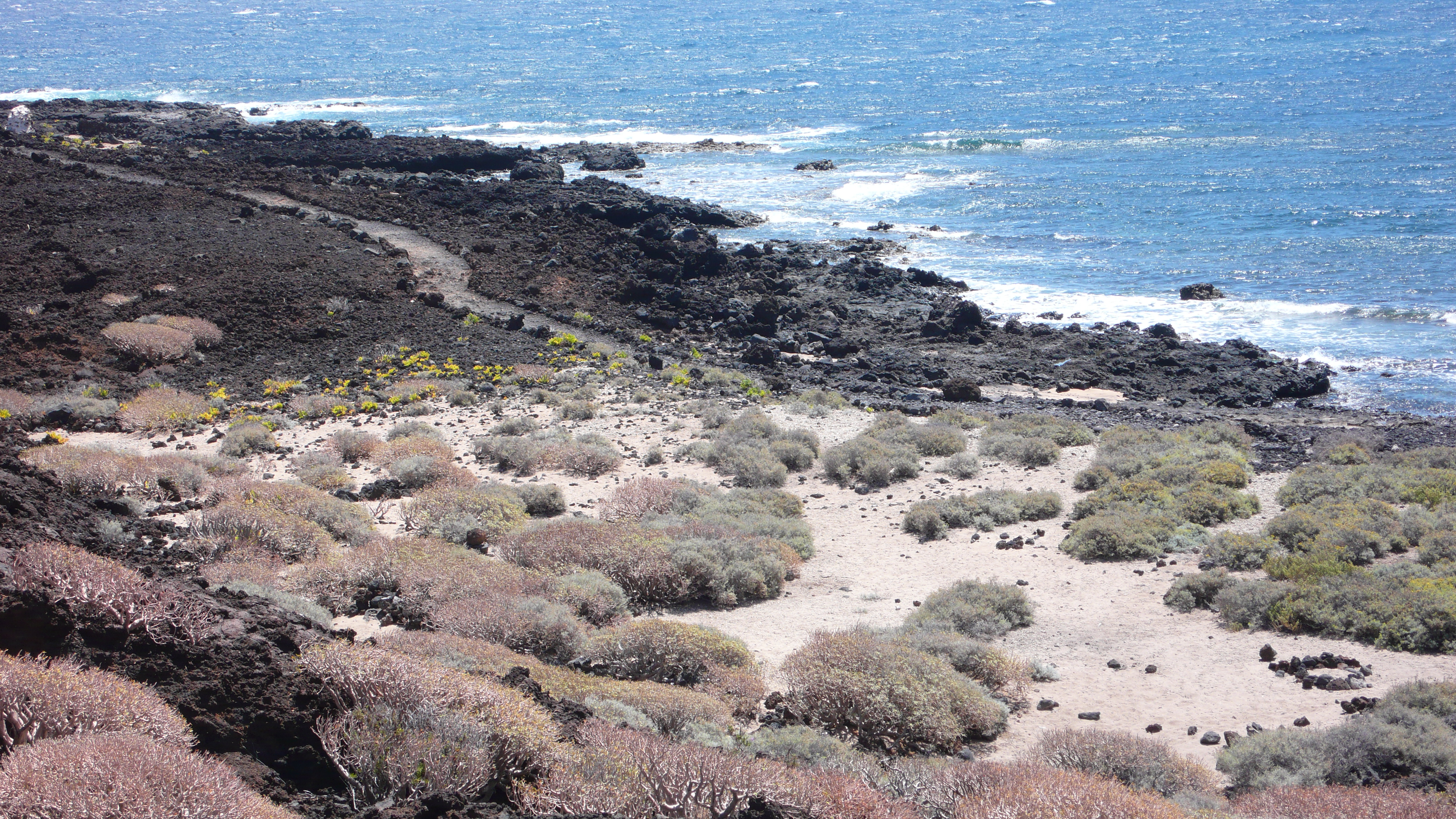
On Monday we took the students up to the Guimar Badlands (Malpais de Guimar) a 40 minute drive north east from where we are staying in San Eugenio.  I like to take students to Guimar on their first day in the field:  the pine and laurel forests that we visit later in the week are physiognomically similar to such forests in Britain.  But the succulent dominated xerophytic scrub of Guimar is utterly unlike anything that most of them have experienced previously.  The field work we do at this site is always related to plant community structure, trying to understand how the biodiversity of the primary producers is “organised”.  There’s lots of different ways to measure community “organisation” in an ecological sense, of course, and this year we are looking at how the plant community changes along a gradient from the strand line limit of the vegetation, inland and away from the salty influence of the sea.  It’s an exercise I’ve wanted to do for a while because it’s always been clear that the plants DO change; we’re just never put numbers on it.  So we ran out four 120 metre transects and identified all of the plants that they intercepted at 5m intervals.  Lots of student frustration as they used a combination of identification keys, hints from me and guesswork to put a name to these unfamiliar species.  But by the peak of the day’s heat in the mid afternoon we had a data set and several sunburned students  [no matter how often you mention the word “sun block” there will always be some who think they don’t need it].

Back at our apartment complex there was time for a rest/shower/power nap, depending on your preference, before we reconvened to enter the data into spreadsheets and start generating some graphs.  And these preliminary data look really good, showing how the salt tolerant halophytes are replaced by the various euphorbias and other species that dominate the rest of the Badlands within about 40m of the lower limit of the vegetation, with other species even less salt tolerant and only making a show after about 90m.  This is biodiversity doing interesting things………

Tuesday was a trip up through the pine forest zone to Las Canadas at the foot of Mt Teide.  A long day through some spectacular scenery, interspersed with collecting data on bird behaviour at a picnic site and checking some populations of an endemic plant the Canary Wallflower (Erysimum scoparium).  Interestingly the populations to the south of Las Canadas have more or less failed to flower this year, probably because of the very dry winter on Tenerife.  Many other species have also not flowered and there are some implications for the pollination biology of this plant which I’m hoping we can quantify later in the week.   Will report back when I get a chance………..over and out for now.