Category Archives: Pollination

Angry Birds! (and startled bees)

The texture of the life academic is nothing if not varied.  After a couple of days working from home thanks to a dose of flu,  Thursday was spent supervising three one hour tests for my first year students, scattered throughout the day from 0930 to 1600.  As I watched over these hurriedly scribbling undergraduates their shifting expressions ranged across boredom, panic, rapt intensity, smugness and exhaustion.   The latter because it’s been a long term and we’ve worked them hard.  The Easter break will be a relief.  Whilst they pored over the questions I shifted between marking second year literature reviews, checking email and gazing thoughtfully out of the window.

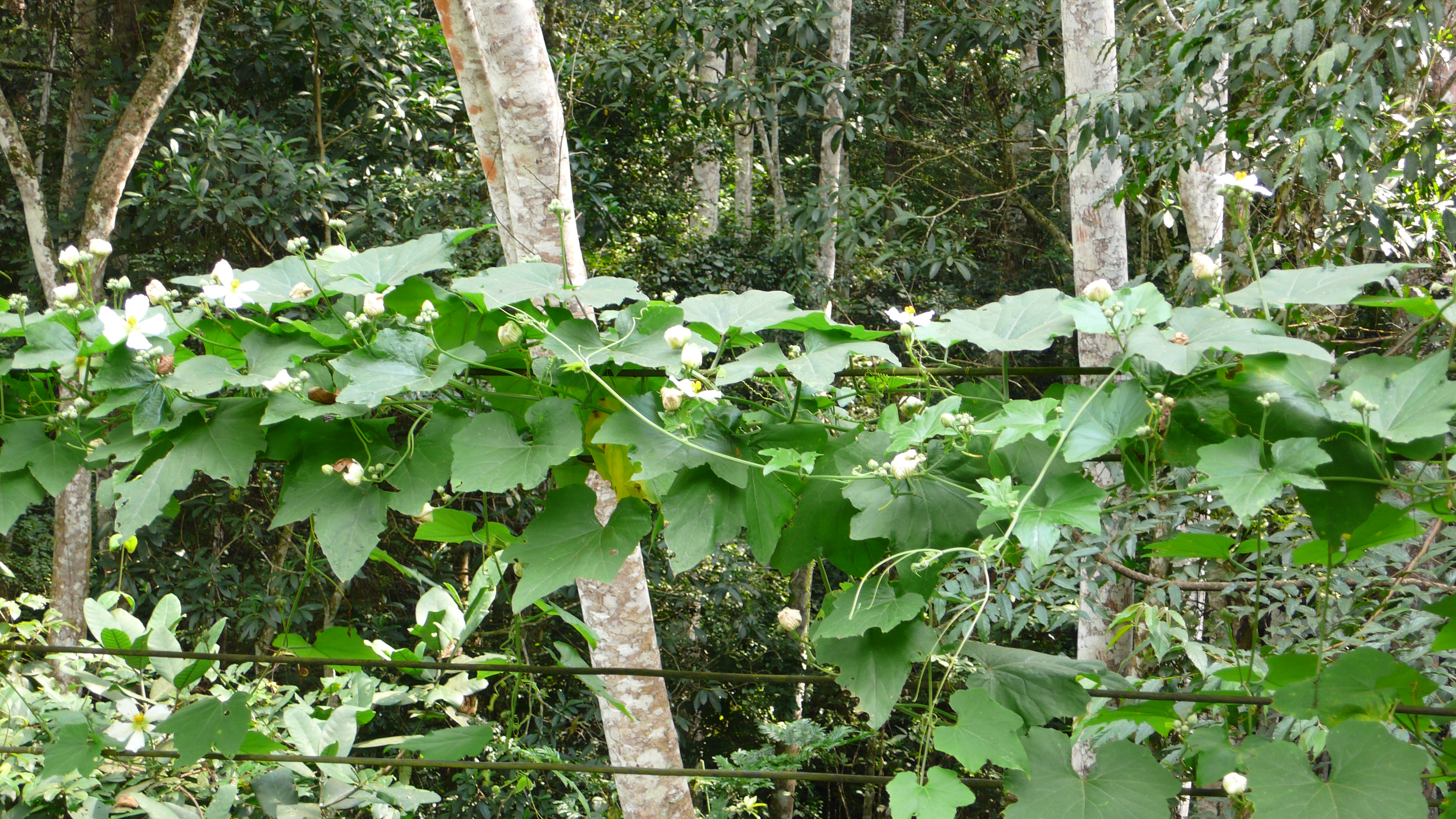
Between tests I went back to the office and worked on completing the first draft of a manuscript that I’ve been promising to send to my co-author Clive Nuttman of the Tropical Biology Association.  It’s based on data we collected in Tanzania last year during the TBA field course whilst observing aggressive interactions between nectar feeding male sunbirds and large Xylocopa carpenter bees.  The bees sneak into the sunbirds’ territories and, if spotted, the birds fly at them, chasing them through the forest.  The plant on which they were feeding is a member of the squash and melon family (Cucurbitaceae) and like many in that family it has separate male and female plants.  Only the male flowers produce nectar;  the females function, in effect, as rewardless mimics of the males.  In addition it seems as though only the bees are pollinators as the birds don’t pick up pollen on their feathers and (crucially) don’t visit the female flowers.  However the birds might be providing a service to the plants by driving the bees to move between plants rather than staying on the male flowers most of the time.  It’s a complex story (which ones in ecology aren’t?) and we’ve only scratched the surface of what is going on, but the aggressive interactions side of it makes a nice starting point for further work.  We’re calling it:   “Angry Birds!  Aggressive displacement of Xylocopa carpenter bees from flowers of Lagenaria sphaerica (Cucurbitaceae) by territorial male Eastern Olive Sunbirds (Cyanomitra olivacea) in Tanzania”.  Let’s see if the journal editor and reviewers will go along with the tongue in cheek pre-title.

Friday started with a meeting between Muzafar Hussain, on of my PhD students you met last time, and Peter Nalder from South Court Environmental.  SCE is a local co-operative dedicated to environmental projects, and organic and permaculture food production.  The group is responsible for managing a number of old, remnant fruit tree orchards around Northampton.  We took a look at a really interesting site over in Abington that was originally a farm.  It’s now been converted into sheltered housing for old folks and a nature conservation area that includes an orchard.  Muzafar is planning to incorporate some of these orchards into his urban bees surveys.  This will add to what we know about the diversity of habitats available to these bees and relates it directly to the ecosystem service of crop pollination that the bees provide.

In the afternoon I drove up to the Wildlife Trust’s offices at Lings House for the first formal meeting of the Nene Valley Nature Improvement Area partners to be held since the announcement that we had secured the funding back in February.   I intend to write more about the Nene Valley NIA in the coming months and years.  But for now it’s enough to say that we’re incredibly excited about the opportunities the NIA will bring to improve the level of biodiversity conservation in the region.  The university is leading on one of five objectives: to assess the range of ecosystem services being delivered in the Nene Valley and the condition of the biodiversity (including habitat as well as taxonomic diversity) that is supporting those services.  We’ll focus on pollination, naturally, but also on other services including fresh water provision and flood alleviation, and possibly carbon storage.  These are new areas for me and it’s going to be a steep learning curve.  A PhD student has already been recruited to work on pollinator diversity and in the near future we’ll take on a post-doc for the main part of the project (if you know of anyone who might be interested ask them to send me their CVs).

Chairing the meeting was Oliver Burke the Wildlife Trust’s energetic and enthusiastic Conservation Manager who has been the real driving force behind the NIA  (which on a map looks like a large intestine squiggling its way across the landscape; in honour of him I renamed it “Oliver’s Colon”.  Not sure if it will stick but I intend to use it in all official NIA documents from now on).  Most of the meeting was concerned with the nuts and bolts of how the finances will work, reporting of activities, membership of the steering group, etc.  Dull but vital if the Nene Valley NIA is to be the success we want it to be.

Also at the meeting was Adrian Southern from the RSPB, standing in for a colleague.  I keep bumping into Adrian in the most unlikely places, first at Biosphere 2 in Arizona in 2001 during an Ecological Society of America meeting that ultimately led to the Waser & Ollerton (2006) edited volume.  Then a few years later at another conference when he was a PhD student at University of East Anglia.  We never really kept in touch so it was a surprise to see him.  Now Adrian’s with the RSPB I hope to talk more with him about some ecosystem services projects he’s working with as part of their Futurescapes programme.  So add that to the lots of different things going on at the moment.  But varied is good.  If tiring.  So looking forward to a week off over Easter.

The Walls of the Garden

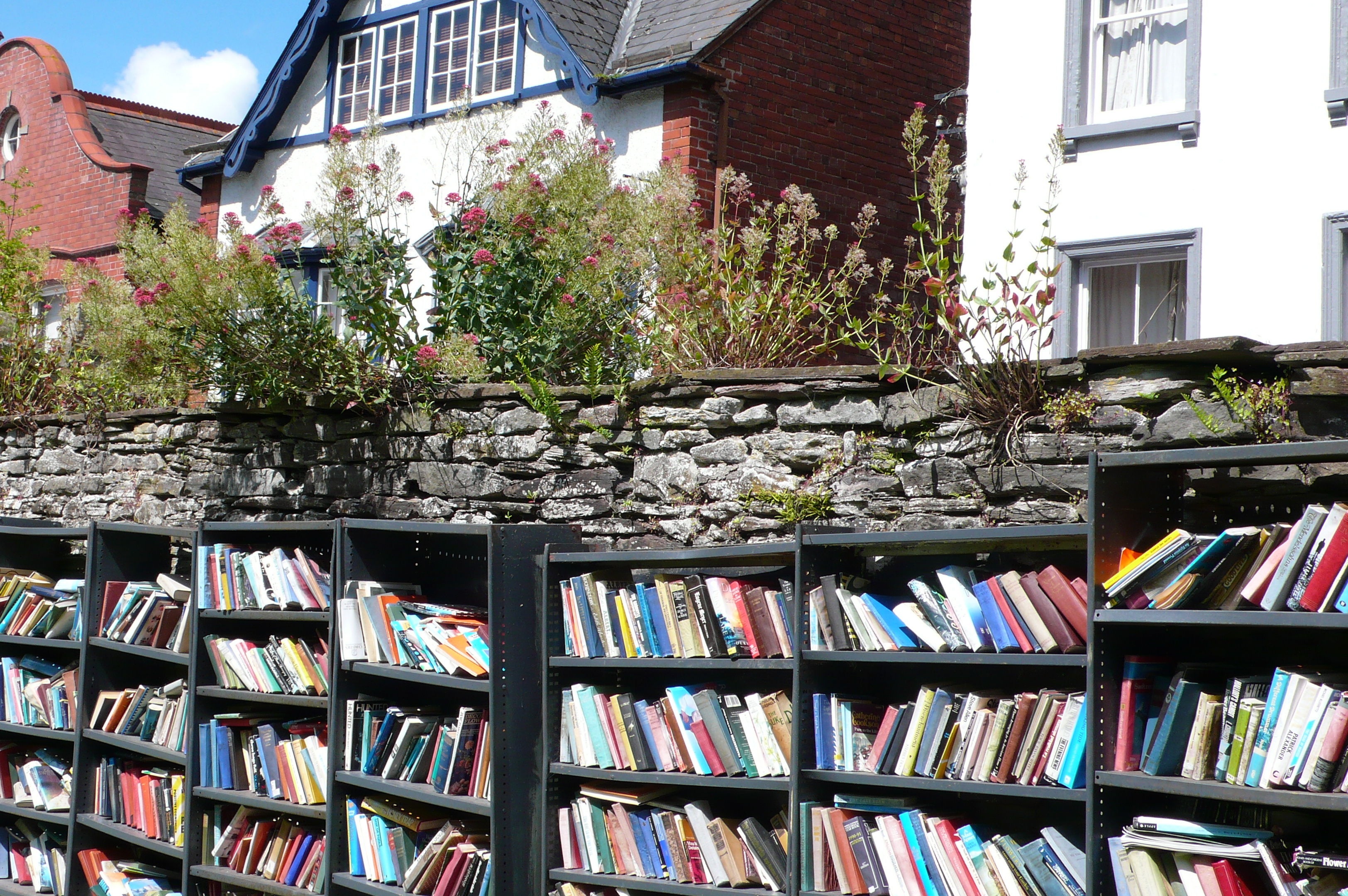
Old stone walls have always held a fascination for me.  Growing up in Sunderland I’d see substantial walls made of the local Magnesian Limestone, rough cut blocks often patterned with impressions and ridges that to my child’s mind looked like exotic coral or fossils of weird animals.  A friend reliably informed me that an odd shaped piece we had found was a “fossil dog’s skull”.  I didn’t believe him.  Even then I was skeptical of unsubstantiated claims.  When I understood more about the intriguing geology of that part of England I discovered that these patterned rocks were of chemical rather than biological origin, but no less interesting for that.

Walls then seemed to become a continuing back drop to my life.  As an undergraduate my final year research project involved clambering around on the 17th century walls of Oxford University’s Botanic Garden, surveying the plants that had naturally colonised them.  The wall flora was an odd mix of exotics and natives, many of which had no obvious means of dispersing on to the walls.  I joked at the time that perhaps the dispersal was by gardeners and ecologists working on the walls.  That may have been close to the truth.

Stone walls provide unique habitats for many plants and animals as they mimic rocky out crops and cliff faces.  Perhaps less obviously, so too do brick walls, as I saw on Friday morning which I spent having a grateful break from the office with Hilary Erenler.  Hils is one of my research students and is funded by the Finnis Scott Foundation.  For the past couple of years she has been surveying the pollinating insects found in the gardens of large country houses around Northamptonshire and into adjacent counties.  Our county is particularly rich in these estates (it’s known as the County of Spires and Squires, a nod to both the large number of churches and the historical pattern of land ownership).  So on Friday we conducted a couple of surveys of some large walled gardens on two private estates.  Amongst other things we measured the lengths and heights of the walls, counted a sample of the density of mortar holes that may have been nest sites for solitary bees such as Osmia rufa.  We also returned some soon-to-emerge bee cocoons to artificial nests as part of an experiment Hils is conducting.

For reasons of privacy and security I’m not allowed to divulge which estates we visited.  But I can say that the walled gardens were fascinating relics of a time when such large households and their staff relied on these sheltered,  productive patches to provide food twelve months of the year.  One garden had retained an avenue of some of the oldest espalier apple trees I’ve ever seen.  Thick and gnarled and festooned with epiphytic lichens and mosses, they must have been planted at least 100 years ago.  Whether the household appreciated it or not, the wild native bees that the walls hosted, and those coming in from the surrounding estate, also played their role by pollinating these apples, as well as pears, cherries, nectarines, beans, squashes and other insect reliant crops.

On the way back to the car we found a small patch of violas, primulas and celandines in a dry spot under a tree.  We counted at least 6 species of bees: two bumblebees (Bombus species); at least two (possibly three) andrenids, including the tawny mining bee Andrena fulvaAnthophora plumipes; and what may have been a Colletes species.  The bumblebees were queens, of course, filling up on nectar to give them energy to look for nesting sites.  But some of the solitary bees were males and exhibited their typical behaviour of patrolling the flowers in search of females with whom to mate.

Back in the office that afternoon I dealt with emails.  One was an unexpected communication from Steve Buchmann regarding a recent paper I’d published with Nick Waser and Andreas Erhardt in Journal of Pollination Ecology.  The paper deals with the historical development of some ideas pertaining to pollination syndromes.  I’ve admired Steve’s work for a long time; together with Gary Nabhan, Steve wrote the now classic book Forgotten Pollinators which can be credited with playing an important role in raising the issue of pollinator extinctions and declines in the public and scientific consciousness.  The JPE paper gives a historical perspective on understanding the interaction between Solanum flowers and their pollinators.  The long standing assumption is that Solanum flowers are pollinated by bees that vibrate their bodies at a particular frequency to shake out the pollen from the anthers, a reproductive strategy termed “buzz pollination”.   Steve was writing to tell me that many years ago he published a paper showing that some Solanum species are buzz pollinated by hoverflies.  I’d missed that paper so am looking forward to reading it when he scans it and sends me a PDF.  It worries me that much of the primary literature from before the widespread use of information technology is going to get neglected like this, because it’s not easy to access electronically.  Depositories that have started to archive older work, such as JSTOR, Biodiversity Heritage Library and Google Books, are great, but there’s still a lot of material to retro-input into these systems.

On the way to invigilate a one hour test for my second year Habitat Ecology and Management students later that afternoon I bumped into Muzafar Hussain, another of my research students, who had been out surveying solitary bees in the urban centre of Northampton.   His first year of surveying in 2011 revealed a surprisingly high diversity of species and he’s continuing that work this year.  Some of these bees are nesting in old stone and brick walls in the back streets behind the main thoroughfares of the town and are exploiting wall plants as pollen and nectar sources, a topic that’s being researched by Lorna, one of my final year project students.  Everything was coming back to walls today…..