Category Archives: Evolution

Garlicky archipelago

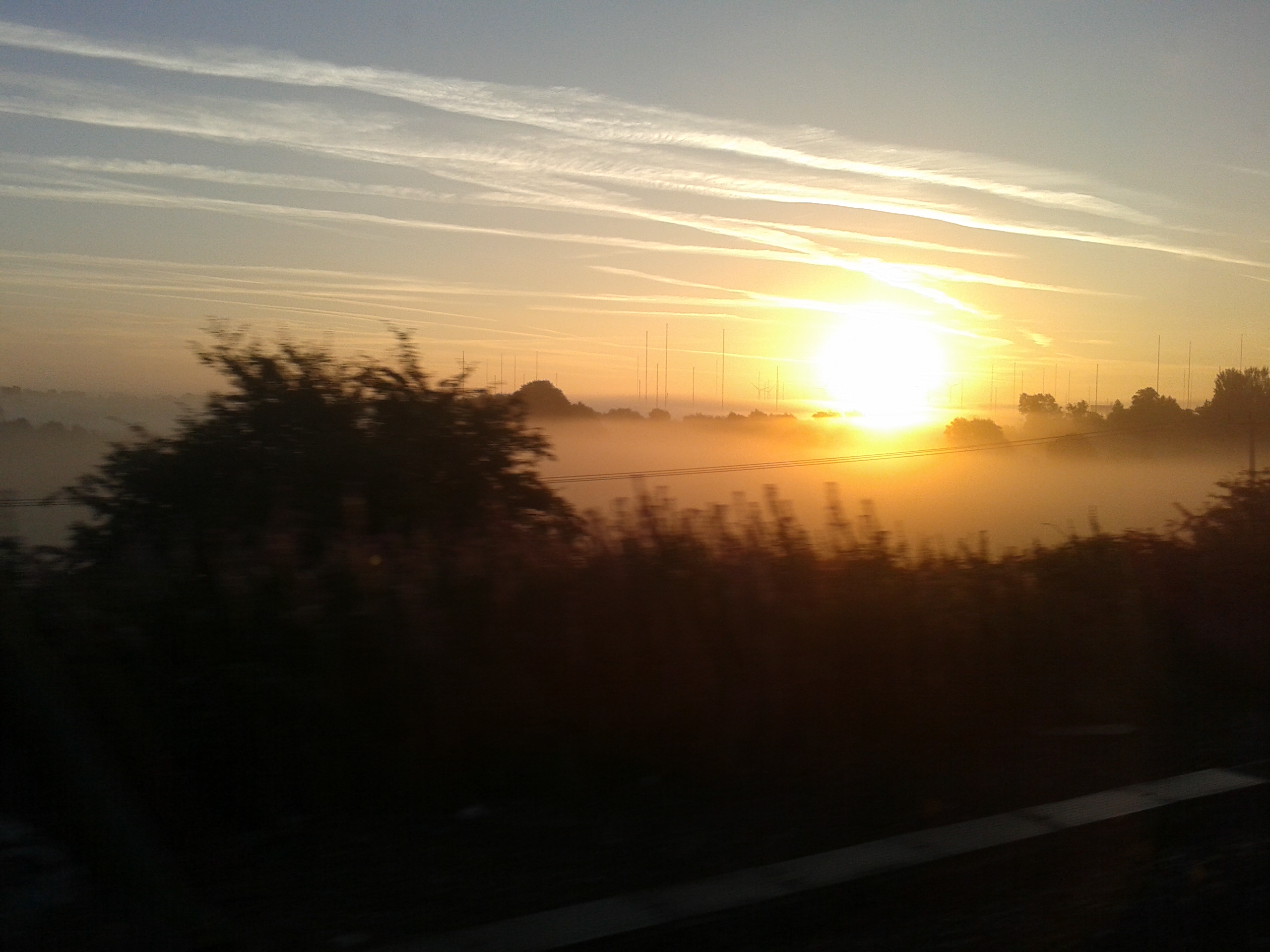
Sunrise from train September 2013

“Garlicky” is a great word, redolent of hot, pungent flavour and nose-filling odour: a Pavlovian word that ignites the senses as it’s uttered.  Perhaps I love the word because garlic is one of my favourite vegetables, a pleasure to both eat and grow.  A Garlic Festival is therefore not to be missed, and my family and I had the opportunity to attend one on the Isle of Wight during a short holiday a couple of weeks ago.  We were joined by university friends I’ve referred to previously, as the first one of us to reach a half century celebrated his 50th birthday.  There was more to the festival than just garlic, but for me its highlight was seeing the sheer variety of different garlic types that can be grown, testament to how this vegetable has been modified from its ancient wild origins in central Asia.  Karin and I bought seed bulbs of four different varieties as additions to the horticultural biodiversity of our vegetable plot, to be planted later in September.   These included the notable Elephant Garlic with its massive individual cloves, which, I’ve just learned while researching that link, is not a true garlic at all but rather a variety of leek.  We live and learn!

Archipelago is another great word and the time we spent on the Isle of Wight, travelling over by ferry from Southampton, served to remind me that the British Isles, with over six thousand islands of various sizes, is by any standards a significant archipelago.  Since at least the explorations of Alexander von Humbloldt, island groups have  been known to host unique species, isolated taxonomically and physically from their closest continental relatives.  Darwin’s later researches showed that archipelagos such as the Galapagos Islands are important as natural evolutionary laboratories, and in previous posts I’ve briefly discussed his unrequited desire to visit to the Canary Islands.  The Isle of Wight is too close to the continent of Europe to have evolved any unique biodiversity but I did pick up the hint of a subtle Island Biogeographic Effect whilst compiling a list of all the bird species I saw over the course of the week.  The list topped out at about 30 species, which I thought was rather low.  Some of the omissions surprised me (not a single blackbird, for instance) and I saw very few individuals of some other common British species.  Now, it could be due to my lousy birding skills I suppose, but it could also be due to the fact that we were on an island, even though it’s less than 1500m across The Solent to the mainland at its closest point.  This is close enough for bumblebees to fly to the island: I’ve seen them shadowing the ferry.  But nonetheless it might be far enough to affect both the diversity and population sizes of the bird life.  Enough wild speculation; I’d be interested to know what serious ornithologists who actually know something about the subject make of this.   

As I finish writing this post I’m on the other great island of my home archipelago, sitting in a bar in Terminal 2 of Dublin Airport.  I’ve been working at University College Dublin as external examiner for their MSc Applied Environmental Science course.  It’s been a fun couple of days reading theses and interviewing chatty, engaged students, which began with a dawn alarm yesterday in order to get to the train station and then Birmingham International in time for a 0850 flight.  Whilst waiting for my taxi I popped into the garden and paused to enjoy the early morning stillness before opening up the chicken coop.  A large flock of black-headed gulls passed low above me, backlit by a thin sliver of moon and silent except for the shuffle of feathers.  From the direction they were travelling I think they were heading from a roost on Pitsford Water and on to destinations unknown.  The garden was also busy with early risen blackbirds and a couple of flitting bats, whilst a little later my taxi passed a rangy fox idly trotting through low mist on the Racecourse park.   It was urban biodiversity at its most sublime.  

All this talk of Northampton is making me feel homesick to be back with the family (Karin, kids, cats and chickens) and start planting garlic.  But there’s just time for another Guinness before my gate opens.  Sláinte!
Rewilding – inside and out

2012-05-11 08.39.32

The last blog entry I posted mentioned the reintroduction of red kites to England, surely one of this country’s most impressive conservation success stories of the past few decades.  Such reintroductions can be seen as one minor aspect of the “rewilding” programme being advocated by some conservation biologists.  In its most extreme form, radical rewilders advocate populating whole landscapes with large herbivores and predators that once roamed these regions but are now locally extinct, either because of human hunting pressure or environmental change (sort of Jurassic Park backed up with real science).  The idea is that reintroducing such animals results in more “natural” habitats in which ecological processes are returned to a more pristine state and biodiversity is maximised.  

There are arguments for and against rewilding in all its forms, and four recent coincidental occurrences make rewilding a topical subject for this blog.  

Coincidence one is that the Guardian newspaper has posted a great animated video about rewilding, voiced by environmental writer George Monbiot, whose work I’ve mentioned previously.  It’s an interesting overview of rewilding, if a bit simplistic; and (spoiler alert!) I’m sure I’d not want to jump naked into a river with hippos!  

Coincidence two is that I’m currently reading Once and Future Giants: What Ice Age Extinctions Tell Us About the Fate of Earth’s Largest Animals by Sharon Levy, which discusses some of the more radical rewilding notions that have been proposed, such as introducing elephants, lions, zebra and other African megafauna to North America, as stand-ins for their Pleistocene cousins which may (or may not) have been over hunted by the ancestors of native Americans.  That’s a controversial topic, as you might imagine, and it’s a book that’s well worth reading, not least because it effectively captures the atmosphere of the various camps of scientists promoting the hypotheses they personally support.

Coincidence three is that a paper was published in the journal Science last week which provides evidence for what can happen when larger animals (often the first to go locally extinct) are removed from ecological communities.  In this case, the seeds of a dominant, bird dispersed palm tree have evolved to be significantly smaller in size in those populations where the largest seed dispersing birds have been removed.  All of this has happened in the last 1o0 years or so, remarkably rapid evolution.  One of the authors, Spanish scientist Pedro Jordano, gives an account of the paper in his blog.  The study is one of the few published that links loss of biodiversity of species interactions to their ecological and evolutionary consequences, and has generated a lot of media attention.

The final coincidence is that a short review paper has finally appeared which I co-authored with Duke University medical researcher William Parker entitled Evolutionary biology and anthropology suggest biome reconstitution as a necessary approach toward dealing with immune disorders“.  You can take a look at the paper (or at least read the abstract) yourself.  But in essence the review places William’s Biome Depletion Theory in a broader perspective of how the loss of species with which Homo sapiens would normally interact (in this case gut worms of various types) can have profund knock-on effects for human health and may explain the epidemics of some conditions that are currently prevalent within industrialised societies.  More controversially, the review advocates that we begin to routinely rewild our gut fauna by selectively introducing one or more types of laboratory-bred worms to the guts of children.  There’s already a lot of discussion around this topic but one day in the future such procedures may become no more unusual than standard childhood vaccinations.

Having said that, there were enough problems convincing land owners that reintroducing beavers was a good thing in the Scottish Highlands, whilst similar plans for wolves and bears have stalled; reintroduction of tape worms to their children’s lowlands will probably take even more convincing.

Wrestling the oiled serpent

Understanding the Earth’s biodiversity is not just about knowing where organisms are currently found, their interactions and community structure, and the threats to them and how they can be conserved.  It is also about understanding the evolutionary origins of that biological diversity.  With this in mind I was interested to read a number of news reports over the last few weeks about the relationship between science and religion, including a piece on a debate between scientists and theologians on the origin of the universe, and the removal of a young Earth creationist perspective in an exhibition about the formation of the Giant’s Causeway.

Whilst religious and scientific views of the universe are not necessarily incompatible, literal interpretations of the origin of the world and its biodiversity are clearly at odds with our understanding of the diversification of life through evolutionary processes.  Reading these reports brought back memories (not all of them positive) of an event I was involved in a few years ago.

Back in 2006, Northamptonshire Creation Group (motto: “Let true science speak” [sic]) approached our former Vice-Chancellor with the suggestion that the University of Northampton might care to put forward a speaker to debate creationist versus the evolutionary world views with a prominent Australian creationist who was undertaking a fairly high profile lecture tour of the UK that year.  I was asked if I was interested in taking part and agreed because I have a long-standing interest in creationist arguments.  One of my main research areas, the ecology and evolution of plant-pollinator interactions, is claimed by some to be one of those (supposedly) wonderful examples of how God has created precise interactions between species which could not possibly have evolved.

Richard Dawkins and others have argued that scientists should not be engaging in such debates  as this because it gives creationists publicity and a credence that they do not deserve.  However my perspective has always been that creationists are not going to go away and their influence on school curricula, for example, needs to be tackled head on.

This debate, in front of an audience of about 200 members of the public, colleagues and students, was undoubtedly the most difficult thing I’ve ever had to do professionally:  we were each given 15 minutes to present our case and that is a very short space of time in which to summarise 200 years of scientific research supporting the validity of the evolutionary world view.  But I gave it my best shot and pointed out at the end of the quarter hour that, had I more time, there was so much more evidence I could have presented, evidence which supports the evolutionary hypothesis.

Hopefully, I went on,  I’d convinced some of the audience of the validity of that way of viewing the world and the life it sustains, though I didn’t imagine that I’d changed my opponent’s worldview.  He was clearly a man of great energy and commitment to his cause to have sustained his point of view for 30 years.  But I wished for his sake that he’d not wasted that energy on a debate which was over long ago. which in fact Charles Darwin thought was finished when he died in 1882.

Rather than squabble over the source of biological diversity, I continued, I would rather that these creationists spent their time and energy on trying to save biodiversity.  Human activity has put enormous pressure on the species with which we share this planet and whole ecosystems are being dramatically altered even as we argued that night.  If creationists really care about God’s creation of life, why are they not furious at the way humanity treats it?  Why are they not directing their passion towards saving it?

I thanked the audience for their time and attention and passed the floor to my opponent.  What followed was not the evidence based “creation science” [sic] I was expecting (having researched his previous claims on the subject of the Earth’s age, etc.) but a rapid-fire delivery of theological arguments.  Over those 15 minutes I counted 50 PowerPoint slides, a Biblical smoke and mirrors approach to arguing evolution.  Interestingly, it was clear when he was loading up his presentation that he had about 8 different “Northampton lecture” that he could choose from, depending upon the tack that I took.  Had I gone for a theological approach to the debate, he would have argued “science” I am sure.

After our presentations we had an opportunity to ask one another one question before it was opened up to the audience.  The question that was addressed of me is one that to this day I don’t really understand.  To paraphrase he asked:

“Can you provide a single example of a species which has evolved into another species, without reference to the assumption that evolution has already occurred”

The second half of the question really made no sense to me and perhaps was designed to throw me off.  It worked: I asked my opponent to explain the question and received some heckling from nearby creationists who accused me of being evasive.  But he clarified his question: what he was really asking was, could I provide examples of species evolving recently.  I talked about antibiotic resistance in bacteria, insects which are now immune to pesticides, and also mentioned peppered moth evolution.  Then the debate was opened up to questions from the floor and the first thing I was asked (by a smirking creationist) was what the peppered moths had changed into: other moths or something different?  I explained the difference, in timescales and outcome, of microevolution and macroevolution.  But that was lost on him.

There was also a question about why peacocks and other species were so beautiful, if not for human enjoyment?  I spoke about sexual selection but my opponent countered that sweet peas in his garden were never visited by bees because they self fertilise, so why are they still attractive?  I suggested he grow some different Lathyrus species, ones which had not been selectively bred by people.

So it went on, trading example for example, neither side giving any ground, until we ran out of time .

The woman who asked me the question about beauty happened to be of Afro-Caribbean descent, and came up to me afterwards when the formal debate had ended.  She forcefully asked how I could support a theory which, according to her, stated that “black people are closer to apes and therefore lower on the evolutionary ladder than white people”.  I firmly explained that evolution says nothing about racism and “Darwinian” arguments about racial superiority were a later bastardisation of Darwin’s original ideas.  But to no avail:  the woman “knew” Darwin was a racist; everyone in her church knew that.

Another post-debate exchange with a creationist went something like:

Him:  Darwin states in Origin of Species that the fossil record was insufficient to support his ideas.

Me:  That was 150 years ago.

Him: Yes, but Darwin said it.

Me: But that was 150 years ago; as I showed, we have acquired an enormous amount of new fossil data since then.

Him:  But Darwin said it and he’s the father of evolution.

Me: But he was only one scientist and that was 150 years ago.

Him: But Darwin said it.

Etc. etc. etc.  Darwin seems to have an almost mythic, bogey-man status amongst creationists, as if everything he wrote HAS to be true and if it’s false then evolution is not true.  A weird interpretation of how science works.

At the end of the evening I went home exhausted and not a little depressed.  Wine was drunk and the evening dissected and I wrote up some notes about the event, including the title of this blog.  That phrase struck me as a suitably Biblical description of trying to have rational arguments with creationists: well greased serpents will always have a way of squirming out of the grip of logic and evidence, whilst throwing distracting coils around your limbs.  I don’t regret taking part in the debate but I’m not in a hurry to do another.

Flattery Gets You Nowhere (reduce, reuse, recycle part 1)

It was always my intention, when I began this blog, to use it as a vehicle to rework and reuse scraps of writing I’ve done over the years that had no real “official” outlet .  Hence the subtitle of this posting.  The following is a book review I wrote on the Amazon website in 2007, after I had read Christine Garwood’s book Flat Earth: The History of an Infamous Idea.  It’s a really interesting and well written piece of science history that gives a perspective to science that goes far beyond the immediate topic area of cranky ideas.  I have to confess to a potential bias: the author is a friend of mine.  But that doesn’t make the review any less genuine: if I’d not enjoyed the book I’d have kept quiet!

The pathways through which the history of scientific progress can be mapped are strewn with the remains of overturned ideas and outdated pronouncements, some cranky and (with hindsight) nonsensical, others perfectly reasonable given the state of knowledge at the time. Newtonian physics, though sensible at the human scale, suddenly fails to convince at a subatomic level, not because of any failings on the part of Newton, but because technological and mathematical advances have allowed modern physicists to probe closer and deeper.

Similarly, in biology, many established taxonomic ideas concerning the evolutionary relationships between major groups of flowering plants, mammals and other large clades are, thanks to molecular phylogenetics, shown to be erroneous. And so science advances, from the clearly wrong to the (probably) correct, leaving in its wake the cast off ideas of previous generations.  Except sometimes, when science (or at least fringe perceptions of scientific understanding) takes a backwards stride of such length that one begins to question whether scientific “facts” mean the same thing to everyone.

The concept of the Flat Earth may be a unique example of how a fact (the globularity of the Earth) could be established very early in the development of the rational analysis of nature, only to be rejected by a minor, but vociferous, cohort of “true believers”.  As this fascinating book by Christine Garwood relates, observations by Aristotle confirmed the true shape of the world, and there were no serious challenges to this idea until the 19th century.  Mediaeval scholars accepted a spherical Earth (disc-shaped mappae mundi, I was interested to learn, were symbolic, not cartographic, in intention) and the fears raised by the prospect of Columbus plunging over the edge of the world were a nineteenth century fiction concocted by the author Washington Irving.

The emergence of Flat Earth views in Victorian England as a serious (at least to their promoters) attack on received scientific wisdom has to be seen as an unusual reverse in thinking, not least because the “Zetetic” Flat Earthers sought to use science against itself to accumulate evidence to support the idea of the Earth as a plane, not a planet. In this vivid and well researched account, Christine Garwood moves easily between historical scholarship and popular science to follow the development of Flat Earth thinking from its rejection by the Ancient Greeks through to its Victorian revival, when learned men as distinguished as Alfred Russell Wallace could be convinced to take part in parochial experiments along England’s canal system to try to prove that the Earth was a globe. Darwin, Huxley and others saw little value in rising to the Zetetics’ bait, and Wallace himself regretted his involvement in later years (but seems to have needed the cash at the time).

As the author demonstrates, the death of the early major movers in the sphere of Flat Earth promotion was followed by the emergence of other, equally committed and frequently just as eccentric personalities, until eventually popular support for the notion of a Flat Earth ebbed away with the first manned space flights, and the photographs and experiences which were returned to Earth. Flat Earthism did not entirely die, however, and no amount of “proof” could dissuade the opinion of zealots such as Samuel Shenton, founder of the International Flat Earth Research Society. Like fundamentalists of all persuasions, he had an answer for everything, however contrived and paranoid.

In Garwood’s thought provoking book our understanding of the development of fringe ideas in the history of science is advanced through an analysis of the primary sources relating to an intriguing subject. The book is scholarly but accessible, at once entertaining and authoritative, and also topical in the context of the increasingly widespread anti-evolutionary views promoted by some religious groups. Unsurprisingly Garwood finds parallels between Creationism and Flat Earth thinking, not least because until recently they were promoted by groups with similar world views and memberships.

Flat Earth ideas continued to be advanced in the late 1960s and early 1970s, as both an academic jest with serious anti-establishment overtones by the International Flat Earth Society of Canada, and as a continuation of Zetetic thinking by other groups. Currently these ideas are defunct and even the most literal of Biblical literalists reject the notion, making it unlikely to re-emerge. Even if it did, no modern scientist would risk credibility by debating it.

Creationism is a different matter entirely and some professional scientists (myself included) have opted to debate with Creationists despite the views of (amongst others) Steve Jones and Richard Dawkins that such exposure only provides oxygen for their cause. Unlike the Flat Earth theorists, however, anti-evolutionists are not simply going to fade away and their influence is now felt in American classrooms and textbooks. How should scientists respond? With reasoned arguments that convince the public and politicians (if not the fundamentalists, who can believe what the hell they like as far as we’re concerned) or by ignoring them and hoping they might disappear in their own infighting?

Both Flat Earthism and Creationism reflect wider social and attitudinal differences regarding the role of Homo sapiens in nature: as rapacious exploiter; or careful steward of the Earth; or as an ecosystem component in its own right. Science can provide data and theories and models, but it is up to individuals how they choose to interpret and act on such information, or whether they decide to deride or ignore it. Christine Garwood’s first book is a marvellous insight into just how deeply self-delusional beliefs can become embedded in the minds of intelligent, but blinkered, individuals, and it is hoped that her subsequent books examine these themes in more detail. Perhaps her successors 200 years in the future will be similarly taken to write about the incredulous movement that denied that Earth’s climate was changing and that the human species was fundamentally altering the biosphere through pollution and over-exploitation of resources, despite the weight of data. And let us hope that we still have a society that can appreciate the irony.

The Roof Tiles of Chirche (Darwin’s Unrequited Isle part 3)

Architectural analogies in evolution are not new.  The most famous (and, in its time, controversial) is perhaps Gould and Lewontin’s “Spandrels of San Marcos and the Panglossian Paradigm” in which these prominent evolutionary biologists suggested that some features of the biology of species were secondary “emergent” structures which formed from the conjunction of other, evolved characteristics.  That is to say these features are not evolved in their own right, they are simply by-products of the evolution of other factors.  In this respect they are like “spandrels” – the ornamented space between two structurally significant elements, for example the arches and the domed roof they uphold in the Basilica di San Marco in Rome.  Gould and Lewontin were following a metaphorical path that had been traversed by many major figures in evolutionary biology.  Most notably, Darwin used the notion of the architect, contrasting natural with artificial selection, in a number of his books, including “The variation of animals and plants under domestication”.

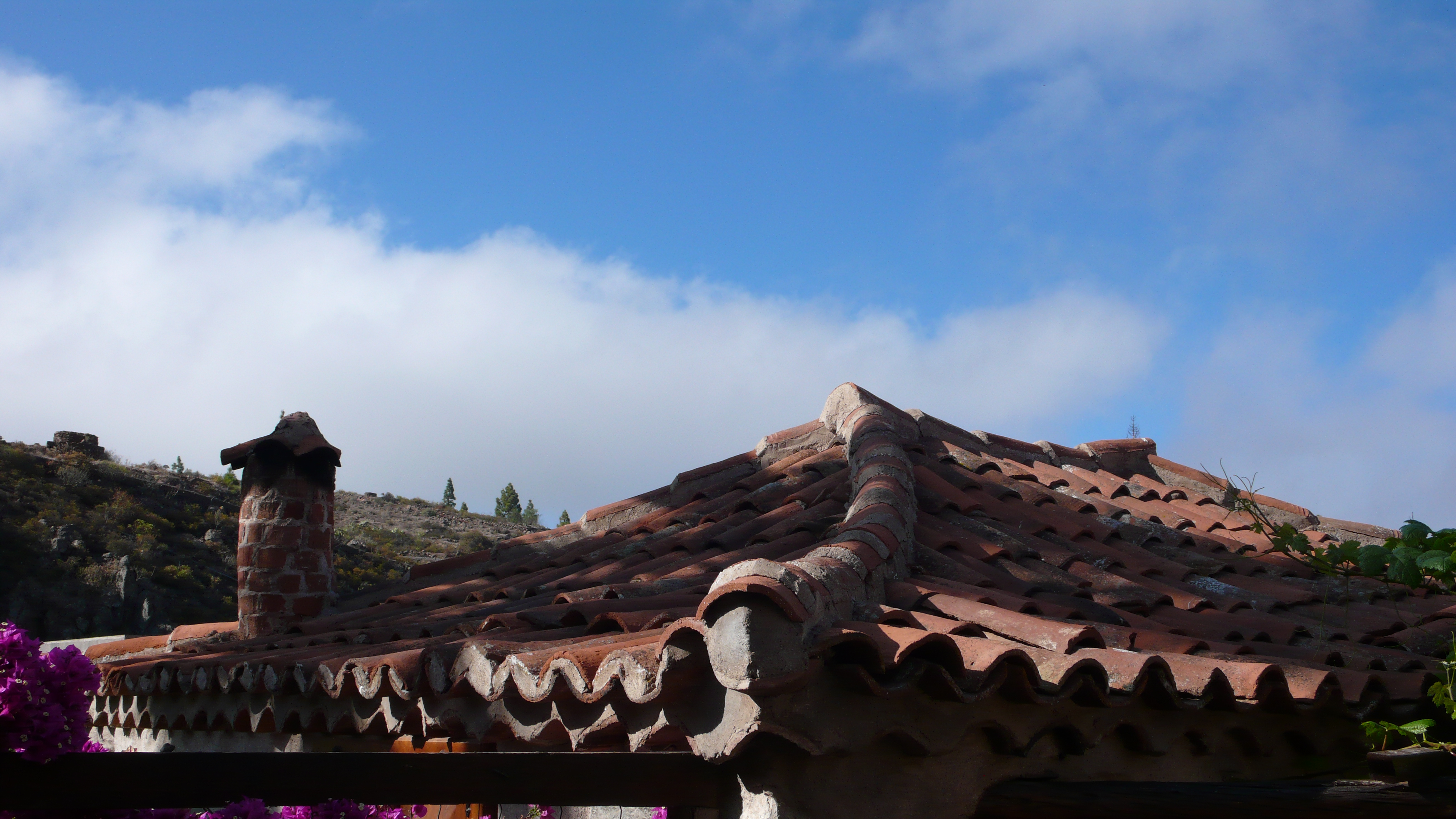
Another architectural analogy occurred to me over the past couple of weeks, time Karin and I have spent back in Tenerife pursuing field work funded by a small grant from the British Ecological Society.  We are staying in a cottage in the pretty village of Chirche in the west of the island.  The older properties, our rented castita included, are roofed with traditional, hand made rough clay tiles that are slim, curved and tapering towards one end.  Tiles are carefully laid curve up and curve downwards in alternating rows so as to both shield the building from the weather and to shed the rain from the roof in the channels formed by the up-curved rows.  These same tiles are used along the ridges of the roof, in contrast to roofing back in the UK where differently shaped tiles would serve for roof and ridge.  Not only that but the same basic curved and tapering form serves as a structural element for the tops of walls, as half pipes to direct the flow of water, and as building blocks for chimney stacks, etc.

It’s a wonderful example of economy of manufacture and purpose, using the same basic element to serve multiple functions.  What has this to do with biodiversity you ask?  It’s a fitting observation for this trip, in as much as we are studying flowers and their visitors.  Flowers are another great example of the economy of evolution: all of their basic elements (male stamens, female stigma style and ovary, petals and sepals) have evolved from the same basic botanical element – leaves.  If that seems unlikely take a look (a really close look) at some of the fancy, highly bred flowers for sale at your local garden centre or plant nursery.  Some will have leaf-like structures deep within the flower where genetic mutations have resulted in the expression of organs rather more like their ancestral form than like stamens or petals.

The purpose of returning to Tenerife is to collect more data as part of an on-going project I’ve been running within our undergraduate field course.  The Canary Wallflower (Erysimum scoparium) has flowers that change colour; they are pure white when they first open and from the second day onwards they darken to violet then ultimately purple, staying on the plant for up to 10 days.  At the same time the flowers stop producing nectar.  The pollinators learn to associate white flowers with more reward and focus their attention on the newly opened blossoms.  This is clearly an evolved strategy as it benefits the plant to have its most recent flowers preferentially visited, rather than the older flowers that have already received pollen.

In an earlier paper we demonstrated, by removing purple flowers from experimental plants, that these older flowers act as a long-to-medium range advertisement to pollinators (the plants look purple from a distance).  It’s a very intriguing system.  We now have about 10 years of data showing that the main pollinator is an endemic solitary bee (Anthophora alluadi).  But there seems to be some variation between years, with a wider range of different bee species present in years following very dry winters (such as this one) when there are fewer other plants in flower.  So the idea that we are testing is that the relative specialisation of the plant (i.e. how many pollinator species it has) is context dependent: in some years/sites it is a specialist, in others a generalist.

Biodiversity is not fixed in time or space.  It varies at all scales and, for this plant and its pollinators, the biodiversity of interactions between them is stable only over modest time periods.  Over the millions of years these plants and bees have existed in the Canarian archipelago, their exact roles within the system have probably varied enormously, like actors improvising their parts dependent on the whims of external forces, in this case weather conditions.  The roof tiles of Chirche saw little rainfall during the last winter; bad for the local farmers and the other people who depend on this rain.  But good for ecologists wishing to study how variation in climate can affect biodiversity.

There’s a reason why toilet seats are curved

The recent announcement of a study showing a correlative link between the loss of biodiversity and the decline of human cultural diversity (specifically of local languages) reminds us once again that studying biodiversity is more than just about discovering how many species there are in different geographical locations and how they can be conserved.  The remit of biodiversity covers all levels of biological organisation, from genes to species to ecosystems, including the human species and those ecosystems we have created for ourselves.  Not only that, biodiversity is also about why species occur where they do and how they have adapted to their local conditions, including interactions with the other organisms that shape their ecology and evolution.

Plants and pollinators are a good case in point: if there is not a suitable size or morphological fit between flower and animal, the animal will not be able to obtain its reward and the flower will not receive pollen. Both immediate ecological context (which species are present in a community?) and longer term evolution (how have these species adapted to one another?) are important in this regard.  These thoughts were very much on my mind as I sat uncomfortably on a rectangular toilet seat in a very swish hotel in Switzerland last week.  There’s a reason why toilet seats are usually curved: it fits the usual shape of our arses.  Rectangular toilet seats are not well adapted to their role and do not work effectively: they are uncomfortable and a victory of Swiss style over human functionality.  The same applies to the convex saucers on which breakfast coffee was served.  They were the anthithesis of biological adaptation where the stylish patterns of a butterfly’s wings, say, have evolved for a purpose (display and/or camouflage) rather than to look pretty.

Karin and I were in Switzerland at the invitation of Nadir Alvarez from the University of Lausanne.  Nadir and his  group are using the latest molecular techniques to carry out fascinating research on species interactions and patterns of phylogeography, including work on one of my favourite groups of plants, the genus Arum.  At Nadir’s request I gave rather a broad talk on the theme of the ecology and conservation of plant-pollinator interactions in highly managed landscapes, focusing on the work that members of the LBRG have done in Northamptonshire and adjacent counties.  The questions afterwards suggested that it generated quite a lot of interest in the audience of about 50 faculty members, postdocs and research and MSc students.  Before and after the lunch hour talk I spent time chatting with postgrads and staff about their research projects, moving from office to office in a carefully Swiss-timed fashion, always conscious that outside each window were fantastic views across Lake Geneva to the snow crowned Alps beyond: “You forget it’s there after a few weeks” claimed one postgrad.

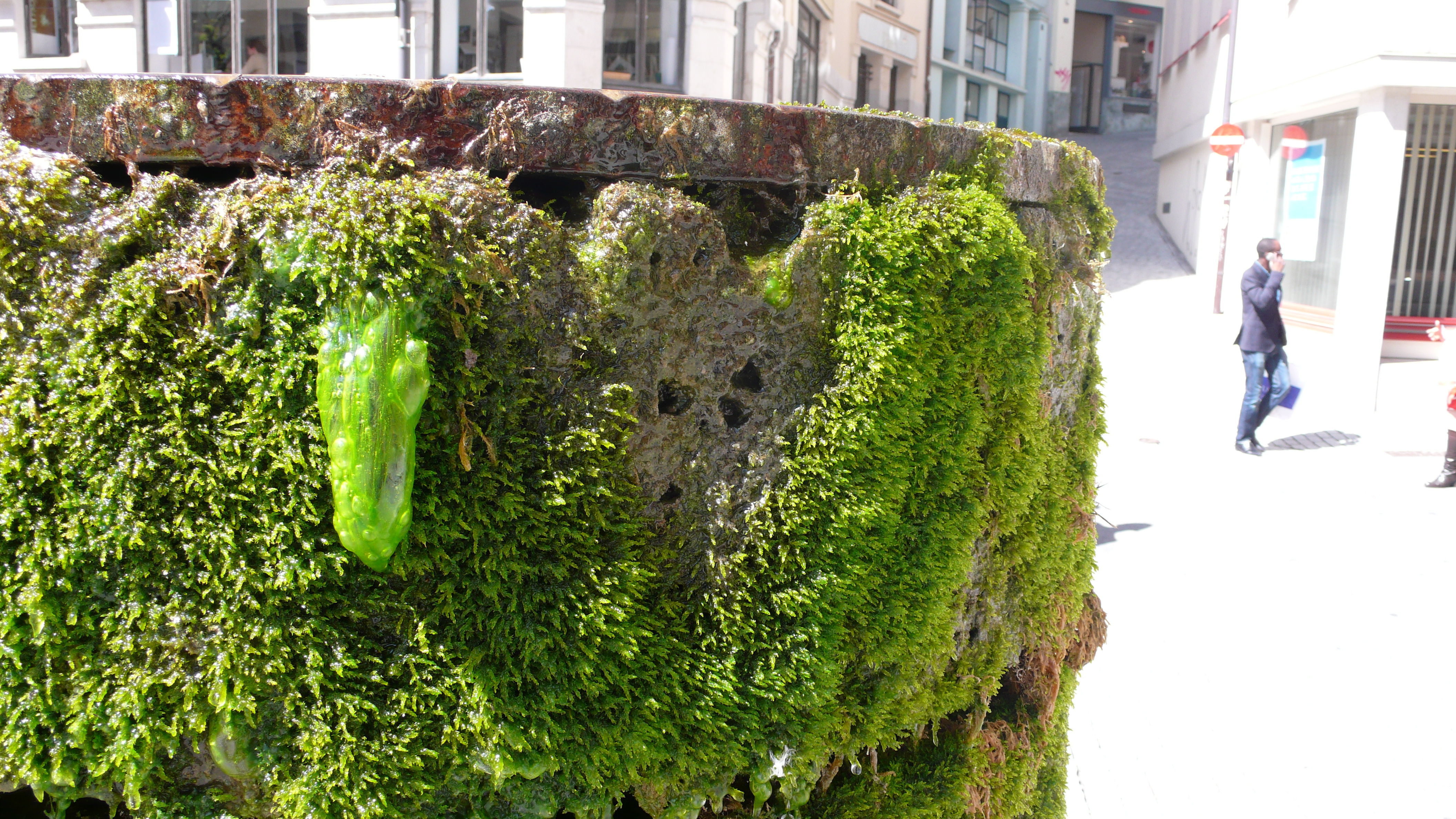
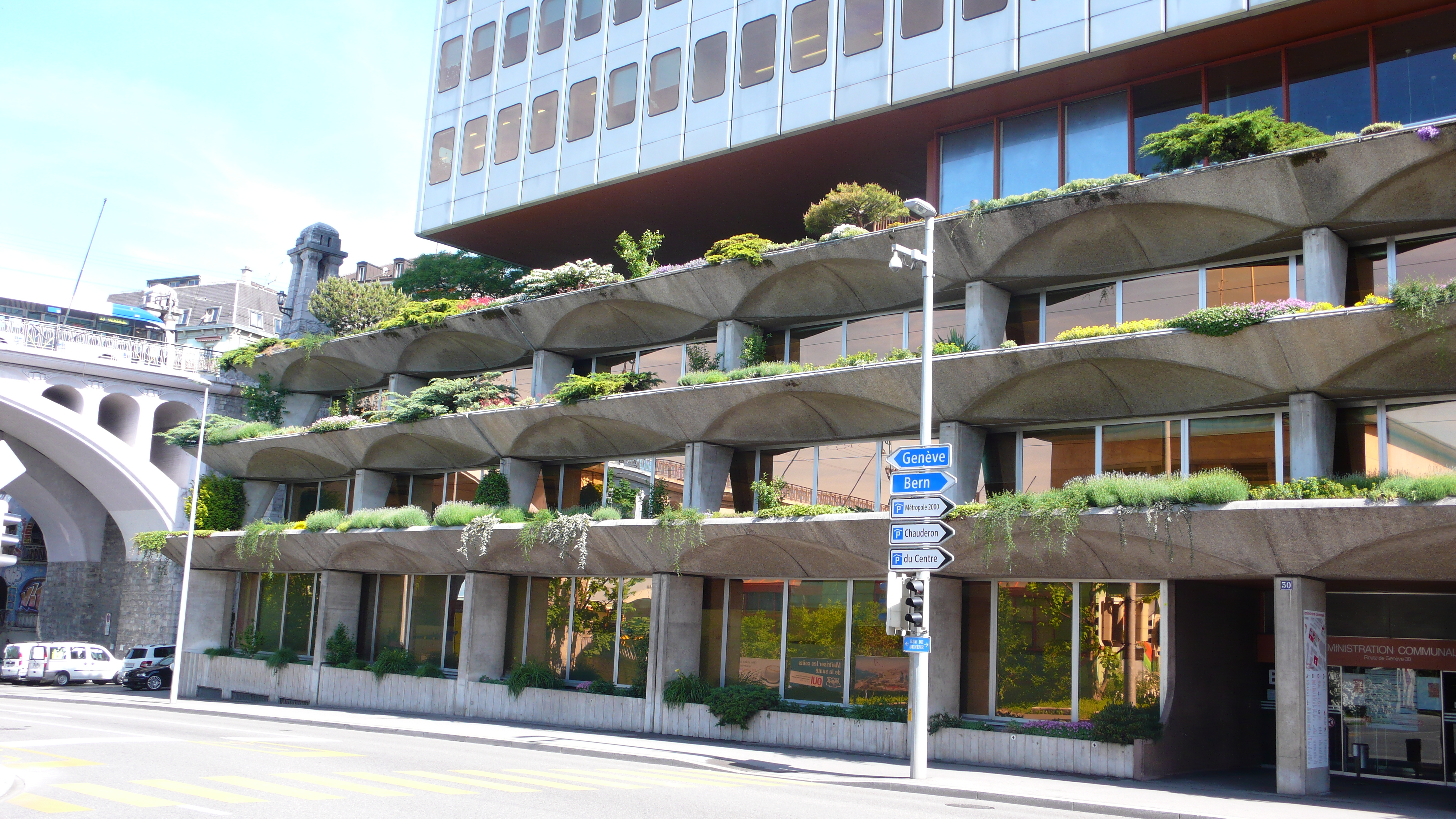
Lausanne is a lovely city which is enhanced by the human-contrived biodiversity of planted roofs, green walls, and public green spaces.  And by the species which naturally colonise suitable habitats, such as the moisture loving mosses and algae which have found a home in the stone and steel fountains designed by Georges Descombes  in La Place de la Louve.

Back in Northampton late Friday night, then up early Saturday morning to prepare a talk for the local branch of Friends of the Earth’s Bee Cause campaign launch.  It was the usual general over view of what pollination is, why it’s important, why pollinators are declining etc., etc.  I pointed out at the start that the public audience (once again of about 50) were getting a free taster of what, from September 2012, our students will be paying £8,500 per year to listen to.  They seemed to enjoy it and had some interesting questions afterwards, though one guy claimed my talk was too long and “a bit like being in church”.  This was the same individual who asked me whether “wasps and nettles can sting each other” which perhaps gives an insight into his world view.

Back at the coal face of university life this week, however, the dominant theme has been marking student work.  Lots of of it, as we work to get final grades into the system prior to exam boards in early June.  A pile of about 90 first year reports on woodland community structure, based on field work we carried out last autumn, has been hard work but in many ways enjoyable.  Some of these students have done very well and really engaged with the aims of the assignment.  Quite a number independently found a recent study on the importance of rot holes in trees for maintaining epiphytic lichen diversity.  Has anyone looked at this in British oaks?  It would make an interesting final year student project.  Which brings us back to the links between biodiversity and human culture, because lichens have been used for millenia as sources of pigments for painting, for example in illuminated Saxon manuscripts such as the Lindisfarne Gospels.