
Sometimes being a consulting scientist means having to make difficult choices about where to be. Unfortunately, being in two places at once is not yet an option!
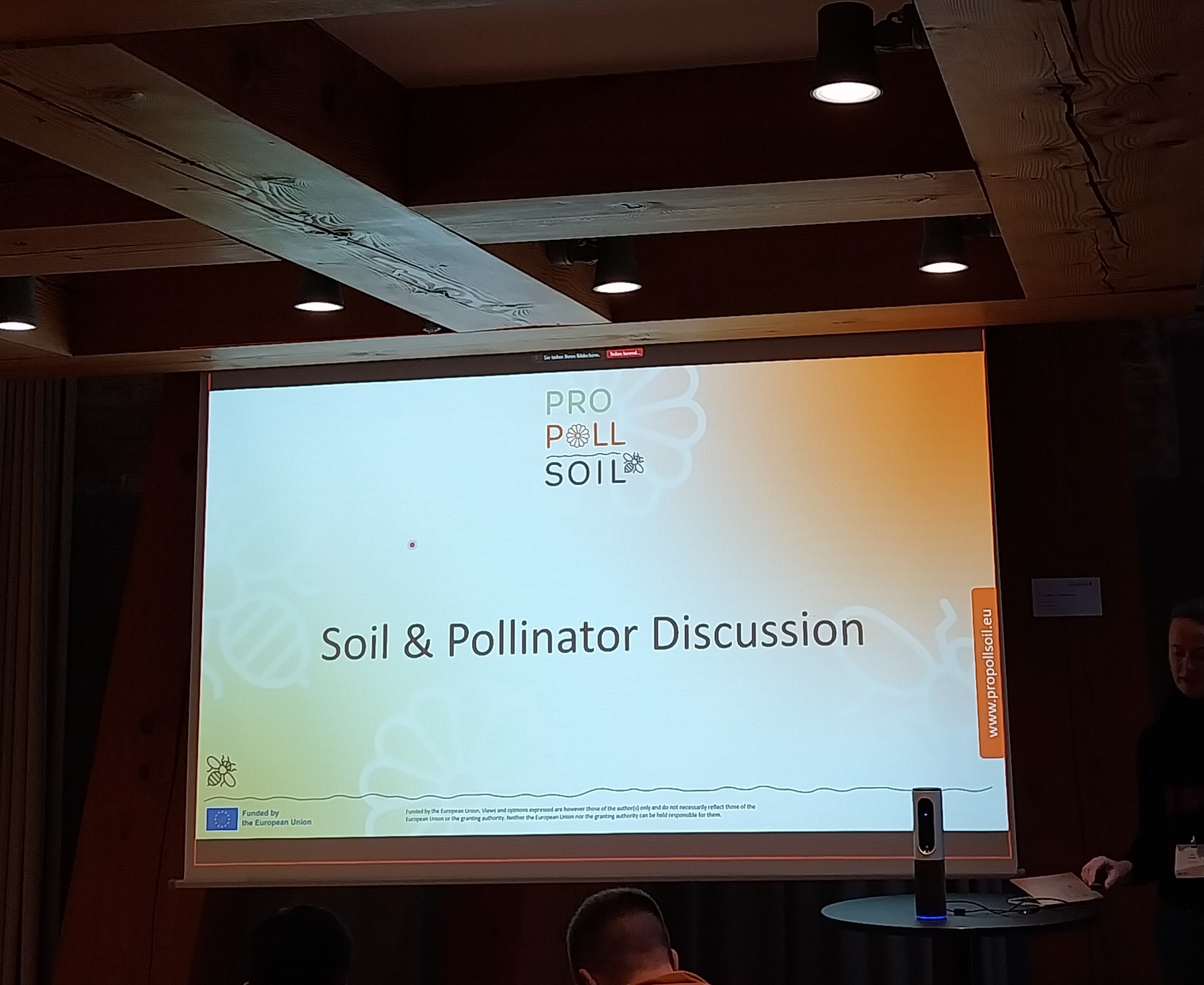
On Monday 16th November, I would very much have liked to be at Westminster for the launch of a new parliamentary report on invasive species and their threats to pollinators. Instead, I was in Aarhus, Denmark, attending the first annual meeting of the European research project ProPollSoil, in which I’m involved.
I was genuinely sorry to miss the parliamentary launch, particularly as I had contributed to the inquiry earlier in the year. But the coincidence of these two events highlights some important connections between pollinator research, conservation and policy.
Pollinators in Parliament
Back in July, I travelled to Westminster to give oral evidence to an inquiry organised by the All-Party Parliamentary Group (APPG) for Bees, Pollinators and Invertebrates, chaired by Barry Gardiner MP and supported by the Royal Entomological Society. I was joined by Professor Helen Roy of the UK Centre for Ecology & Hydrology and Professor Phil Stevenson of the Royal Botanic Gardens, Kew.
The resulting report, Securing the future for UK pollinators: Preparing against the threat of invasive species, was published on 16th November. Drawing on written and oral evidence from researchers and conservation organisations, it makes ten recommendations for strengthening Britain’s response to invasive non-native species. These include improved biosecurity, better surveillance and early detection, more effective coordination between government agencies, and greater use of technologies such as environmental DNA and bioacoustic monitoring.
The report considers threats from species such as the Yellow-legged Hornet (Vespa velutina), the varroa mite and invasive plants. As I’ve previously discussed on this blog, the actual impacts of particular invasive species need to be assessed carefully rather than simply assumed. And it’s important to distinguish between non-native species generally and those that genuinely cause ecological damage.
One recommendation particularly appeals to me: we should measure the success of invasive-species policies in terms of ecological outcomes, including the health and resilience of plant–pollinator networks, rather than simply counting how many invasive organisms have been intercepted or eradicated.
This reflects something I’ve argued for many years. Biodiversity is not just about the species present in an ecosystem, but also about their interactions and the outcomes of those interactions. When an invasive species arrives, it can alter relationships between plants, pollinators and other organisms, sometimes with far-reaching consequences. Our research on introduced plants losing their pollinators and other mutualists provides another example of how biological invasions can reshape ecological relationships.
There’s also a historical footnote that pleases me. Following a Westminster pollinator seminar in December 2015, I wrote that my fellow speakers and I strongly supported establishing an APPG concerned with all pollinators, rather than just honey bees. Eleven years later, it’s encouraging to see that such a group is not only established but producing substantive policy recommendations.
Meanwhile, in Denmark…
While the new report was being launched in London, some 40 colleagues from across Europe were gathering in Aarhus for the first annual meeting of ProPollSoil.
As I explained when the project began last year, ProPollSoil is investigating the relationships between soil health and pollinator biodiversity. It’s an important but frequently overlooked dimension of pollinator conservation. After all, pollinators don’t spend their entire lives visiting flowers. Many bees nest underground, while other pollinating insects spend part of their life cycle developing, sheltering or overwintering in soil. What happens beneath our feet can be just as important as the availability of flowers above ground.
Our three-day meeting included updates from the different research teams, results from an expert survey, discussions about soil–pollinator relationships, and sessions on data management and the development of better approaches to monitoring biodiversity. One aspect of ProPollSoil that I’m particularly involved with is EuroBeeSoil, a citizen-science initiative using iNaturalist to collect observations of ground-nesting bees across Europe. I introduced this initiative on the blog earlier this year, and we’re continuing to encourage people to contribute records. You can explore the observations and take part through the EuroBeeSoil project on iNaturalist.
The connections run deeper than you might think
At first glance, a parliamentary inquiry into invasive species and a European research project on soil-dependent pollinators might seem rather different activities. But there are several important connections.
The first is soil itself. The parliamentary report identifies the international trade in horticultural plants and soils as a major pathway through which invasive organisms can enter Britain. Indeed, it cites an estimate that around 40% of invasive species arrive through this route. Soil is therefore both an essential habitat for many pollinators and a potential means by which harmful organisms are transported around the world.
The second connection is monitoring and evidence. Both initiatives recognise that effective conservation depends on knowing which species are present, where they occur, and how their populations and interactions are changing. Citizen science has an important role to play, but observations also need appropriate validation and scientific analysis if they are to provide reliable evidence for conservation decisions.
The parliamentary report explicitly recommends integrating citizen-science records with expert validation and spatial modelling. Although EuroBeeSoil is not an invasive-species surveillance programme, it illustrates how public participation can help address important gaps in our ecological knowledge.
Finally, both initiatives recognise that the threats facing pollinators cannot be considered in isolation. Invasive species, changing climates, land management, pesticides, habitat degradation and soil health interact in complicated ways. Protecting pollinators requires us to understand these connections rather than tackling each issue independently. That is also a central message of the European pollinator conservation White Paper that I helped to produce earlier this year: we need coordinated action across research, policy and land management if we’re serious about reversing pollinator declines.
So, although I was disappointed not to be at Westminster for the report launch, the work taking place in Aarhus was very much part of the same bigger picture. Good science should inform good policy, and good policy should create the conditions in which science can help deliver real improvements for biodiversity. I hope the parliamentary report receives the attention it deserves, and I’m grateful to the Royal Entomological Society, Barry Gardiner MP and everyone involved in organising the inquiry. As for ProPollSoil, there’s plenty more work ahead. It may not be possible to be in two places at once, but it’s reassuring when two different activities are pulling in much the same direction.

