Category Archives: Urban biodiversity

A city without trees is like a bird without feathers – Brazil Diary 2

P1110073

Today is my last day at FUNCAMP and I’m currently sitting in the hotel lobby, waiting for our lift to Belo Horizonte and the National Botanical Congress.  It’s likely to be a 7 hour drive, but longer if we stop for food, toilet breaks, and to look at birds and interesting landscapes (which we will!)

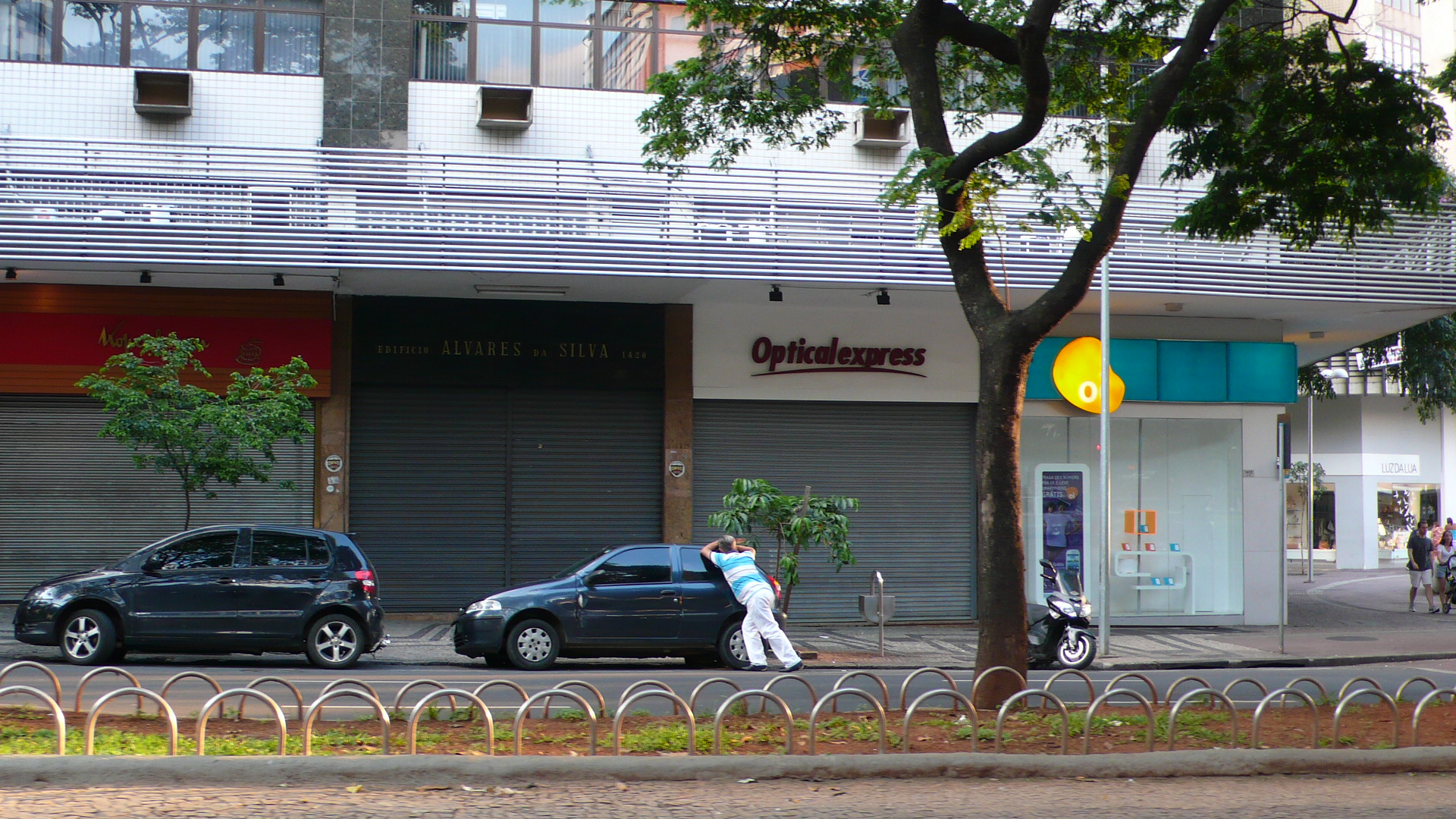
Yesterday André and I went to Campinas city centre accompanied by two of his former professors, Cristina and Zezo, to have lunch and discuss future collaborations when they come to Northampton for a sabbatical in 2014.  Campinas is big and busy, hot and hectic.  Temperatures were in the low 30s centigrade in the open streets, but as soon as we passed beneath the shade of any of the larger trees, the heat was blocked and we were much more comfortable.  City trees provide multiple ecosystem functions: they store carbon, of course, but they also significantly alter the local microclimate.

Nowhere is this more apparent that in subtropical and tropical regions, but you can also feel their effects even in a British city, where the presence of trees cools parks and pavements, insulating against high temperatures.  Do trees in temperate cities also insulate against cold in the winter?  I’m not sure but it would be an interesting area to research.

Trees are also beautiful, of course, and so the analogy with birds works on multiple levels: a city without trees is like a bird without feathers, because trees and feathers are both functional and ornamental.  In Campinas many of the trees were from families familiar to me, such as figs, legumes and mangos.  But others were new, including a species of Lagerstroemia from the loosestrife family (Lythraceae).   

Does it matter whether the trees are native or not?  That’s a debatable point; the last day of the pollination course at Unicamp on Friday included a session of student presentations of the projects that they’ve worked on all week.  One of them was an assessment of the diversity and origin of the trees within the park adjacent to the campus.  The students identified 64 tree species, 45% of which were native to that region of Brazil.  The remaining 55% are from other parts of Brazil, or from other countries, but nonetheless they provide resources for pollinators and birds within the park.   Perhaps this is acceptable in urban areas but not in areas of nature conservation or wilderness?

Our lift is here so I will sign off, except to note that my bird list is getting longer (over 50 species now) and that the award for Mammal of the Week goes to the agouti.  This a pretty, colourful relative of the guinea pig was abundant in the park in Campinas and completely charmed me with its confident and graceful demeanour.  If only I could bring one home…..

Cities and biodiversity – a new resource

LondonDecember2007013

This is by way of a re-post from the good folks over at the bio-Diverse blog.  They’ve noted that there is now  an online, interactive version of the Cities and Biodiversity Outlook report.  It’s a product of a collaboration between the UN Convention on Biological Diversity, the Stockholm Resilience Centre (SRC) and Local Governments for Sustainability (ICLEI), and was launched at the at the CBD COP in Hyderabad in 2012. There’s a video introduction narrated by actor Edward Norton and it deals with the huge increase in urbanisation that is predicted for the next few decades, together with the impacts it is likely to have on biodiversity, as well as the opportunities for nature within urban cityscapes.

It’s an interesting resource that deserves to be more widely advertised.  As more of us become city folk, these are messages to which we need to pay heed if our descendants are to have healthy and happy lives.

Biodiversity and urban cultural fabric

093

It’s easy to take for granted the biodiversity of our towns and cities, though “urban ecology” has become a buzz phrase within the subject and there’s lots of research groups working on this topic, as I’ve mentioned previously in relation to Muzafar Hussain‘s work on solitary bee diversity within Northampton.  Muzafar is currently analysing his data and writing up the results, and I hope to share some of his exciting findings with you at some point in the future.

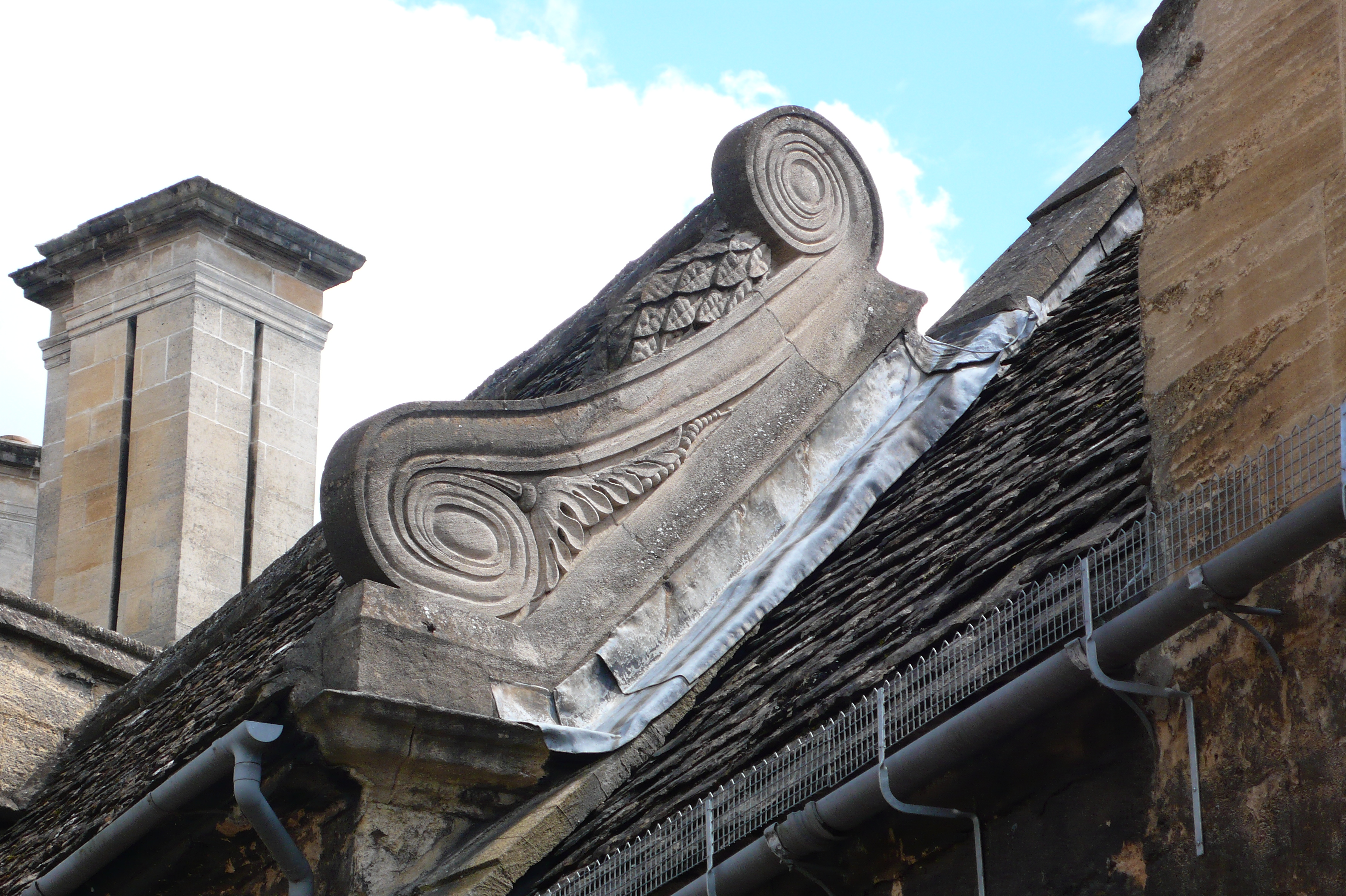
However another aspect of urban “biodiversity” has hardly been researched at all, as far as I’m aware:  the way in which elements of the natural world have been incorporated into the physical fabric of urban landscapes. The use of flower and animal figures around doorways and windows, and in the metalwork, of Victorian town houses in Northampton, for example.  Some of the most impressive are to be found on a couple of houses in the Barrack Road Conservation Area, where the iron railings around street-side balconies have been cast to resemble botanically accurate Epihyllum cacti in full flower.  There are many others, including birds incorporated into boot scrapers, and flowers and trees used for house names  (“Holly Cottage”, “Lonicera House”, “The Lindens”).  Much of the housing and commercial architecture in Northampton dates to the back end of the 19th century and the use of such motifs possibly reflects the influence of the iconic Natural History Museum in London, Alfred Waterhouse’s cathedral of biodiversity a century before the term was coined.

The names of pubs and inns may sometimes reflect our fascination with the natural world (“The White Elephant”) or with agricultural biodiversity (“The Cock Hotel”), a topic that I’ve written about in the past.  I was therefore unhappy to read that a pub in Northampton town centre is to be renamed, despite the fact that its old name of The Fish Inn reflects a history of that part of town which goes back to at least the 16th century and was included in a town heritage trail.  Why do councils allow this to happen?  It devalues the cultural fabric of the town ever further.  

Oxford, I’d like to think, might treat its local history a little better, regardless of whether one can spin a loose link to biodiversity.  It’s always a pleasure to return to the city which turned me into a professional scientist so I was happy to make the almost two hour early morning car and bus trip to attend the first day of the Biodiversity Resilience symposium.  I was teaching on the second day so had to miss it, but the first half of the symposium was interesting and thought provoking.  Highlights for me included:

  • Sam Turvey‘s analysis of whether or not human range expansion over the past several thousand years has driven the extinction of large mammals.   In some cases the evidence is clear cut, in others it’s not.
  • Lydia Cole on using the fossil pollen record of tropical forests to estimate recovery times of forest vegetation following disturbance; it appears that whilst all forests can recover, not all regions do so equally quickly, with time scales varying from around 150 to 350 years.
  • Graham Stone describing his group’s work on  how the history of interactions between oak gall wasps and their parasitoids in Europe can be reconstructed using molecular genetic data.
  • Guy Woodward on the effects of stressors such as pollution and drought on freshwater food webs.
  • John Dearing linking social science with natural science in an analysis of how population growth and exploitation of natural resources might lead to environmental problems in some parts of China in the near future.

These should give you a sense of the diversity of topics covered and that was the overwhelming impression that I came away with at the end of a long day: the study of biodiversity is as broad as one can imagine, from genes to ecosystems, interactions to extinctions.  Notions of what is meant by “resilience” were equally wide, with each presenter having a subtly different take on a slippery concept.  This illustrates the value of conferences such as this: it brings together a community of individuals who might work in complete ignorance of one another’s work, even though it could inform and challenge their own studies.  If day two was as stimulating as day one, then the organisers can count it a success.

Harvest of evidence

P1100769

The last entry I posted was premature in its prediction that autumn is here and for the past week we’ve enjoyed some bright, warm weather: an Indian Summer before autumn proper envelops us.  Sunday afternoon was spent in the garden, digging up potatoes and planting the garlic we bought on the Isle if Wight.  Neither of these crops requires pollinators, but others we’ve been harvesting this month do, including squashes, runner beans and greengages.  The latter are from a mature tree that, when we took over the house in 2012, I assumed was a bog standard Victoria plum.  The tree did not crop last year but has more than compensated this season with abundant deliciously sweet fruit.

All of this provides useful anecdotes for public lectures.  Since appearing on Bees, Butterflies and Blooms I’ve regularly been asked to give talks to gardening societies and  I try not to refuse because they are usually fun with attentive, knowledgeable audiences.  At one such event earlier this year I was asked: “Is there any evidence that declining pollinators are resulting in lower crop yields in Britain?”  It’s a great question that goes to the heart of evidence-based conservation and the notion that science should be informing such policies as strategies to conserve biodiversity.

As far as I’m aware there is no indication that British insect pollinated crop yields have declined.  And if the evidence of our greengages, runner beans and squashes is anything to go by, there’s currently plenty of wild bees, hoverflies and other insects (we get few honeybees in this garden) to service those food plants that require their pollinating activities.  But that doesn’t mean we should be complacent and monitoring is required, because the evidence from other countries is that yields are down for insect pollinated crops and hand pollination is required in some places.

Evidence should inform everything that we do and believe as scientists, gardeners, informed members of the public, whatever label we choose for ourselves.  This is especially true of currently controversial issue such as the causes of global climate change or the effects of neonicotinoid pesticides on pollinator health (see Dave Goulson’s slides from a recent conference talk, for example).  But we should also understand that a basic tenet of science is that it can never “prove” anything:  new evidence may appear at any time that refutes our cherished notions, or disproves that pet hypothesis.  We make decisions on weight of evidence not on proof.  So it was depressing to read a widely publicised article about a Nigerian postgraduate student’s claims that he has “proved” that homosexual relationships are “unnatural” because only the opposite poles of magnets are attractive to one another, the same chemical compounds do not react together, and roosters only love hens.   At first I thought it was a spoof but it appears that the research student is perfectly serious and, more, has been tipped to win a Nobel Prize by his equally deluded supervisors.

It’s easy to scorn the guy’s findings and point out that people aren’t magnets or simple chemical compounds and that homosexual activity is widespread in the animal world (so how do we define “unnatural”?)   But Karin, as always, had a deeper and more nuanced view of this story than did I.  Perhaps it’s her training in psychotherapy but whatever the reason, she gave an alternative perspective and pointed out a sad possibility.  Karin suspects that the student has been manipulated by academic and political powers that have a vested interest in such “proof” because of threatened sanctions on aid.  Under this scenario the student has been encouraged by the academics at the university to pursue this misguided work, which can only support the Nigerian government’s anti-gay stance.  Of course the research will never be published by any reputable scientific journal and the story has harmed the University of Lagos’s international reputation.  But for the narrow minded and biblically fundamentalist, the story itself will be evidence enough to shore up their own prejudices.  One person’s crackpot claims is another’s decisive evidence.

Garlicky archipelago

Sunrise from train September 2013

“Garlicky” is a great word, redolent of hot, pungent flavour and nose-filling odour: a Pavlovian word that ignites the senses as it’s uttered.  Perhaps I love the word because garlic is one of my favourite vegetables, a pleasure to both eat and grow.  A Garlic Festival is therefore not to be missed, and my family and I had the opportunity to attend one on the Isle of Wight during a short holiday a couple of weeks ago.  We were joined by university friends I’ve referred to previously, as the first one of us to reach a half century celebrated his 50th birthday.  There was more to the festival than just garlic, but for me its highlight was seeing the sheer variety of different garlic types that can be grown, testament to how this vegetable has been modified from its ancient wild origins in central Asia.  Karin and I bought seed bulbs of four different varieties as additions to the horticultural biodiversity of our vegetable plot, to be planted later in September.   These included the notable Elephant Garlic with its massive individual cloves, which, I’ve just learned while researching that link, is not a true garlic at all but rather a variety of leek.  We live and learn!

Archipelago is another great word and the time we spent on the Isle of Wight, travelling over by ferry from Southampton, served to remind me that the British Isles, with over six thousand islands of various sizes, is by any standards a significant archipelago.  Since at least the explorations of Alexander von Humbloldt, island groups have  been known to host unique species, isolated taxonomically and physically from their closest continental relatives.  Darwin’s later researches showed that archipelagos such as the Galapagos Islands are important as natural evolutionary laboratories, and in previous posts I’ve briefly discussed his unrequited desire to visit to the Canary Islands.  The Isle of Wight is too close to the continent of Europe to have evolved any unique biodiversity but I did pick up the hint of a subtle Island Biogeographic Effect whilst compiling a list of all the bird species I saw over the course of the week.  The list topped out at about 30 species, which I thought was rather low.  Some of the omissions surprised me (not a single blackbird, for instance) and I saw very few individuals of some other common British species.  Now, it could be due to my lousy birding skills I suppose, but it could also be due to the fact that we were on an island, even though it’s less than 1500m across The Solent to the mainland at its closest point.  This is close enough for bumblebees to fly to the island: I’ve seen them shadowing the ferry.  But nonetheless it might be far enough to affect both the diversity and population sizes of the bird life.  Enough wild speculation; I’d be interested to know what serious ornithologists who actually know something about the subject make of this.   

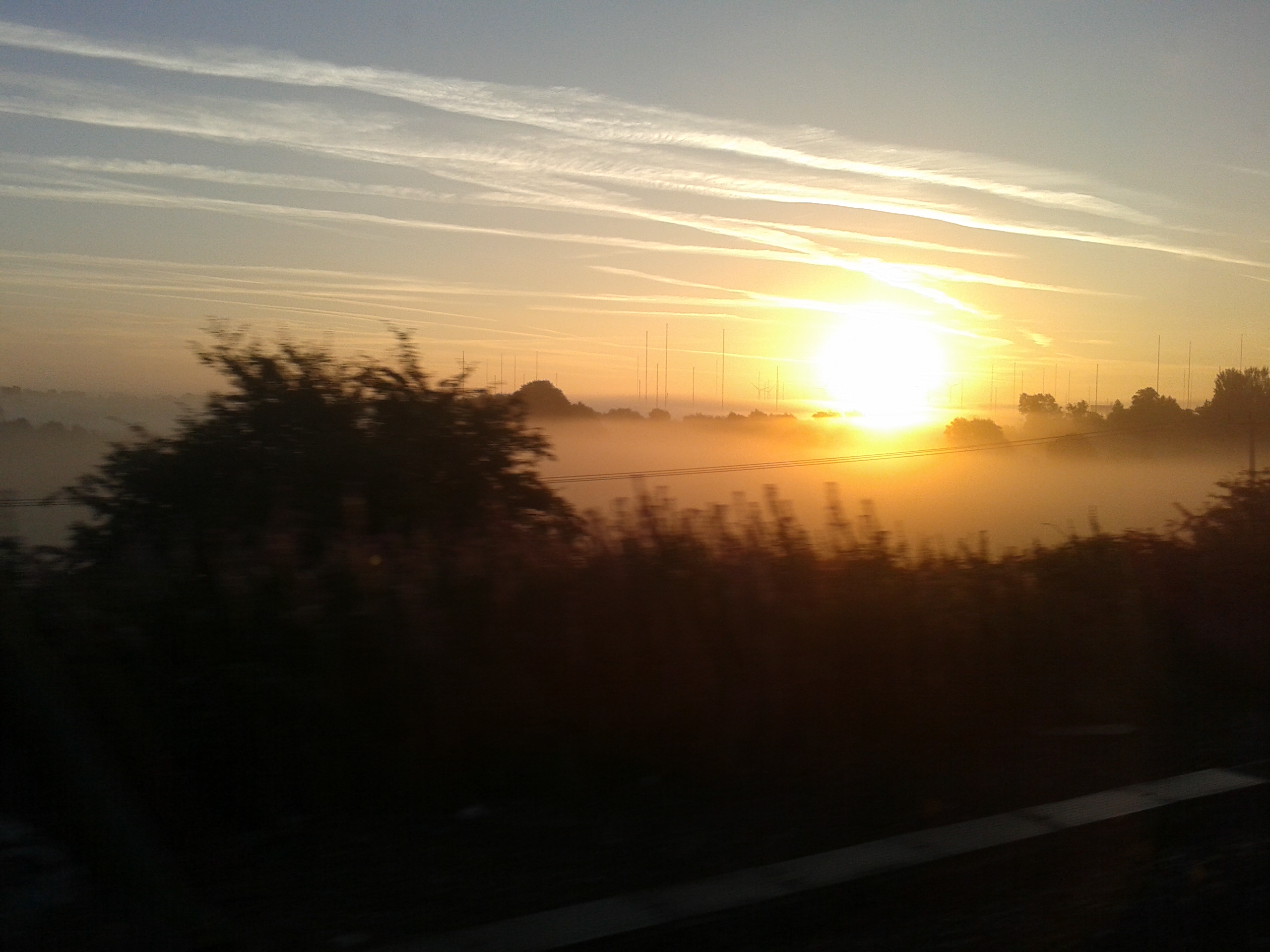
As I finish writing this post I’m on the other great island of my home archipelago, sitting in a bar in Terminal 2 of Dublin Airport.  I’ve been working at University College Dublin as external examiner for their MSc Applied Environmental Science course.  It’s been a fun couple of days reading theses and interviewing chatty, engaged students, which began with a dawn alarm yesterday in order to get to the train station and then Birmingham International in time for a 0850 flight.  Whilst waiting for my taxi I popped into the garden and paused to enjoy the early morning stillness before opening up the chicken coop.  A large flock of black-headed gulls passed low above me, backlit by a thin sliver of moon and silent except for the shuffle of feathers.  From the direction they were travelling I think they were heading from a roost on Pitsford Water and on to destinations unknown.  The garden was also busy with early risen blackbirds and a couple of flitting bats, whilst a little later my taxi passed a rangy fox idly trotting through low mist on the Racecourse park.   It was urban biodiversity at its most sublime.  

All this talk of Northampton is making me feel homesick to be back with the family (Karin, kids, cats and chickens) and start planting garlic.  But there’s just time for another Guinness before my gate opens.  Sláinte!

In defence of lawns UPDATED

2012-02-22 10.19.23

Over at the Small Pond Science blog, Terry McGlynn has a thought provoking post which asks ‘Are trees the lawns of the future?‘.  I won’t rehash Terry’s arguments, you can read it yourself, but I was intrigued by his stereotyping of lawns as always bad.  As a keen amateur gardener and a professional with research students who have worked on garden biodiversity projects, I’d have to say that there’s lawns and there’s lawns: it all depends on how they are managed and what the purpose is of a particular lawn. Clearly there’s a continuum from high diversity, natural “lawns” (i.e. close-cropped grassland which can support significant biodiversity such as some chalk grassland and African savannah lawns) through to the high resource input, monoculture, perfectly presented lawns seen on golf courses and around important buildings.  In the part of the continuum that Terry’s railing against, typical urban and suburban householder’s lawns and everything below that in terms of “naturalness”, it’s possible to manage lawns in a low-input way that is both productive and can support biodiversity.

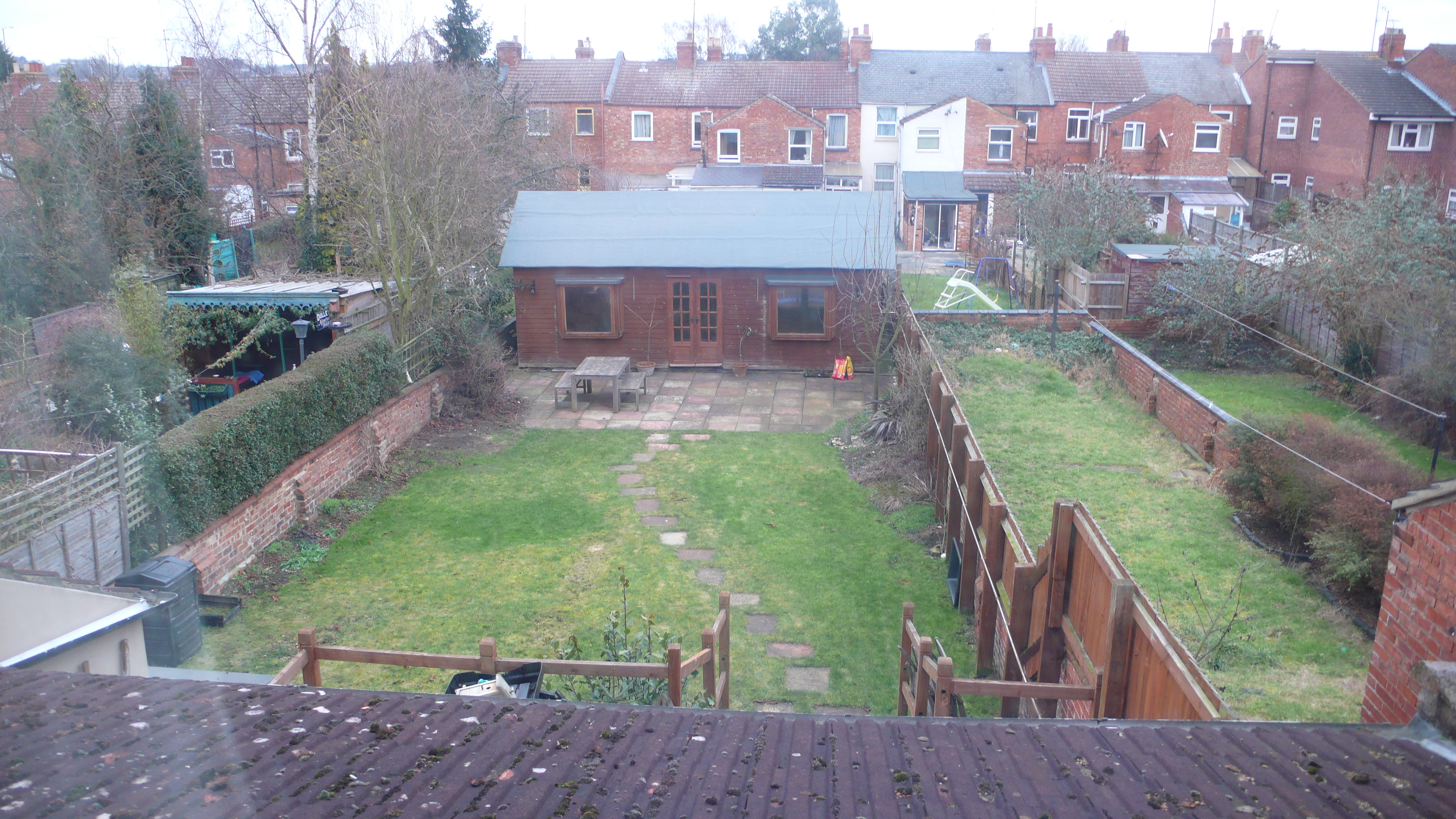
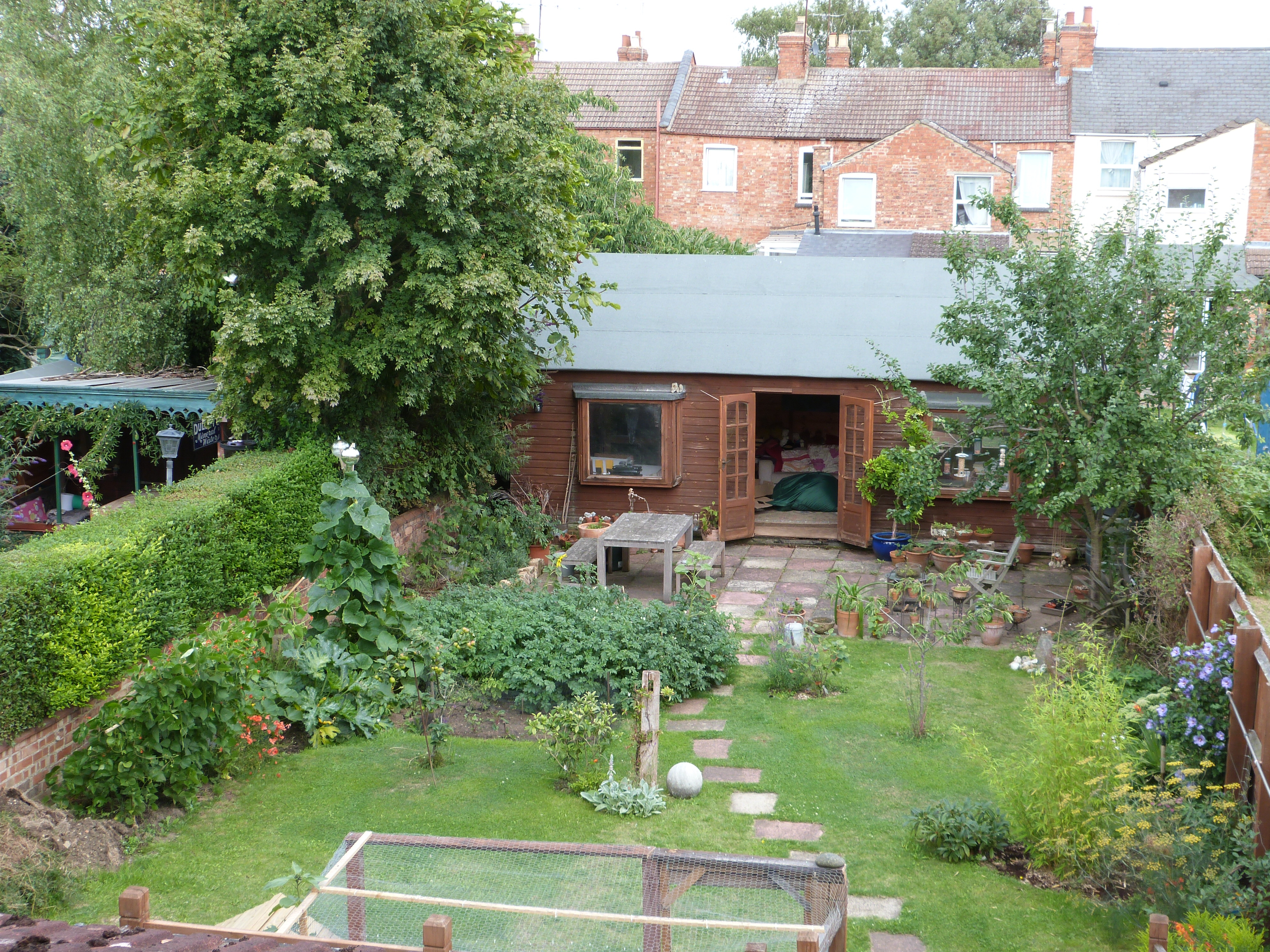
In the house that Karin and I moved into about 18 months ago, the garden was almost wholly laid to lawn; the picture at the top shows you what it was like in early 2012.  Since then we’ve dug flower borders, a vegetable patch and planted fruit trees, but kept about 50% lawn (though this will reduce as we widen borders). We don’t water or fertilise the lawn, just keep it regularly mown. I’ve not assessed it systematically but I’d estimate that, in addition to the grasses (some native, some not) there’s another 10 to 15 native plants growing in it, plus fungi which pop up every now and then. The plants include taxa which are popular nectar sources for bumble bees and solitary bees, e.g. clovers, dandelions, etc. These flower even though we mow regularly, and of course these bees pollinate our squashes, courgettes, apples, plums, etc.  The local blackbirds and starlings also find food on the lawn.

I mentioned that the lawn is “productive” and that’s where the grass cuttings come in. They are either put into the compost heap, fed to our chickens, or added directly to the vegetable patch as a mulch.  It’s also possible that the clover, which is a nitrogen fixing legume, is adding to the soil fertility that can be accessed by the far-reaching roots of the fruit trees.  Would be an interesting hypothesis to test.

So I think it’s possible to have a lawn that adds to local biodiversity and is productive for the gardener, but I accept that we may be unusual in that regard.  It’s not the kind of lawn that would make a grass obsessive proud; but that type, as Terry notes, needs a lot of input of resources, not least time.

UPDATE –  a few people have asked to see a picture of how the garden looks now, so below is more or less the same shot but taken today (15th August 2013) by Karin.  Comparing a British garden in February and August is clearly unfair!  But hopefully you can see that we’ve done quite a bit of work to it, though as with all gardens it’s a work in progress.

Garden 15th August 2013

More dreams of a river

The Power station - enhanced

Britain has been baking in a long, hot, dry period over the past few weeks, ending spectacularly in thunderstorms and torrential rain last Tuesday; the very day chosen for a walk-over of the University of Northampton’s proposed new campus site at Nunn Mills by the ad hoc ecology group that is discussing the wildlife potential of the project.  To say that we got wet would be an understatement: the only way I could have got wetter would have been to jump into the nearby River Nene.  But it was a useful day for us that generated lots of ideas on how the biodiversity of the site might be conserved and enhanced.  The group included my colleague Duncan McCollin and myself from the University, officers from the Wildlife Trust, a team from Betts Ecology who have been formally assessing the site, plus other building and landscape consultants. 

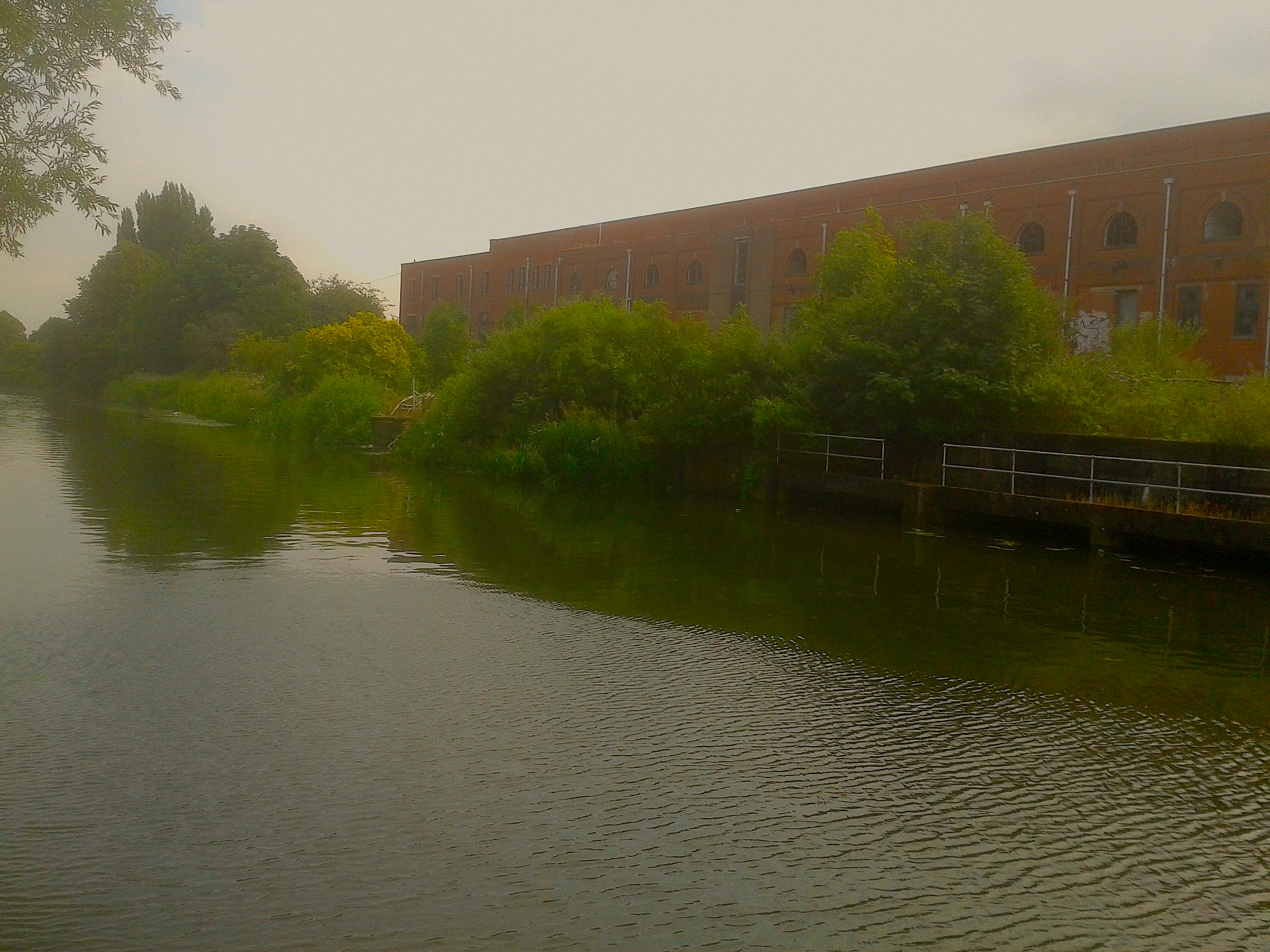
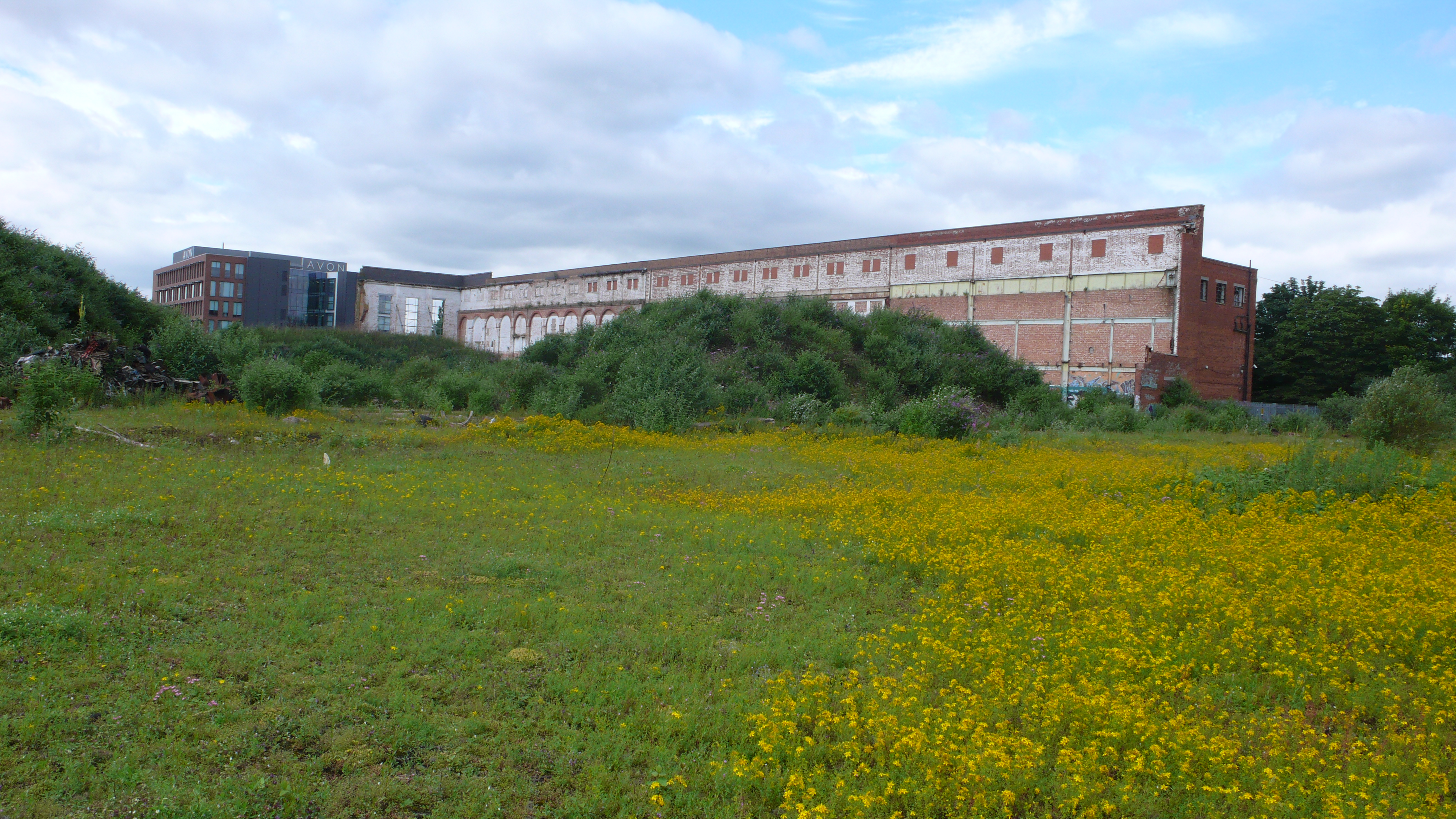
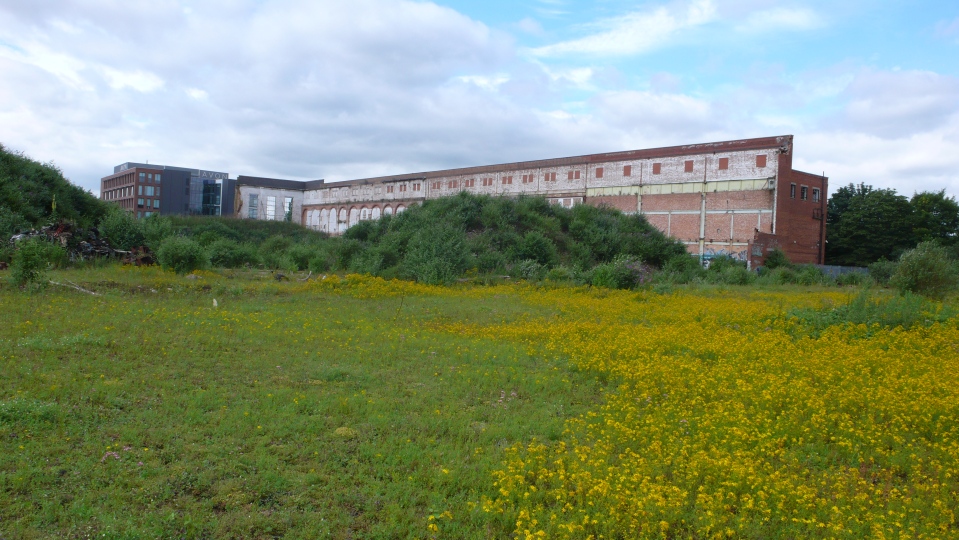
In an earlier post I mentioned the eastern half of this site and its interesting “urban tundra” plant community.  The purpose of last Tuesday’s visit was to also assess the western half which is the former factory of the Avon cosmetics company.  If you want to take a look at the area for yourself, go to Google Earth and search “Northampton Nunn Mills” and it will take you straight there.  The imagery is from 2009 but it hasn’t changed much in that time, except that what looks like a small lake on the north side of the river is now a marina for canal boats.   The roughly oblong site has the company headquarters for Avon right in the middle, with the redundant factory to the west and south.  To the east is the former power station.  In terms of wildlife and biodiversity more broadly, the mix of standing buildings, bare concrete and piles of rubble look unpromising.  But there’s lots of wildlife already on the site (including common lizards, peregrine falcons and various bats) and great potential because of its proximity to other areas.  

The River Nene forms the northern boundary of the proposed Waterside Campus and is rich in fish, insect and (especially) bird life, though it has potential to be richer, particuarly if the river banks can be reprofiled in places to remove the concrete walls and create more river edge habitat.  On this brief visit we saw a range of bird species, including grey herons, common terns, black headed gulls, swans, mallards, coots, and an LBJ (possibly reed warbler), all directly reliant on the river.  None of these birds is especially uncommon but they hint at a much richer diversity along the river valley as a whole, including internationally important sites for over-wintering migrant species.  There’s also otters along this part of the river and one of the plans for the campus is to have a quiet, secluded stretch that includes an otter holt. 

The southern border of the site is delimited by both the Hardingstone Dyke (a drainage channel) and a disused railway track, both good habitats for a range of species, especially ground nesting solitary bees and wasps on the dry soils of the railway line.  To the east, beyond the large electricity substation, these features link with the Barnes Meadow Local Nature Reserve.  This all provides a local context for nature to colonise the Waterside Campus if opportunities are provided.  The broader geographical context for the Waterside Campus is provided by the Nene Valley Nature Improvement Area project that I’ve discussed before.  The feeling amongst the group on the day was that there is great potential to enhance and create wildlife areas and it’s our desire to see these through to completion.  This will include ongoing collaboration between academics, consultants, NGOs and developers, as well as the University’s senior management team.  As an academic I’m also excited by the educational opportunities it will provide for our students as they monitor and assess the biodiversity of the development.  The next few years will be  interesting ones for us!  But we’re also interested in hearing from local people who know the area well and may have ideas about how biodiversity can be supported on the site; feel free to comment.            

A (Green) Apple for teacher – The Biodiversity Index wins an award!

BO-2DbsCcAAZPsu (1)

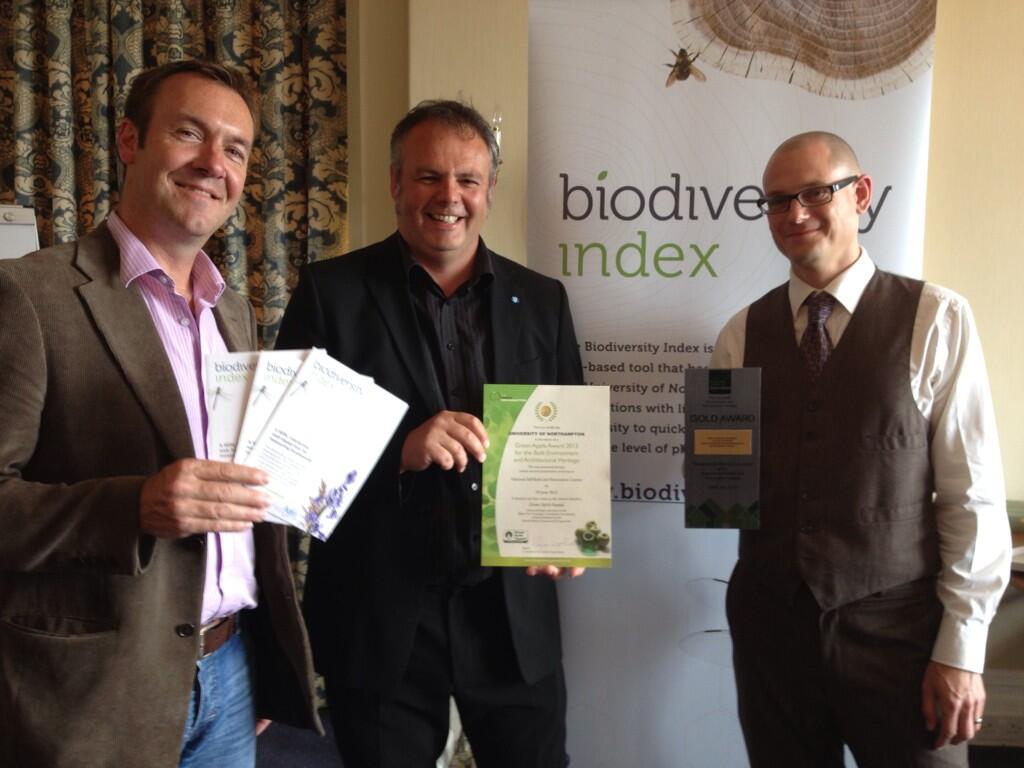
At a small ceremony attended by businesses and local authorities on Friday, the team who developed the Biodiversity Index received a Green Apple Gold Award from The Green Organisation.  I proudly accepted the award on behalf of everyone and made a short speech which, in the spirit of my “reduce, reuse, recycle” policy, I’m posting here.  Thanks to Bobbie Lane for the photo, Richard Moore for help with the speech, and Gareth Thomas for the notion of biodiversity as the “fourth resource”.  


Ladies and gentlemen.

In June 2011 the UK National Ecosystem Assessment reported to Government that the value of the natural environment to the British economy was at least £30 billion per year in terms of the ecosystem services it provides, such as carbon storage, soil fertility, tourism and pollination.

In contrast, earlier this year the State of Nature Report by 25 of the UK’s leading wildlife organisations, suggested that 60% of animal and plant species for which we have data have declined in the past 50 years.  To add to this, some recent work by my research group at the University of Northampton has shown that 23 species of pollinating bees and wasps have gone extinct in Britain since the late 19th century.

Clearly there’s a contradiction here: at a time when we value biodiversity more than ever, it is declining at an ever-faster rate.  So what can we do about this situation?  How can individuals and organisations help to reverse this trend?  This is one of the aims of the Biodiversity Index.

Energy, water and waste are typically the main resources actively managed by businesses and organisations, but there is growing interest in understanding and managing biodiversity as a fourth resource that is critical for society as a whole.  In contrast to some of the other speakers you have heard today, the Biodiversity Index is not going to make you money.  In fact, if you are in the commercial sector, it will cost you a small amount of cash to join.  But the broader benefits of staff engagement with wildlife conservation, and the positive effect this will have on our country as a whole, are priceless.    

The Biodiversity Index is an interactive web-based tool, developed by the University of Northampton and believed to be the first of its kind anywhere in the world.  It enables organisations with little or no knowledge of biodiversity to undertake a rapid but scientific assessment of the level of plant diversity on their site and suggests ways to improve each habitat.

The Index widens access to the knowledge and tools required to make a start in improving the management of biodiversity on urban sites, with the potential to assist schools and colleges, universities, hospitals, local authorities, SMEs and larger businesses to improve the environment in which we work and live.

The tool was developed as part of the SEED Project and was launched at the Environmental Association for Universities and Colleges annual conference in April 2013.  To date the Biodiversity Index has been used by over 30 UK universities and endorsed by several companies including Ricoh UK Ltd, a Global 100 sustainability company.

On behalf of the team that developed the Biodiversity Index I am delighted to accept this Green Apple Gold Award as an acknowledgment of the innovative work undertaken in this collaboration between the School of Science and Technology and the Department of Infrastructure Services at the University of Northampton.

Thank you.

To Dream a River

The notion of streams and rivers as the veins and arteries of a nation, bringing life giving fluids to the country’s urban hearts, is an overplayed one for sure.  But it’s accurate nonetheless, even if these fluids contain biodiversity enough to give any blood disease specialist palpitations.   Given their importance it is therefore odd (I’m tempted to write “suicidal”)  that in Britain we have a history of our towns turning their backs, both metaphorically and literally, on our rivers, ignoring their cultural, social, biological and frankly life sustaining importance.  I’ve mentioned the brewery and sewage effluent entering the River Wear at Sunderland in an earlier posting.  As the pollution went in so there was a  gradual receding of business, industry and habitation away from the river.  There seems to be a correlation between the use and value of a river and the condition of its water and biodiversity: as rivers become ignored and disconnected from urban centres, so they become dumping grounds for whatever can be flushed or piped into them.

This process of riparian neglect was repeated throughout the twentieth century across the country and Northampton’s River Nene is no exception.  From its central place in the town’s commercial activities in the nineteenth century, with its links to the Grand Union Canal and to the North Sea, the Nene has declined in both importance to the town and in its ability to support wildlife, at least in the stretch running through the town and just down river.  Much of the ecological quality of water in this stretch is considered “moderate” to “poor” against the criteria set out by the Water Framework Directive, the main driver of European (and therefore UK) water management.

Against this backdrop of neglect and  river decline, recently a group of us went for a seven mile hike along the River Nene, from the western fringes of Northampton at Duston Mill, through the centre of the town, out to Billing Mill.   The trek was organised by a former student of ours, Neil Monaghan, now working for the River Nene Regional Park (RNRP).  The purpose of this walk was (quoting Neil’s brief for the day) “to inform the Northampton Enterprise Zone River Nene Re-naturalisation Study” by “identify[ing] issues and opportunities for works in-stream and in areas influencing the watercourse which would be likely to facilitate improvements (or at least negate degradation) through land use change or water management”.  My particular interest in this relates to the work we are doing as part of the Nene Valley Nature Improvement Area (NIA) project I’ve mentioned before. Also taking part in the hike were representatives from most of the groups with an interest in the River Nene’s ecology, water quality and flood risk management, including my university colleagues Duncan McCollin & Chris Holt; another former student Hugh Bunker, now working for the Environment Agency (EA); independent consultant ecologist Steve Brayshaw; Heather Ball and Oliver Burke from the Wildlife Trust; Martin Janes from the River Restoration Centre; and other staff from RNRP, the EA, Northants County Council and Northampton Borough Council.  All in all, a wide range of interests and expertise, giving their own perspectives on the River Nene.

Although I’d visited parts of the area that we walked, I’d never before hiked this whole stretch.  It was a revelation.  We passed some really pleasant stretches of river and lake close to commercial centres in Northampton that I know well, in the sense of “drive there, buy things, drive away”.  But I was wholly ignorant of just how close the river is to some of these points.

One of the reasons why it’s easy to lose track of the water courses and lakes, is that it is so geographically complex.  Take a look at the Nene Valley on Google Earth and what you’ll see what I mean.  The aerial view reveals a network of river branches, tributaries, canals and lakes, traced across the landscape.  Some of these seem to have no obvious starting point, or end abruptly.  At one point a lower lying stream passes under the river via a siphon.  It’s very confusing for a predominantly terrestrial ecologist!  The whole area is historically prone to flooding, as Chris has discussed in some of his published research and so understanding the dynamics of the whole catchment is an important task for the Environment Agency and local government.

Away from the river, one of the highlights of the trip was a guerrilla visit to a post-industrial site that is posited as the new campus for the university.  It’s actually the site of the former Northampton power station and like many abandoned brownfields across the country, it has developed its own ecological community of invasive alien plants (for example buddleia, in abundance) and native species, many of them normally at home on dry grasslands.  One section was described by Steve, half seriously, as “urban tundra” as it was dominated by a species of lichen from the genus Cladonia.   

Our main attention was the River Nene, of course, never far from the path that we walked.  Further down the course we came to the Northampton Washlands, an area of low lying grassland and flooded gravel pits that serves to store flood water when the river overtops its banks.  It’s also an internationally important site for migratory birds such as lapwing and golden plover, and is part of the recently designated  Special Protection Area (SPA).  It was another highlight in a day of exploration and surprises.

The dream of a river which can support biodiversity, provide drinking water, allow a wide range of recreation, and be flood managed, is a hugely ambitious one.  But there are many people and organisations working hard to see it flourish because the River Nene is a  vital part of the life of the town and the county.  And without dreams, what are we….?

There’s a reason why toilet seats are curved

The recent announcement of a study showing a correlative link between the loss of biodiversity and the decline of human cultural diversity (specifically of local languages) reminds us once again that studying biodiversity is more than just about discovering how many species there are in different geographical locations and how they can be conserved.  The remit of biodiversity covers all levels of biological organisation, from genes to species to ecosystems, including the human species and those ecosystems we have created for ourselves.  Not only that, biodiversity is also about why species occur where they do and how they have adapted to their local conditions, including interactions with the other organisms that shape their ecology and evolution.

Plants and pollinators are a good case in point: if there is not a suitable size or morphological fit between flower and animal, the animal will not be able to obtain its reward and the flower will not receive pollen. Both immediate ecological context (which species are present in a community?) and longer term evolution (how have these species adapted to one another?) are important in this regard.  These thoughts were very much on my mind as I sat uncomfortably on a rectangular toilet seat in a very swish hotel in Switzerland last week.  There’s a reason why toilet seats are usually curved: it fits the usual shape of our arses.  Rectangular toilet seats are not well adapted to their role and do not work effectively: they are uncomfortable and a victory of Swiss style over human functionality.  The same applies to the convex saucers on which breakfast coffee was served.  They were the anthithesis of biological adaptation where the stylish patterns of a butterfly’s wings, say, have evolved for a purpose (display and/or camouflage) rather than to look pretty.

Karin and I were in Switzerland at the invitation of Nadir Alvarez from the University of Lausanne.  Nadir and his  group are using the latest molecular techniques to carry out fascinating research on species interactions and patterns of phylogeography, including work on one of my favourite groups of plants, the genus Arum.  At Nadir’s request I gave rather a broad talk on the theme of the ecology and conservation of plant-pollinator interactions in highly managed landscapes, focusing on the work that members of the LBRG have done in Northamptonshire and adjacent counties.  The questions afterwards suggested that it generated quite a lot of interest in the audience of about 50 faculty members, postdocs and research and MSc students.  Before and after the lunch hour talk I spent time chatting with postgrads and staff about their research projects, moving from office to office in a carefully Swiss-timed fashion, always conscious that outside each window were fantastic views across Lake Geneva to the snow crowned Alps beyond: “You forget it’s there after a few weeks” claimed one postgrad.

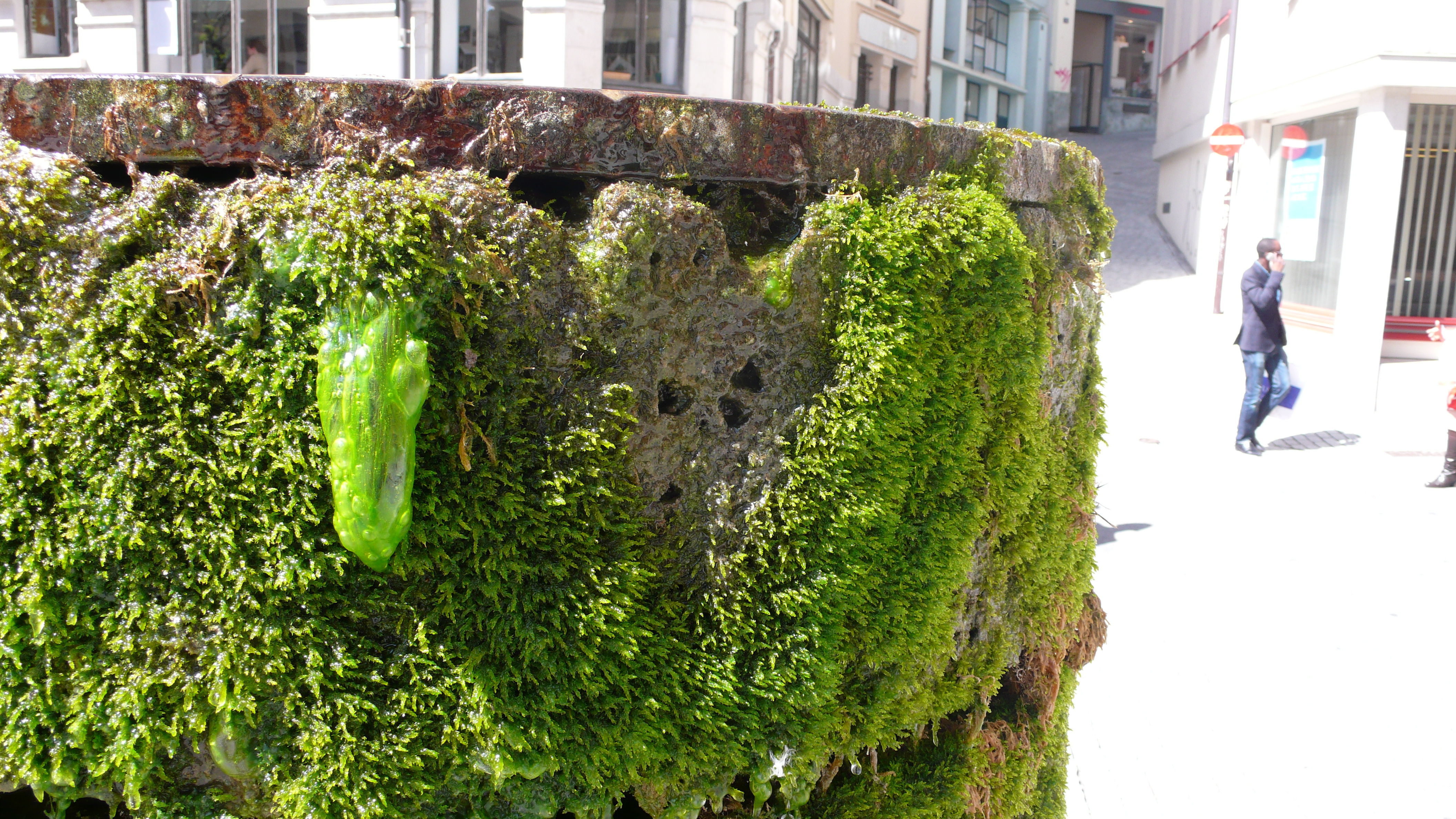
Lausanne is a lovely city which is enhanced by the human-contrived biodiversity of planted roofs, green walls, and public green spaces.  And by the species which naturally colonise suitable habitats, such as the moisture loving mosses and algae which have found a home in the stone and steel fountains designed by Georges Descombes  in La Place de la Louve.

Back in Northampton late Friday night, then up early Saturday morning to prepare a talk for the local branch of Friends of the Earth’s Bee Cause campaign launch.  It was the usual general over view of what pollination is, why it’s important, why pollinators are declining etc., etc.  I pointed out at the start that the public audience (once again of about 50) were getting a free taster of what, from September 2012, our students will be paying £8,500 per year to listen to.  They seemed to enjoy it and had some interesting questions afterwards, though one guy claimed my talk was too long and “a bit like being in church”.  This was the same individual who asked me whether “wasps and nettles can sting each other” which perhaps gives an insight into his world view.

Back at the coal face of university life this week, however, the dominant theme has been marking student work.  Lots of of it, as we work to get final grades into the system prior to exam boards in early June.  A pile of about 90 first year reports on woodland community structure, based on field work we carried out last autumn, has been hard work but in many ways enjoyable.  Some of these students have done very well and really engaged with the aims of the assignment.  Quite a number independently found a recent study on the importance of rot holes in trees for maintaining epiphytic lichen diversity.  Has anyone looked at this in British oaks?  It would make an interesting final year student project.  Which brings us back to the links between biodiversity and human culture, because lichens have been used for millenia as sources of pigments for painting, for example in illuminated Saxon manuscripts such as the Lindisfarne Gospels.