
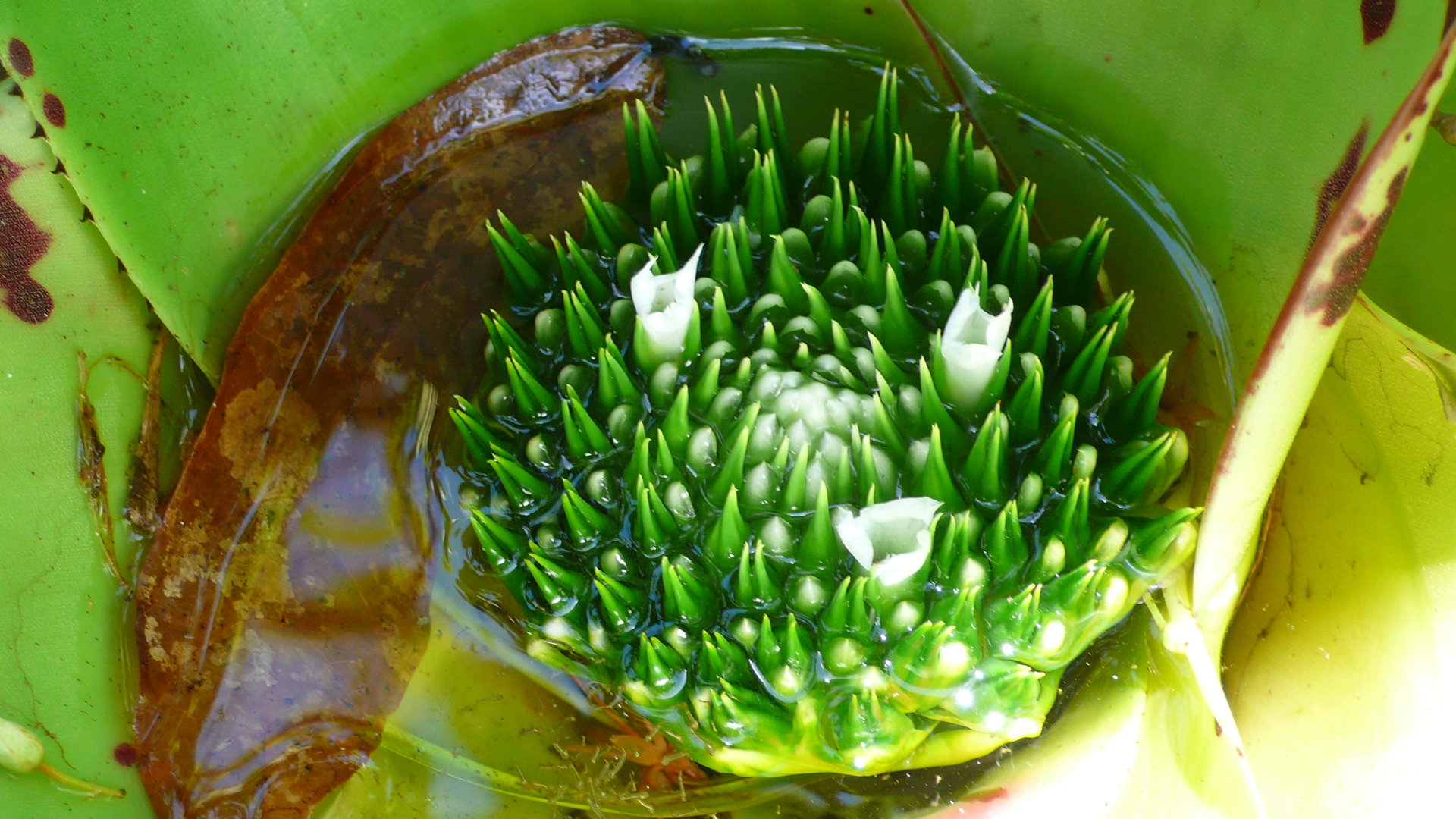
Review of “Pollination and Floral Ecology” by Pat Willmer (2011) Princeton University Press. £65. pp. 832.
Some backstory: In early 2012 I was asked by the review editor of the journal Annals of Botany to review this book, and I jumped at the chance as it’s the first major single-author overview of the field of pollination ecology for a number of years, by a well respected academic in the field. Unfortunately the review took a lot longer than I expected, in part because I was also coordinating my department’s Research Excellence Framework submission, on top of other teaching, research and admin duties, and it was taking up quite a bit of my time.
In addition I had mixed feelings about the book and wanted my review to do it justice, not be over-critical but at the same time highlight what I saw as flaws. In the words of the Fairport Convention song, Who Knows Where the Time Goes? – my review was only completed last Christmas and duly submitted. Turns out that the journal has a backlog of book reviews to publish and the editor asked that, given it’s been a couple of years since the book was published, would I mind if the review was posted on the Annals of Botany blog rather than in the printed journal. I happily agreed as it’s likely to get more readers on the blog, and said I’d also post it on my own blog. So here it is:
Any text book that tries to assess and summarise the whole of a multidisciplinary research field such as pollination ecology and floral biology is required to be four things: (1) comprehensive in its scope; (2) up to date in its coverage of the literature; (3) accurate in its assessment of the current state of the field; and (4) authoritative in the conclusions it presents.
This volume by Professor Pat Willmer of the University of St Andrews certainly ticks the first box. It’s a huge book, and covers everything relating to the evolution of flower attraction and reward systems, ecological interactions with pollinators, biochemistry, physiology, agriculture and conservation; all in 29 chapters split into three sections, with 87 pages of references. The literature extends to 2010, which is impressive for a book published in 2011 (though see my comments below about completeness of the literature). Specialist terms are highlighted in bold to direct the reader to the glossary at the back, a useful device even if there are a few inaccuracies, which I’ll mention later.
So far so good, and the author is to be congratulated on putting together such a comprehensive, not to mention timely, single-author book. It’s clearly the summation of a career devoted to studying pollinators and flowers, and the author’s passion for her subject is apparent throughout.
However when we come to points 3 and 4, things are less straightforward. There are some issues with accuracy that are troubling in a book aimed at newcomers to the field as well as established researchers. To give just a few examples:
– on p.18 we are told that asclepiads have “one stamen” (they have five); on p.169 and in the glossary that asclepiad pollinia are the pollen grains from one anther (they are the contents of half an anther); and on p.170 that the pollinaria are “glued” to pollinators (they actually clip on).
– in the glossary, tree ferns are referred to as “cycads”, an error that is repeated on p.89.
– on p.88 there is a statement suggesting that tree fern spores were dispersed by “animal fur” 300 million years ago, long before the evolution of mammals, and that this (and dispersal of spores of fungi and mosses) is the equivalent of pollination: it is not, it equates to seed dispersal.
These are troubling errors of basic botany that are forgivable in an early draft of the book (everyone makes mistakes) but not in the final published version, after it’s been read, reviewed, checked and edited. If the book goes to a second edition I hope that these (and other) mistakes will be fixed. But they do hint at a fundamental problem with a book (and a field) as large and complex as this: a single author is arguably unlikely to be able to do justice to all of the subject matter.
There are parts of the book where it is unclear (to me at least) what the author is actually saying. For example, on p.96 there is a graph which, it is suggested, demonstrates that pollination by animals is “technically uncommon when assessed in terms of the numbers of broad taxonomic groups that use it”, though the legend to the figure claims that “most orders of plants have no families” that possess wind pollination. This is confusing: what is to be concluded by someone new to the field? Is animal pollination common or rare? Likewise, on p.91 we are told that the “first angiosperms…would probably have had their pollen moved mainly by wind…”, but then on p.92 that “an element of insect pollination could be regarded as almost ancestral”. Which is correct?
There are other aspects to the book that are simply out of date; for example the linear, rather deterministic schemes set out in Figures 4.6 and 4.8 showing that Cretaceous flowers were open and radially symmetrical, and only later evolved into complex, bilateral flowers in the Tertiary, ignores fossil discoveries showing that orchids evolved in the Cretaceous (Ramírez et al., 2007). Likewise, discussion of “counterproductive” crypsis in flowers (p.124) neglects recent findings of cryptic, wasp-pollinated plants in South Africa (e.g. Shuttleworth & Johnson, 2009).
There is a theme emerging here: some of the botany that the book presents is inaccurate, confused or out-dated. Fortunately the zoological aspects of the book are much better, as one might hope from a Professor of Zoology.
The final criterion, that the book should be “authoritative in the conclusions it presents”, is however, in my view, the main weakness of this volume. The author is unhappy with recent developments in the field, particularly as they relate to community-scale assessments of plant–pollinator interactions, in terms of network analyses and predictive utility of pollination syndromes. Clearly Professor Willmer is on a mission to rebalance what she perceives as failings within some of the current trends in studying pollination. A book review is not the place for a technical dissection of the author’s arguments, which is best left to the peer-reviewed literature (though I would argue that that’s also the place to present some of the criticisms the author introduces, rather than into a text book such as this). I could focus the whole of this review on these topics because: (a) they take up a large proportion of the book, about one-third of the text pages; and (b) they are highlighted on the cover as being one of the main contributions of the book; specifically, that the author provides a critique of previous work that does not distinguish between “casual visitors and true pollinators” that can in turn result in “misleading conclusions about flower evolution and animal-flower mutualism”. Unfortunately her targets are straw men, and one – I believe quite telling – example will suffice.
On p.447 there is a criticism of the use by Waser et al. (1996) of Charles Robertson’s historical data set, and specifically that the analyses they present “…did not distinguish visitors from pollinators even though Robertson’s database did include information on this”. However Waser et al. clearly state (p.1045 of their paper) that only pollinators were included in the analyses, not all flower visitors, and that “visitation is not a synonym for pollination…non-pollinating visitors are excluded (as in Robertson 1928)” (p.1048).
Why should Professor Willmer make a statement to the contrary? Evidently she wishes to impress upon her readers that (in her opinion) there are fundamental problems in current approaches to studying pollination at a community level. But even if that were the case (and I don’t believe it is) misrepresenting previous studies to suit an argument is poor scholarship at best.
Regardless of whether some of her criticism is well founded, the author does not seem to appreciate that plant–flower visitor interaction networks are ecologically important regardless of whether or not a flower visitor acts as a pollinator. More fundamentally, true pollination networks possess similar attributes to flower visitor networks, for example a nested pattern of interactions, and arguments about level of generalisation of species are a matter of scale, not category (Ollerton et al., 2003).
At the end of her Preface, Professor Willmer reveals to us quite a lot about her personal attitude to research when she states that some readers might find her approach “too traditional” in an “era where ecological modelers [might be claimed to] have more to tell us than old-style field workers”. What the author fails to appreciate is that this is a grossly false dichotomy and that most of the pollination ecologists who have embraced new analytical methodologies for understanding plant–pollinator interactions are also “old-style field workers” with considerable experience of studying the ecology of flowers and their pollinators beyond the computer screen.
In summary this is a book that, for all its good qualities of comprehensiveness and (mostly) up to date coverage, should be read with caution: parts of it are neither as accurate nor as authorative as the field of pollination and floral ecology deserves.
LITERATURE CITED
Ollerton J, Johnson SD, Cranmer L, Kellie, S. 2003. The pollination ecology of an assemblage of grassland asclepiads in South Africa. Annals of Botany 92: 807-834.
Ramírez SR, Gravendeel B, Singer RB, Marshall CR, Pierce NE. 2007. Dating the origin of the Orchidaceae from a fossil orchid with its pollinator. Nature 448: 1042-1045.
Shuttleworth A, Johnson SD. 2009. The importance of scent and nectar filters in a specialized wasp-pollination system. Functional Ecology 23: 931-940.
Waser NM, Chittka L, Price MV, Williams N, Ollerton J. 1996. Generalization in pollination systems, and why it matters. Ecology 77: 1043-1060.
 Prof. Jeff Ollerton - ecological scientist and author