Category Archives: Hoverflies

Are honey bees native to Britain? And does it matter?

2013-04-15 13.54.19-2

It’s no secret that I’ve become frustrated over recent years by the general confusion in the media between the concerns relating to honey bee health (which are largely veterinary/husbandry problems, though pesticides may also play a role) and declines in wild pollinators, which are a wildlife conservation issue mainly due to habitat destruction, though again pesticides are probably having an impact.

That frustration came to a head last year when colleagues and I published a short letter in the influential journal Trends in Ecology and Evolution that was prompted by a throwaway remark in an earlier article stating that honey bees “are essential pollinators for the maintenance of natural biodiversity”  No they are not.  And you can read for yourself why we responded to that article if you follow the link above.

In a recent posting on the Adventuresinbeeland blog, Emily Heath discussed her attendance at a recent British Library event about pollinators and pesticides.   I commented on the blog and in passing mentioned honey bees as being “not native” to which one respondent demurred and wrote:   “I thought honey bees ARE native to Britain, although they have been bred with various breeds ……. Apis mellifera mellifera is a British native, isn’t it?”.   I’ll paraphrase my response here:

The only study that I’m aware of that has addressed this question is Norman Carreck’s paper from 2008 – you can download a PDF of that article here.  Norman is convinced that Apis mellifera mellifera is native to Britain but, as I interpret it,  the evidence he presents is circumstantial and the earliest archaeological remains of honey bees are all associated with human settlements. Even if honey bees were originally native to Britain, the present situation, in which honey bees have been selectively bred and hybridised, is akin to using Tamworth pigs as evidence that wild boar are native.

However for me the most compelling evidence that honey bees are not native is ecological: despite their generalist nature and ability to form large colonies when managed, out in the wider countryside of Britain honey bees do not do particularly well. “Wild” honey bees are never very abundant (compared with some bumblebee species, for instance) and feral colonies in natural settings are few and far between.

This prompted a to-and-fro discussion with Emily that you can read for yourself.

Are honey bees native to Britain?  The jury is out but the balance of evidence as I see it is pointing to them being a human introduction.  Does it matter?  In many respects, no.  Honey bees are (like any other agricultural animal) a utilitarian species that provides us with a range of benefits.  But in one respect it DOES matter – and that is in relation to how we formulate and put in place strategies to reverse the decline of wild pollinators such as bumblebees, hoverflies and butterflies.  If honey bees become the central focus of such strategies (and funding), due to confusion in the minds of the public, MPs, policy makers, businesses, the media and other influential bodies, then wild pollinators would lose out.  In my opinion that would be a great mistake.  I’d be interested to know what other people think.

Thank the insects for Christmas (reduce, reuse, recycle part 2)

2012-11-26 15.38.04

The university term has drawn to a close in a flurry of activity as we complete our pre-Christmas teaching and assessments, and the Department of Environmental and Geographical Sciences conducted a successful five-yearly Periodic Subject Review of its degree programmes.  I’m conscious that some of the things I wanted to write about since my last blog entry have slipped past without action, including a week that was bookended by visits with students to iconic localities on the biodiversity and conservation map.  These were a Monday trip to the Darwin Centre of the Natural History Museum in London with students on my final year Biodiversity and Conservation module; followed by a Friday visit to Wicken Fen, arranged by my colleague Janet Jackson for second year students on her Habitat Ecology and Management module.  Both great days away from the lecture room, if for different reasons.

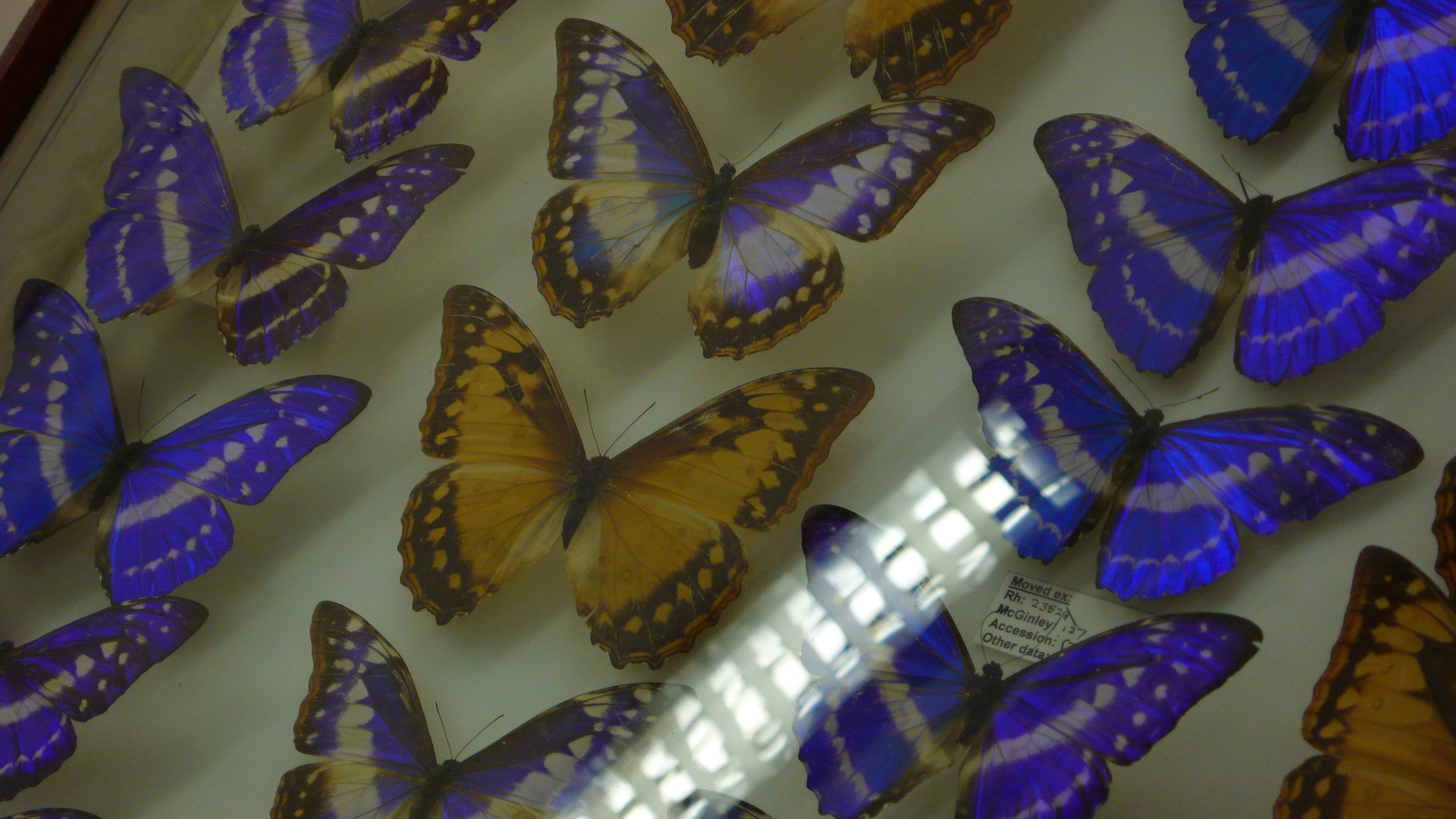
At the Natural History Museum we looked at the insect research collections, behind the scenes where the public does not normally venture.  Wicken Fen, on the other hand, is open to all and we met birders and walkers as we toured the site.  I kept a tally of the number of bird species we identified and the final count was 29 (30 if you include the chickens being kept in a back garden close to the visitor centre).  It would have been impossible to make a meaningful species count  at the Musuem as we were overwhelmed by the statistics presented by the curators:  85,000 butterfly and moth specimens in the Lepidoptera section, 3 to 4 million specimens of true flies (Diptera).  On it went; wonderful diversity and an incredible scientific resource.

Which brings me neatly to the main topic of this entry: the importance of insects at Christmas!  I’ve mentioned before that one of the intentions of this blog was to reuse some of the writing I’ve done over the years in various fora, sometimes updating and re-casting it ro reflect recent activities or events (hence the “reduce, reuse, recycle” epithet).  The publication this month of the final report of the Government-sponsored workshop Insect Pollinators: Linking Research and Policy in which I was involved has prompted me to modify and re-post an entry that first appeared on the University of Northampton’s blog at this time last year.

The social and economic news is not great, global poverty is on the increase even in the richest countries and the range of human-influenced assaults on the natural environment seems to be escalating on a weekly basis.  But at least it’s Christmas!  A time to relax and enjoy ourselves, to share time with family and friends, and to unwind during the cold and gloom of winter.  Whatever your faith, or lack of it, Christmas should be about taking a break and reflecting on the year that has passed.  We’re helped in that respect by the ceremonial seasonal trimmings: the Christmas tree, strings of flashing lights, baubles and tinsel.  So while you’re kissing a loved one under the mistletoe, admiring that glossy holly wreath, or tucking into your Christmas dinner, spare a thought for the insects.

What in Saint Nicholas’s name”  you are asking ”have insects got to do with Christmas?!”  Well, like the turkey, we’d be stuffed without them:  they play an essential part in providing us with the things we associate with the Christmas.  If we had no flies, wasps, bees and other bugs acting as pollinators there’d be no berries on your mistletoe or your holly.  Kissing and admiring would be a less festive affair and that’s just for starters.  These insects also pollinate many of the vegetables, herbs and spices on your plate, as well as some of the forage that went to fatten your roast bird or tender joint of meat.   Not to forget much of what went into the nut roast that’s feeding the vegetarian relatives.

The economic value of insect pollination in the UK was estimated by the recent National Ecosystem Assessment to be about £430 million per year .  In fact this is a huge under valuation because the labour costs alone of paying people to hand pollinate those crops would run into billions of pounds.  This sounds far fetched but it’s already happening to fruit crops in parts of China.  The answer is to encourage wild insects, not artificially  managed honey bees, because collectively the former are far more abundant, and often more effective, as pollinators.  Their diversity is an insurance against losing any one species in the future.

The NEA’s valuation is also too low because it only deals with edible crops.  Mistletoe and holly are both dioecious species, which is to say that individual plants are either male or female, as is the case with most animals.  This means that the plants cannot self pollinate and insects are absolutely vital to their reproduction and to the production of the decorative berries we so value (a holly wreath without berries is just a big spiky doughnut, in my opinion).  Whilst researching the economic value of the annual mistletoe and holly crops for this blog posting I’ve been having a conversation with Jonathan Briggs over at Mistletoe Matters and he tells me that “the mistletoe trade in Britain is entirely unregulated and not documented in any tangible way” and the same is true of holly.  We therefore have no idea what the economic value actually is.  But some back-of-the-red-and-gold-Christmas-lunch-napkin calculations can at least give us an insight.  Auction reports this year  show that on average the best quality berried holly was selling for £2.50 per kg whilst equivalent quality holly without berries cost only 75p per kg.  In other words, pollination by insects increases the value of that crop by over 300%.   Similarly the high quality mistletoe averaged 80p per kg, whilst the second grade stuff was only 20p per kg.  And the best holly wreaths (presumably with berries!) were averaging £3.40 each.  These are wholesale prices, of course; retail cost to the customer is much greater.  A decent holly wreath will set you back between £15 and £30 whilst online shopping for mistletoe is in the £5 to £15 bracket.  The national census of 2011 shows us that there are 23.4 million households in England and Wales, plus there are 2.36 million in Scotland and 0.70 million in Northern Ireland.  Let’s round it down and say there’s 26 million households in the whole of the UK.  Let’s also be very conservative and estimate that only 5% of those households bought one holly wreath and some mistletoe at a total cost of £20.  Multiply that by the small proportion of households buying these festive crops and you arrive at a figure of about £26.5 million!  And that doesn’t include non-household use in shops, offices and businesses.  So there you have it: an industry worth a few 10s of millions (at least) all being ultimately supported by insects.

With pollination, timing is everything, and Jonathan also made the point that spring flowering mistletoe and holly can be important early nectar sources for insects.  Therefore despite the poor  summer weather, this year has been a good one for mistletoe berries because the pollination happened before the heavy rains began.  Despite being quite common plants, rather little research has been done on either holly or mistletoe pollination in the UK and it would make for an interesting student project.

The Landscape and Biodiversity Research Group here at the university is playing its part by working to understand the ecology of plants and pollinators, and how to best conserve them.  In this blog I’ve referred a few times to some ongoing projects researching how the wider landscape is supporting pollinators in habitats such as country house gardens   (Hilary Erenler’s PhD work which she’s currently writing up) and urban centres (ongoing PhD work by Muzafar Hussain).  There’s also the recently completed work by Sam Tarrant and Lutfor Rahman on pollinator (and other) biodiversity on restored landfill sites.   Plus work that’s only just started by Kat Harrold on how whole landscapes support pollinators in the Nene Valley Nature Improvement Area. This is all part of a broader programme of research into the conservation of biodiversity in our region and beyond, including a contribution to the Shared Enterprise Empowering Delivery (SEED) sustainability project.   Biodiversity matters and its importance to our society is being increasingly recognised by government, business and the public.

So if you make one New Year’s resolution on the 31st December, let it be that you will put away your bug sprays for 2013 and learn to love the insects (even wasps!) who give us so much and help to support our economy in a very real way.  It costs us nothing; all we need to give them is well managed, diverse, unpolluted habitats in which to live.

Have a great Christmas everyone!

The Walls of the Garden

Old stone walls have always held a fascination for me.  Growing up in Sunderland I’d see substantial walls made of the local Magnesian Limestone, rough cut blocks often patterned with impressions and ridges that to my child’s mind looked like exotic coral or fossils of weird animals.  A friend reliably informed me that an odd shaped piece we had found was a “fossil dog’s skull”.  I didn’t believe him.  Even then I was skeptical of unsubstantiated claims.  When I understood more about the intriguing geology of that part of England I discovered that these patterned rocks were of chemical rather than biological origin, but no less interesting for that.

Walls then seemed to become a continuing back drop to my life.  As an undergraduate my final year research project involved clambering around on the 17th century walls of Oxford University’s Botanic Garden, surveying the plants that had naturally colonised them.  The wall flora was an odd mix of exotics and natives, many of which had no obvious means of dispersing on to the walls.  I joked at the time that perhaps the dispersal was by gardeners and ecologists working on the walls.  That may have been close to the truth.

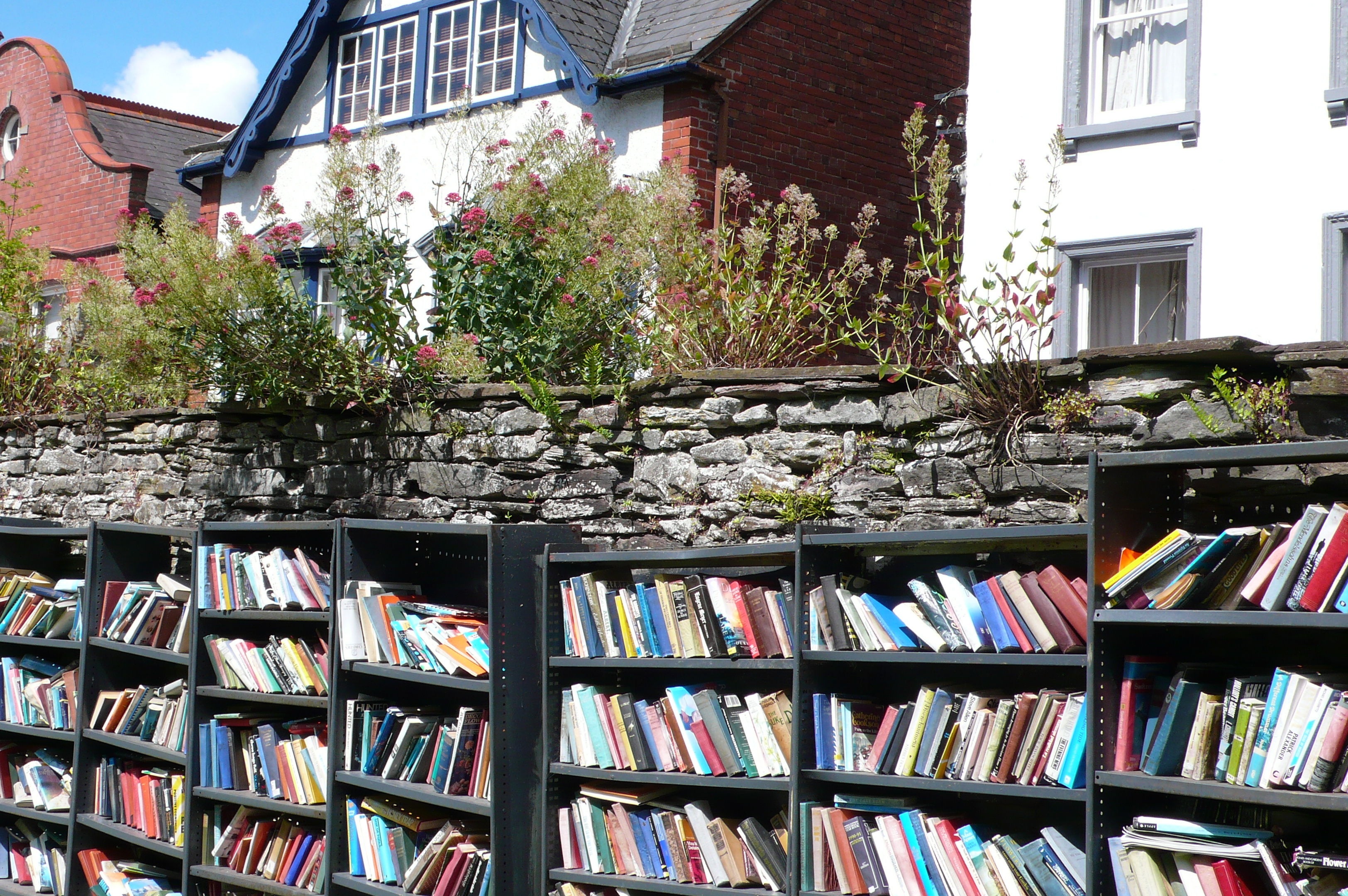
Stone walls provide unique habitats for many plants and animals as they mimic rocky out crops and cliff faces.  Perhaps less obviously, so too do brick walls, as I saw on Friday morning which I spent having a grateful break from the office with Hilary Erenler.  Hils is one of my research students and is funded by the Finnis Scott Foundation.  For the past couple of years she has been surveying the pollinating insects found in the gardens of large country houses around Northamptonshire and into adjacent counties.  Our county is particularly rich in these estates (it’s known as the County of Spires and Squires, a nod to both the large number of churches and the historical pattern of land ownership).  So on Friday we conducted a couple of surveys of some large walled gardens on two private estates.  Amongst other things we measured the lengths and heights of the walls, counted a sample of the density of mortar holes that may have been nest sites for solitary bees such as Osmia rufa.  We also returned some soon-to-emerge bee cocoons to artificial nests as part of an experiment Hils is conducting.

For reasons of privacy and security I’m not allowed to divulge which estates we visited.  But I can say that the walled gardens were fascinating relics of a time when such large households and their staff relied on these sheltered,  productive patches to provide food twelve months of the year.  One garden had retained an avenue of some of the oldest espalier apple trees I’ve ever seen.  Thick and gnarled and festooned with epiphytic lichens and mosses, they must have been planted at least 100 years ago.  Whether the household appreciated it or not, the wild native bees that the walls hosted, and those coming in from the surrounding estate, also played their role by pollinating these apples, as well as pears, cherries, nectarines, beans, squashes and other insect reliant crops.

On the way back to the car we found a small patch of violas, primulas and celandines in a dry spot under a tree.  We counted at least 6 species of bees: two bumblebees (Bombus species); at least two (possibly three) andrenids, including the tawny mining bee Andrena fulvaAnthophora plumipes; and what may have been a Colletes species.  The bumblebees were queens, of course, filling up on nectar to give them energy to look for nesting sites.  But some of the solitary bees were males and exhibited their typical behaviour of patrolling the flowers in search of females with whom to mate.

Back in the office that afternoon I dealt with emails.  One was an unexpected communication from Steve Buchmann regarding a recent paper I’d published with Nick Waser and Andreas Erhardt in Journal of Pollination Ecology.  The paper deals with the historical development of some ideas pertaining to pollination syndromes.  I’ve admired Steve’s work for a long time; together with Gary Nabhan, Steve wrote the now classic book Forgotten Pollinators which can be credited with playing an important role in raising the issue of pollinator extinctions and declines in the public and scientific consciousness.  The JPE paper gives a historical perspective on understanding the interaction between Solanum flowers and their pollinators.  The long standing assumption is that Solanum flowers are pollinated by bees that vibrate their bodies at a particular frequency to shake out the pollen from the anthers, a reproductive strategy termed “buzz pollination”.   Steve was writing to tell me that many years ago he published a paper showing that some Solanum species are buzz pollinated by hoverflies.  I’d missed that paper so am looking forward to reading it when he scans it and sends me a PDF.  It worries me that much of the primary literature from before the widespread use of information technology is going to get neglected like this, because it’s not easy to access electronically.  Depositories that have started to archive older work, such as JSTOR, Biodiversity Heritage Library and Google Books, are great, but there’s still a lot of material to retro-input into these systems.

On the way to invigilate a one hour test for my second year Habitat Ecology and Management students later that afternoon I bumped into Muzafar Hussain, another of my research students, who had been out surveying solitary bees in the urban centre of Northampton.   His first year of surveying in 2011 revealed a surprisingly high diversity of species and he’s continuing that work this year.  Some of these bees are nesting in old stone and brick walls in the back streets behind the main thoroughfares of the town and are exploiting wall plants as pollen and nectar sources, a topic that’s being researched by Lorna, one of my final year project students.  Everything was coming back to walls today…..