
This year – 2026 – marks the 40th anniversary of my first publication. Forty years. Imagine that – I certainly can’t! It feels like a long time ago, a distant memory, another life. I was 21 and I hadn’t even begun my undergraduate degree. After a less-than-successful time at school I decided to complete a Higher National Diploma (HND) qualification in Applied Biology at Sunderland Polytechnic (now the University of Sunderland) that I hoped would get me a place on a degree course. As it turned out, it did, but during my HND I completed a research project which (with the encouragement of my then supervisor, the late cactus expert Geoff Swales*), was subsequently published in December 1986 as “Adaptation to arid environments in the Asclepiadaceae” in the British Cactus and Succulent Journal.
That was the modest start of a botanical love affair with asclepiads (now subsumed into the family Apocynaceae) that has persisted to this day and resulted in over 20 research papers, chapters, and more general articles, plus appearances in both of my books.
The latest of these papers is published today and, as well as being a 40 year milestone for me, it’s a paper that I am inordinately proud of, as it represents an amazing coalescence of ethnobotany, taxonomy, conservation, biogeography, cultural science, and pollination ecology. And I managed to sneak in a citation of the 1986 paper that started the whole thing!
This paper is the first global review of the diversity of edible species in a family that is usually considered to be highly toxic and produces a lot of sticky latex to deter herbivores. Yet that reputation turns out to be only part of the story. Our survey found no fewer than 440 edible species of Apocynaceae worldwide, which works out at about 7.7% of the family (and is definitely an under-estimate). They occur across all of the major evolutionary lineages of the family, and in most of the main biogeographic regions where these plants grow.
What people eat is also far more varied than you might expect. Fruits are the commonest edible part, but roots and tubers are also important, and in different places people consume leaves, stems, flowers, nectar, latex, bark and even wood ash used as a condiment. That diversity is not random: our analyses show clear phylogenetic and geographic patterning in which parts are eaten. In other words, both evolutionary history and regional cultural practices help to shape how Apocynaceae are used as food.
One especially interesting result is that edible Apocynaceae appear, on current evidence, to be less threatened than non-edible members of the family. But that comes with a big health warning: more than 80% of species, edible or otherwise, have never been properly assessed for conservation status. So there is still a huge amount that we do not know.
The same is true for pollination. Many of these plants depend on animal pollinators to produce the fruits and seeds that people eat, yet pollination data are missing for most edible species, including about 90% of those whose edible parts are directly pollinator-dependent.
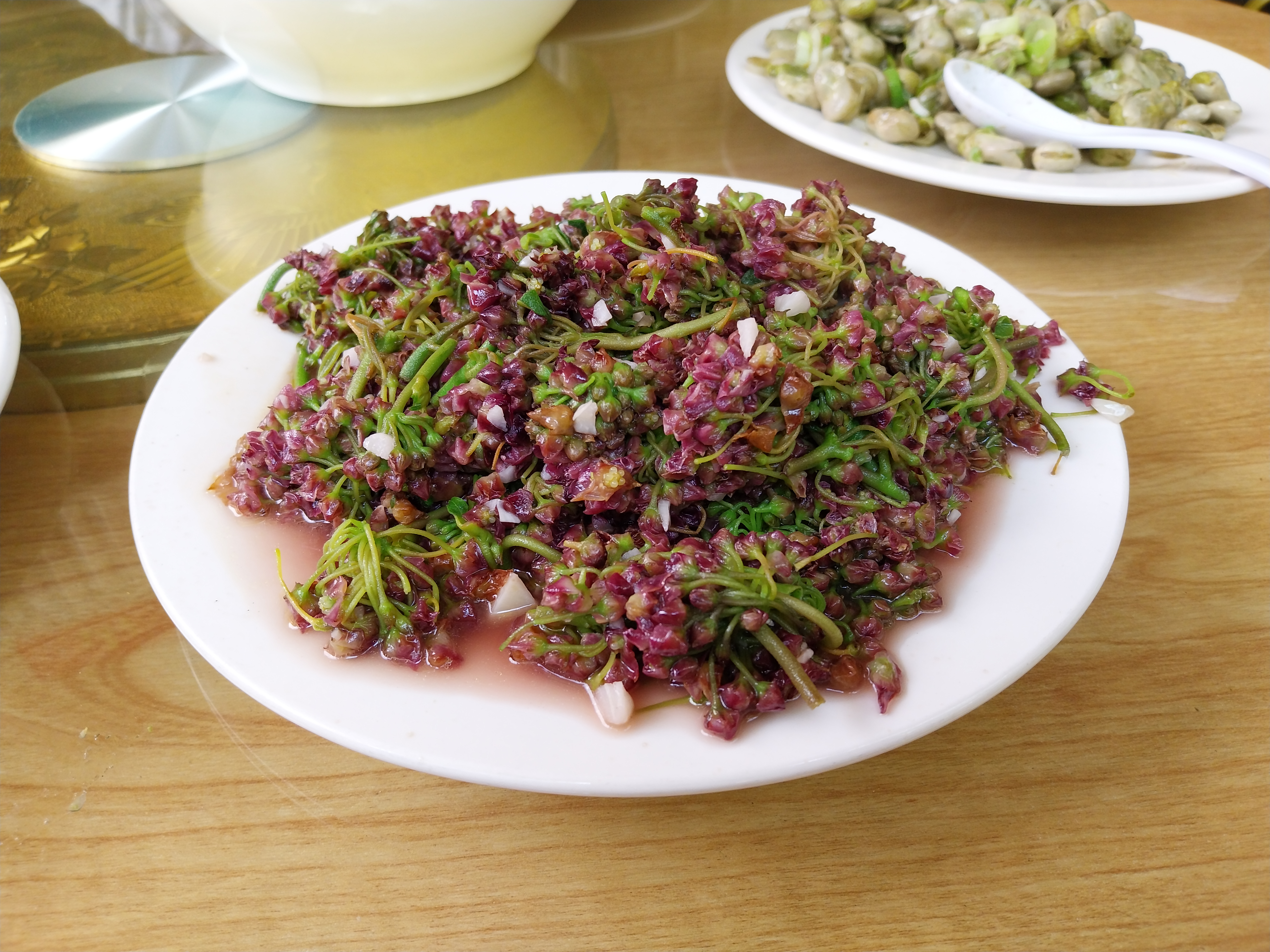
For me, that is one of the most striking messages of the paper. Hidden inside a family best known for poisons and medicinal compounds is a substantial, globally distributed food resource, much of it tied to local knowledge and wild harvesting. It is a reminder that botanical and cultural diversity, conservation, and pollination ecology are all bound up together. And, as a nice bonus, the study even uncovered an unexpected taxonomic surprise in China, where one edible species turned out to belong in an entirely new genus, Kushengia. The edible flowers of Kushengia sinensis are shown in the image at the top of this post – lightly boiled, stir fried with garlic, and thoroughly delicious!
Here’s the reference with a link to the paper, which is unfortunately pay-walled. If anyone wants a copy, send me a request via my Contact page:
*It goes without saying that I’m incredibly grateful to Geoff and the other teachers and supervisors who, during the course of my education, encouraged me in my studies. During one lab session with Geoff we were each given a cactus seed and asked to study it under a microscope and draw it. Afterwards I pocketed the seed, took it home, and germinated it. That cactus – a specimen of Parodia (Notocactus) mammulosus – is still growing on my windowsill, a living reminder of a great mentor.

 Prof. Jeff Ollerton - ecological scientist and author