Tag Archives: Poetry

How reliable is ChatGPT? A weird encounter with Erasmus Darwin

There’s currently a lot of interest in ChatGPT and over the past week, like many others, I have been playing around with this artificial intelligence (AI) system and testing its knowledge and creative powers. The latter are really very impressive: I asked it to write a couple of limericks about Karin and my professions, and about our move to Denmark, and it produced a decent stab at those.

I also probed its knowledge about topics with which I’m familiar, mainly pollinators and pollination of course, and it produced some good answers. When I highlighted some errors it had made, ChatGPT went back and revised its answers, and politely thanked me in the process. If I were a student I would not rely on it to write accurate essays, but so far so good(ish).

This morning, however, I had a very odd experience. I was trying to track down something attributed to Erasmus Darwin (Charles’s grandfather) and I asked ChatGPT: “What did Erasmus Darwin say about birds visiting flowers?”

This is the answer that came back:

Erasmus Darwin was a naturalist, physician, and poet who wrote about a wide range of topics, including birds and flowers. In his 1794 poem “The Loves of the Plants,” he describes how different species of birds visit flowers in search of nectar:

“Birds of each hue, from the gay parrot’s beak
To the goldfinch, painted in tiny streak,
Sip nectar from the cups that bloom and bow
With every breeze, and nod and dance below.”

Now, the first part of this, about Erasmus’s life, is true. It’s also true that he wrote a poem with that title, though it was published in 1791, not 1794.

But, when I double-checked those attributed lines against the published version of the poem that’s on Project Gutenberg, I discovered that they did not exist. ChatGPT had made them up!

As I said, this AI is pretty creative and will certainly write a poem for you on any topic you care to request. But I didn’t ask it for that, I had made a factual query. And ChatGPT had just invented some poetry and claimed it as fact, unless of course those really are Erasmus’s lines and I’ve missed their source (please correct me if I have).

Now as a scientist and writer I try to be rigorous when quoting and citing sources, and if I hadn’t double-checked this I might have taken it at face value. And one could argue that my initial question – “What did Erasmus Darwin say…?” – was a little ambiguous. But nonetheless, I was not expecting an AI to try to pass off something it had created as fact.

Has anyone else experienced anything like this when using ChatGPT? It’s a fun, creative tool. But as far as I can tell, it also has a very human ability to lie.

“Arches of evergreen that scarce let through, A single feather of the driving storm” – how evergreen trees alter local microclimate

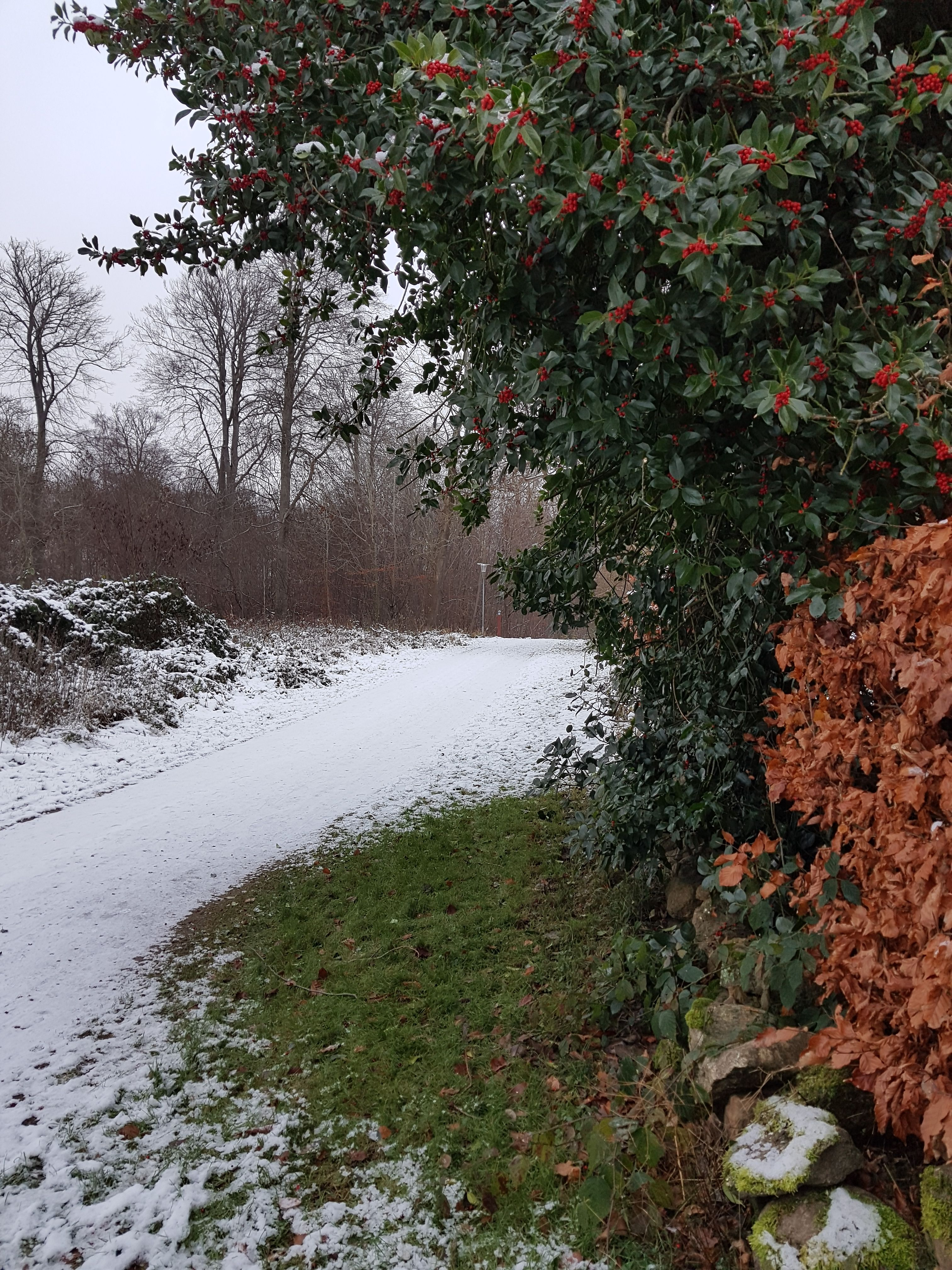
Yesterday, Karin and I took a winter walk through one of the local woodlands, our feet crunching on the iced-over crust which is all that remains of last week’s snowfall. No doubt more snow is on its way as we approach the deepest part of winter here in Denmark. But seeing this holly tree reminded us that some parts of the woodland might remain snow-free no matter what the conditions.

Although I’m no meteorologist (and any who are reading this can correct me if I’m wrong), I suspect that two things are going on here. Firstly, the tree is sheltering the ground and reducing the amount of snow that falls below it. That umbrella effect is fairly obvious. But secondly, and more subtly, the small amount of warmth that there is in the soil is being prevented from radiating off into space by the presence of the holly leaves. So the warmer soil and surface layer of vegetation melts any snow that manages to make it through or under the holly’s canopy.

In both of these ways, the evergreen holly is affecting the microclimate of this part of the woodland. That in turn adds to the ecological heterogeneity of the habitat, proving greater access to food for animals, affecting the phenology of the ground flora, reducing local soil moisture, and so forth. All of these, in turn, will potentially lead to greater diversity of species with the local area.

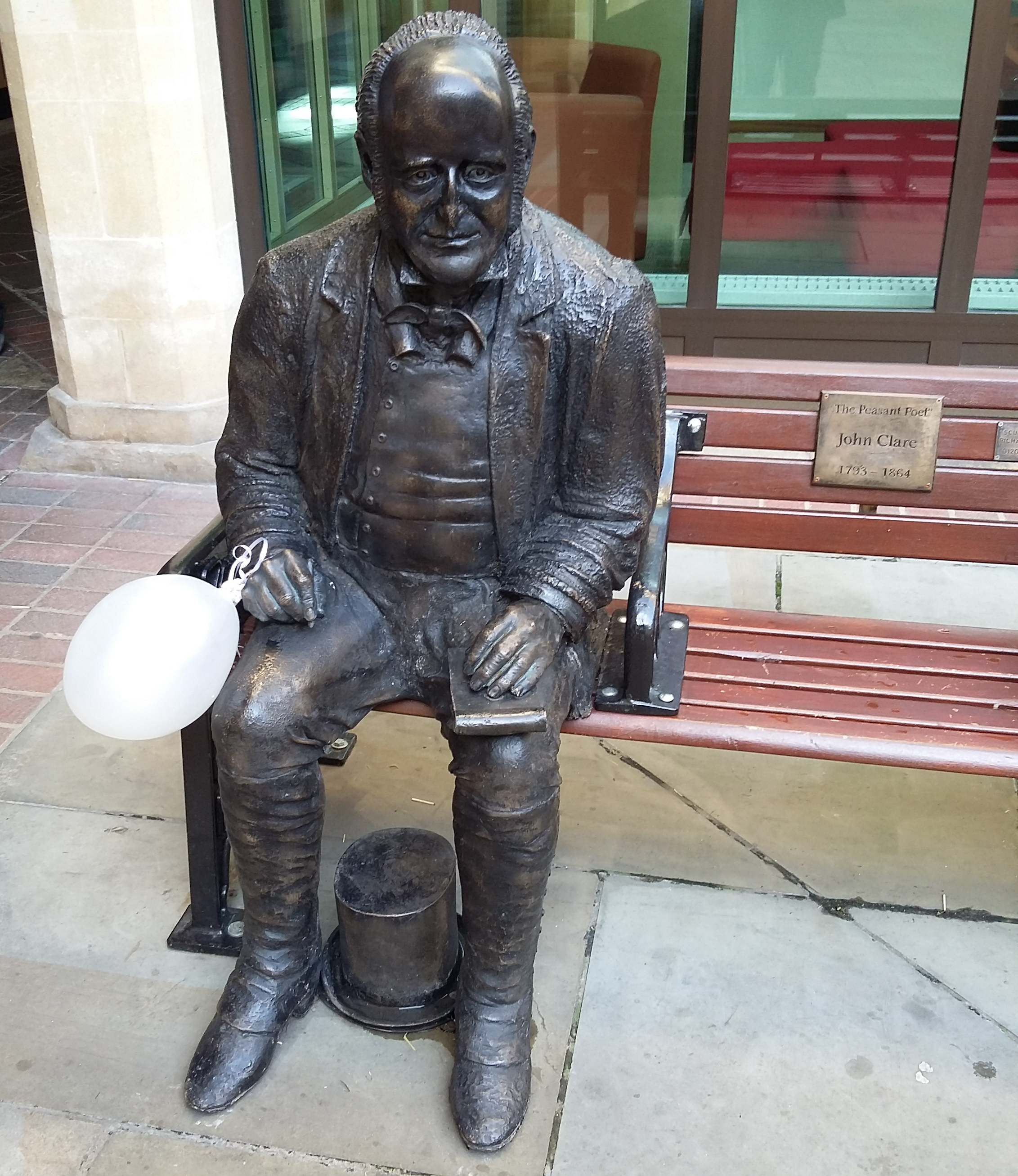
On this blog and in my book Pollinators & Pollination: Nature and Society I’ve often written about evergreen trees, shrubs and climbers such as ivy, holly and mistletoe, including both their cultural associations (especially with Christmas) and their ecological importance. As so often is the case, the English poet John Clare thought about all of this two centuries ago. The quote I used in the title of this post is from his poem Winter Walk:

The holly bush, a sober lump of green,
Shines through the leafless shrubs all brown and grey,
And smiles at winter be it e’er so keen
With all the leafy luxury of May.
And O it is delicious, when the day
In winter’s loaded garment keenly blows
And turns her back on sudden falling snows,
To go where gravel pathways creep between
Arches of evergreen that scarce let through
A single feather of the driving storm;
And in the bitterest day that ever blew
The walk will find some places still and warm
Where dead leaves rustle sweet and give alarm
To little birds that flirt and start away

John Clare (1793-1864)

This might be my last post of the year, and so it only remains for me to wish a Glædelig Jul and Merry Christmas to all of my readers!

Photograph and poem: the only alien here

2018-11-01 23.21.44

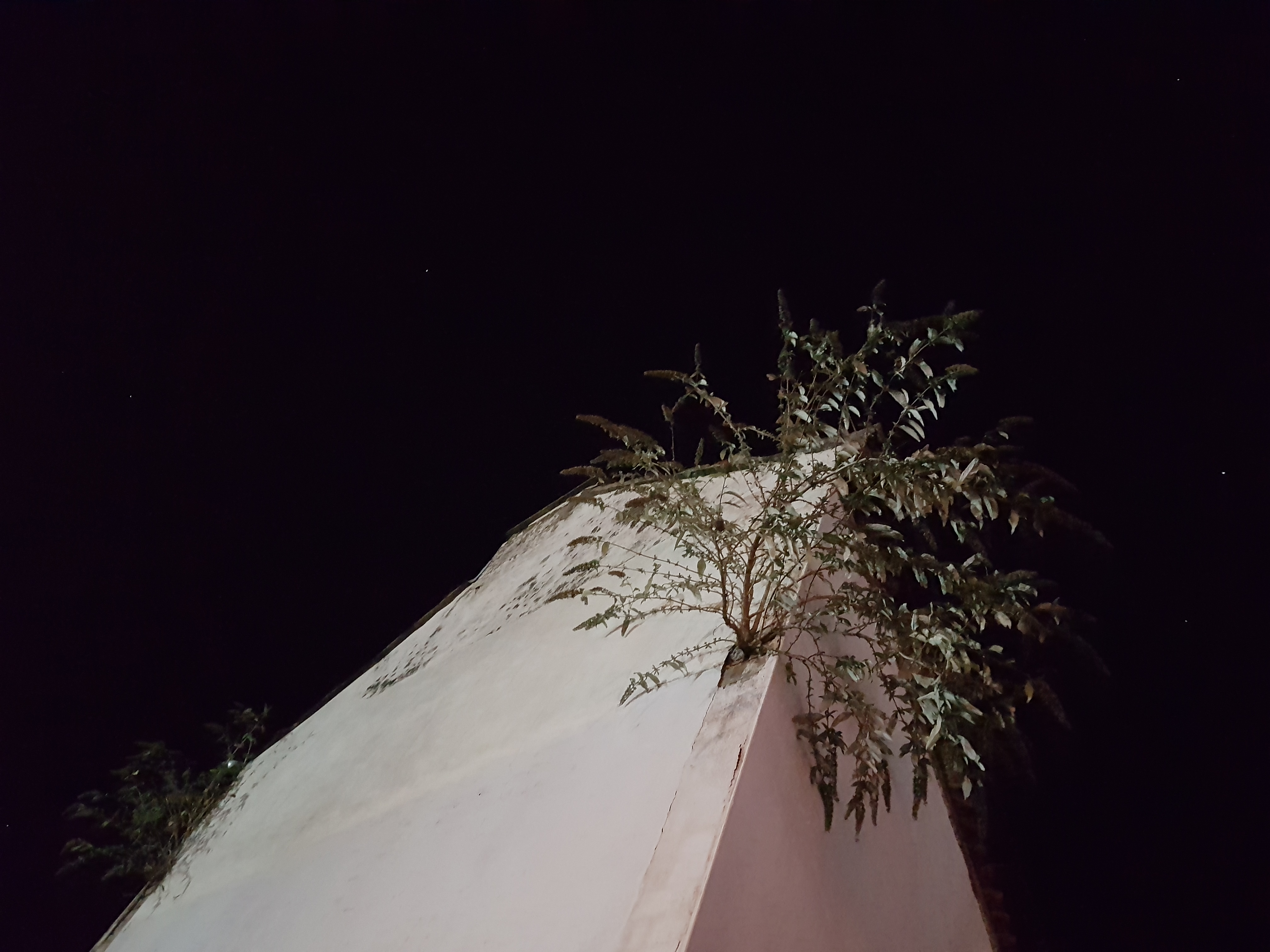
Wind the propagator propels air-borne seeds

To urban refuge and new opportunity

Where they germinate, elongate, grow, and flower,

Roots seeking soil, making do with mortar and render,

As, persistent in its invader role,

Buddleia grips a gable cliff, dispensing offspring

From house wall warmth into frigid space

And a clear night of stars backdrops the only alien here.


Who was the father of biogeography? Let poetry decide! UPDATED

Norway from the air.jpeg

Over at the Dynamic Ecology blog yesterday, Jeremy Fox posted in the weekly Friday Links feature a piece about clerihews – four line poems about an eminent individual that follows a strict AA BB rhyming structure.  Jeremy’s challenge of “+1000 Internet Points for anyone who writes a clerihew about an ecologist in the comments”, of course, was like a proverbial red rag.  The clerihews came rolling in, including some great contributions, and some dodgy rhymes…  I contributed a couple:

Darwin’s natural selection
Was received with circumspection
But with development of society
Evolution replaced piety

and

Following the theories of Darwin
Science and religion were a-warrin’
But after natural selection
Came more balanced introspection

But then I suddenly found myself in a clerihew face-off  with Brazilian ecologist Rafael Pinheiro, which is too good not to preserve for posterity:

RP:

Look to this poor man called Wallace
He was not born and raised in a palace
But don’t get fooled by this misleading photography
The man is the father of biogeography

JO:

Von Humboldt travelled and mapped plants
When schoolboy Wallace wore short pants
So in a more accurate historiography
Von Humboldt’s the father of biogeography

RP:

Humboldt came first, I will not deny
But Wallace is the father and I’ll tell you why
He was not the first to study species distribution
But the one who explained it through evolution

JO:

Sure, Hooker embraced Darwin’s evolution
And came up with a very modern conclusion
But fatherhood is not about interpretation
It’s about the initial insemination

Jeremy award us 10,000 Internet Points and we agreed to call it a draw 🙂  Thanks to Jeremy for the initial challenge and to Rafael for being such a good sport.  It was a lot of fun.

UPDATE:

Jeremy has also highlighted the contributed clerihews with this post on Dynamic Ecology, to which Rafael has commented:

Jeff Ollerton studied pollinators and plants
When graduateboy me read his papers wearing short pants
So, I must admit, I am happy to be the one
Who faced him in the first clerihew slam

To which there’s only one possible response:

Rafael Pinheiro it’s been my pleasure
To trade these clerihews at leisure
But your last one, truth be told
Makes me feel old


Scientist as Poet as Scientist – from Dark Mountain 10

Dark Mountain on Tenerife 1

What follows is the text from an article that has just been published in Dark Mountain issue 10. Click on that link and you can read more extracts from this volume of poetry, prose, and illustration, and even purchase a copy.  Dark Mountain 10 focuses on “poetics”, hence the title and topic of my contribution.

The Dark Mountain project is a fascinating, vibrant, loose network of writers, thinkers, musicians and artists, whose work and ideas I’ve discussed previously (see:  Up a mountain darkly and We are so very ‘umble).  It’s a great achievement that they (we) have made it to ten issues; here’s to the next 10.


Poet as Scientist as Poet

For as long as I can recall I have been a scientist. Early memories as a child include turning over rocks and probing under bushes in search of elusive insects, dissecting knowledge from road kill, and splitting it from fossil-rich shale. But also, for as many years as I can remember, I have created poetry. Sometimes this has been permanent written text, other times only thoughts and fragments, committed to temporary memory and ultimately lost like the bugs I studied in jars and released back into the wild. Over time the science has become public-facing as hobbies were turned into a career. The poetry remained turned inward, written for myself, only occasionally on show to lovers or to audiences at local spoken-word events.

Perhaps the idea of scientist as poet is too contradictory to bear serious scrutiny, but both of these aspects of my life relate to a deep, enquiring curiosity that has always been present. Both reflect a need to understand something of this complex, confusing world we inhabit, and the place of people and their relationships with one another, and with the environment in a wider, encompassing nature.

In the first volume of Dark Mountain I stepped out as a scientist-poet and contributed an essay-with-poetry entitled ‘W(h)ither Science?’, which was a very personal take on the role of scientists, and the knowledge they generate, in the early 21st century. This piece was framed within the context of Uncivilised ideas of ‘what happens when it all goes wrong?’ I prefer to think of it as ‘if’ rather than ‘when’ because, as I originally put it, ‘knowledge is not predictable’. In other words, we don’t know what will happen in the future, so we can only prepare for a range of outcomes. If we take the best of the sciences and of the arts, and of the education they generate, perhaps we can survive as a species and as a set of communities.

Was that really only six years ago? So much has happened in the intervening period; the science has turned ever more outward, with more writing for scientific journals, magazines, my blog, and more presentations of the research undertaken by my group to other scientists, to policy makers and NGOs, and to the public. The poetry, meanwhile, has remained private, which led me to consider whether it was time to give up a little more. The two short poems in this essay were both written more than ten years ago, though they have been revised and polished periodically. Even as I began to construct this piece I was revising words and reconsidering sentence structure, much as I might revise the analysis of a data set or reconsider its interpretation when writing a scientific paper. One of the things I love about producing poetry is that its form is malleable, it’s never complete, I can change it when I wish. This malleability is also a feature of science: we revise our ideas when confronted with new evidence, rejecting previously supported hypotheses in favour of more accurate notions of the universe.


Chains of Copper, Locks of Lead

Mention a river:
I may have heard of it,
Or talked to a woman who has gazed at its bed.
Cage its waters, bind its banks,
With chains of copper, and locks of lead.

Ultimately bending to time, eroding
The surge and the volume sustaining, removing.

Weighed down, I lay down,
And the river unconscious
Passed over my body and on to the sea.
While my lover cast stones from the bank to the current.
The banks of my body, the river of me.


Due to their inherent chemical properties, both lead and copper are relatively ductile, weak metals: they cannot withstand the force of a river indefinitely. In the same way, no matter how much we believe we can tame rivers or seas or any other component of the natural world, ultimately the environment will prevail. It just takes time. We might canalise a river to prevent flooding or dam it to provide hydro-electricity, but not realise that in its untamed state the river is more valuable, as it provides food, allows travel, brings fertility to flood plains. What, then, does it mean to ‘know’ something about a river? Whose knowledge is more valuable, which expert do we trust? The internet is awash with information, but knowledge, first and second-hand, can both enlighten us and sometimes prevent us from really understanding.


Ordinary by Choice

She chose the route and chose her topics,
Modular waypoints across years of work.
Decisions based on the balance of a gyroscopic
Pursuit of life, work, and an honours degree.
Finally, she elected to be
Ordinary by choice.


A student who chooses not to complete a final year dissertation
module – and so graduate with Honours – but rather exit university with an Ordinary degree, is described as ‘Ordinary by choice’. The phrase strikes me as both poetic and prophetic. Could anyone choose to be ‘ordinary’, and even if they could, is such a thing desirable? Is the course of a simple, ordinary life preferable to one that is complex and extra-ordinary? Does anyone truly believe that their experience of our rich, intricate world, in which decisions are made about priorities and ‘balance of life’, is ordinary, no matter how they make a living or what they do to fill their days?

Education in its widest sense, both formal and informal, taught and autodidactic, is a constant and destinationless journey that takes us from ignorant to less-than-ignorant. It is no coincidence that we use the same word (‘course’) in education, and to describe a river, and a life. A river’s function, as far as people are concerned, depends on choices that we make as to its course and fate. But even without human intervention that course naturally shifts over time and its destination is not necessarily the sea: much depends on geological events and the resulting topography of the land, at time scales uncaptured by the course of an individual’s experience.

The scientific research that I undertake is an attempt to capture truths about the ecological functioning of our planet and how it underpins human societies, no matter how technological or industrialised. It takes collected, often hard-won, data, internally scrutinises it for meaning, and externalises the findings into tables, graphs and written texts, that may influence other scientists or emerge in government reports or policy documents. My poetry takes ideas, emotions, feelings, and projects that mix of internal and external worlds into forms that sometimes, but not always, make sense to me. Empirical truths and emotional truths are not the same thing, and in fact may be contradictory and counter-factual. But empirical rationalism and emotional construction can coexist, and often do within the minds and personalities of scientists. Most do not produce poetry, but every scientist I know is emotionally invested in their subject and openly describes their science in terms of delight, rage, obsession, elation and disappointment, every bit as intense as any poet.


The full reference for this is:

Ollerton, J. (2016) Scientist as Poet as Scientist  Dark Mountain 10: 185-189

John Clare: Landscape & Learning – Northampton – 11th November

John Clare - 20161017_104834.png

Following my recent post about John Clare’s poem “Wild Bees“, I’ve been invited to give a short presentation on this at a forthcoming meeting about the Northamptonshire poet and documenter of environmental change.


Here’s the details:

John Clare: Landscape & Learning

Short presentations & discussions on aspects of John Clare

Venue: Room MY120 University of Northampton, Avenue Campus, NN2 6JD


FRIDAY 11th NOVEMBER: 10am arrival – 4pm close


Culminating with the JOHN CLARE LECTURE 2016 to be given by Professor John Goodridge


Contributors include: Jeff Ollerton, Erin Lafford, Charles Bennett, Clare Abbatt, Christy Edwall, Stephen Sullivan, Carry Akroyd, on topics such as:

John Clare’s Sonnets * Clare & the Bees * Clare the Fiddle Player * Clare as Inspiration * Clare & Weather * ‘The Nightingale’ * Clare in the Fields * ‘St Martin’s Eve’

Free and open to all. Bring lunch or use cafeteria on site.

Identifying the “Wild Bees” in John Clare’s poem – UPDATED

P1030210

John Clare is one of the most celebrated English poets of rural landscapes and nature in the 19th century. To quote his biographer, Clare was “the greatest labouring-class poet that England has ever produced. No one has ever written more powerfully of nature”.  Not only that, he was born and lived for much of his life in my adopted county, hence his epithet as “The Northamptonshire Peasant Poet”.

One of his less well-known poems is called Wild Bees and is a stunning example of Clare’s ability to make detailed observations of the natural world and to translate those observations into poetry.  So good are those observations that, as I show below, it’s possible to identify Clare’s bees from the descriptions he gives.  First of all, here’s the full poem:

Wild Bees

These children of the sun which summer brings
As pastoral minstrels in her merry train
Pipe rustic ballads upon busy wings
And glad the cotters’ quiet toils again.
The white-nosed bee that bores its little hole
In mortared walls and pipes its symphonies,
And never absent couzen, black as coal,
That Indian-like bepaints its little thighs,
With white and red bedight for holiday,
Right earlily a-morn do pipe and play
And with their legs stroke slumber from their eyes.
And aye so fond they of their singing seem
That in their holes abed at close of day
They still keep piping in their honey dreams,
And larger ones that thrum on ruder pipe
Round the sweet smelling closen and rich woods
Where tawny white and red flush clover buds
Shine bonnily and bean fields blossom ripe,
Shed dainty perfumes and give honey food
To these sweet poets of the summer fields;
Me much delighting as I stroll along
The narrow path that hay laid meadow yields,
Catching the windings of their wandering song.
The black and yellow bumble first on wing
To buzz among the sallow’s early flowers,
Hiding its nest in holes from fickle spring
Who stints his rambles with her frequent showers;
And one that may for wiser piper pass,
In livery dress half sables and half red,
Who laps a moss ball in the meadow grass
And hoards her stores when April showers have fled;
And russet commoner who knows the face
Of every blossom that the meadow brings,
Starting the traveller to a quicker pace
By threatening round his head in many rings:
These sweeten summer in their happy glee
By giving for her honey melody.


Here are the bees that I think Clare is talking about:

The white-nosed bee that bores its little hole, In mortared walls and pipes its symphonies

This is the least obvious of the bees to identify, but my best guess, due to the “little hole” and “white nose“, is one of the small Yellow-Faced Bees (Hylaeus spp.) some of which (despite the name) have white faces.  UPDATE:  following discussion with Matt Smith in the comments (below) I’m going to change my mind and suggest that Clare is referring to male Hairy-footed Flower Bee (Anthophora plumipes) – I think the “never absent couzen” part is the give-away.

And never absent couzen, black as coal, That Indian-like bepaints its little thighs

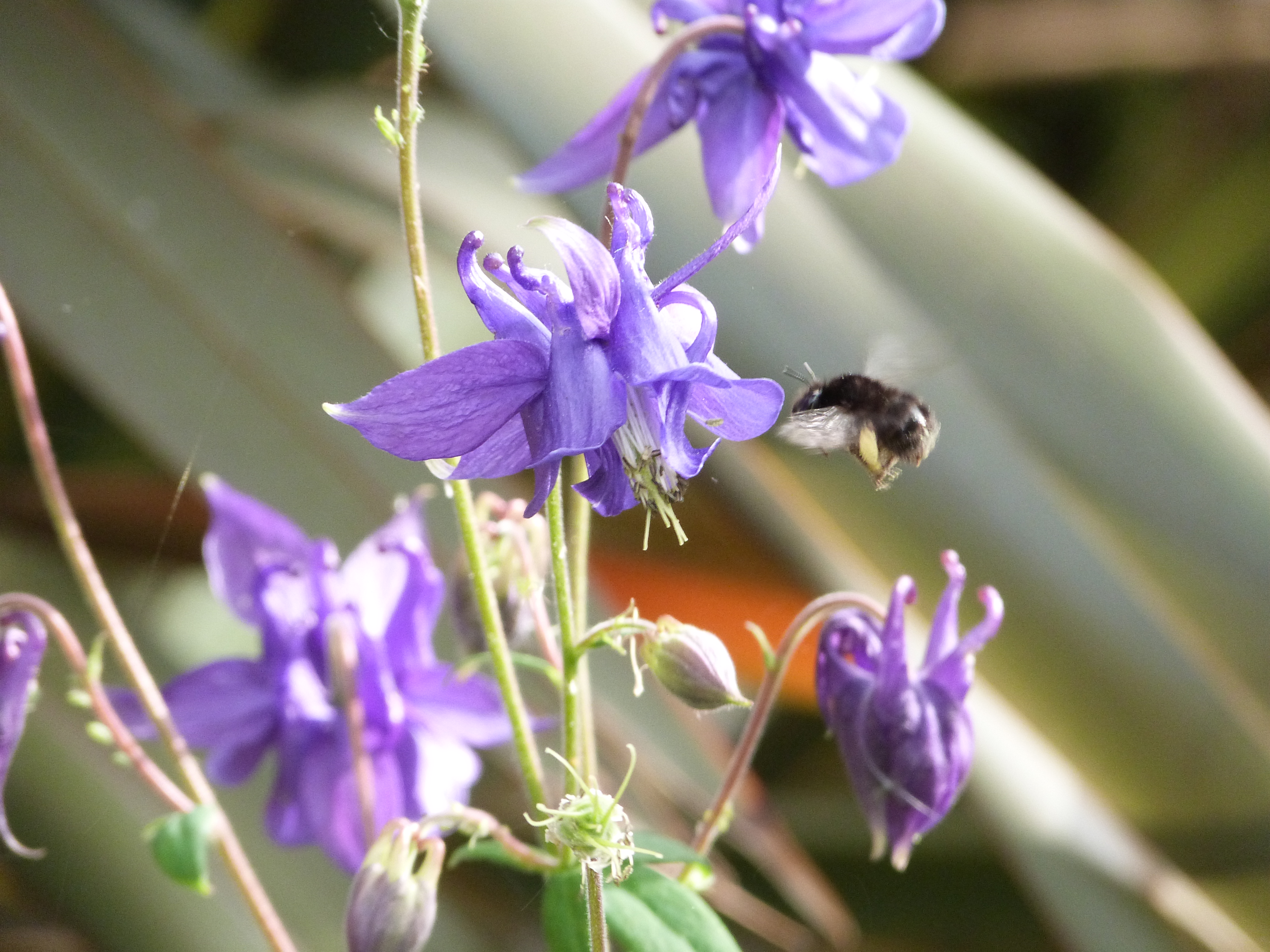
This has to be the female Hairy-footed Flower Bee (Anthophora plumipes) which is all black except for its orange pollen brush on its rear legs, and which also nests in old walls.

The black and yellow bumble first on wing, To buzz among the sallow’s early flowers, Hiding its nest in holes from fickle spring

I’m going to suggest that this is referring to the Buff-tailed Bumblebee (Bombus terrestris), the queens of which tend to emerge earlier than other, similar species, hence “first on wing“.  It also usually nests in rodent holes.

In livery dress half sables and half red, Who laps a moss ball in the meadow grass

This can only be the Red-shanked Carder Bee (Bombus ruderarius) the only red and black bee in the UK that makes a mossy nest above ground.

And russet commoner who knows the face, Of every blossom that the meadow brings

Finally, this must be one of my favourite bumblebees, the all-brown, Common Carder Bee (Bombus pascuorum), which is as common as the name suggests, and is renowned for foraging on a wider range of flowers than most others, and therefore “knows the face of every blossom“.

If you have any suggestions for alternative bee identifications, please comment below.

UPDATE:  it occurred to me after I posted this that all of the bees that Clare describes are still common in Northamptonshire with the exception of the Red-shanked Carder Bee (Bombus ruderarius) which has seen a huge decline throughout its range – see the BWARS account for this species.