‘…people would need to be very weak in the head… before it would occur to them to go into the garden and eat snails…’
Anon. (1867)
Delighted to announce that my essay “A short history of snail-eating in Britain” will be in October’s issue of British Wildlifemagazine. This is a topic that’s intrigued me for many years because it has a close connection to the snail-eating habits of folks (my own family included) in the area of the north-east of England where I grew up. Hopefully it will also interest, and surprise, the readers of British Wildlife!
It’s been a rather nomadic couple of years. After Karin and I sold our house in Northampton, we travelled around in the UK and then in Denmark, renting places as we needed them, plus we spent a month in Kenya. We’ve now become more settled in Sjælland and, after some deliberation about whether to buy a house or continue renting, we’ve reached a compromise and bought into an andelsbolig, one of the many Danish cooperative housing schemes – see this article in The Guardianfor more details.
The development of twenty-eight small properties has been newly built to the highest standards of insulation and is plugged into the district heating system which uses a combination of solar warming and gas (in part using methane generated from food waste).
It’s nice to have a garden again. I hadn’t realised how much I’d missed having a space in which to plant and potter. All gardens present challenges, of course, and this one is no exception. Until about 600 years ago the area was under the shallow Kattegat sea. It’s now above sea level due to post-glacial rebound and in fact this whole region of Odsherred is a UNESCO Global Geopark because of the postglacial landscape.
What this means for us is that we are gardening on “soil” which has a very high sand content and is filled with stones, large and small.
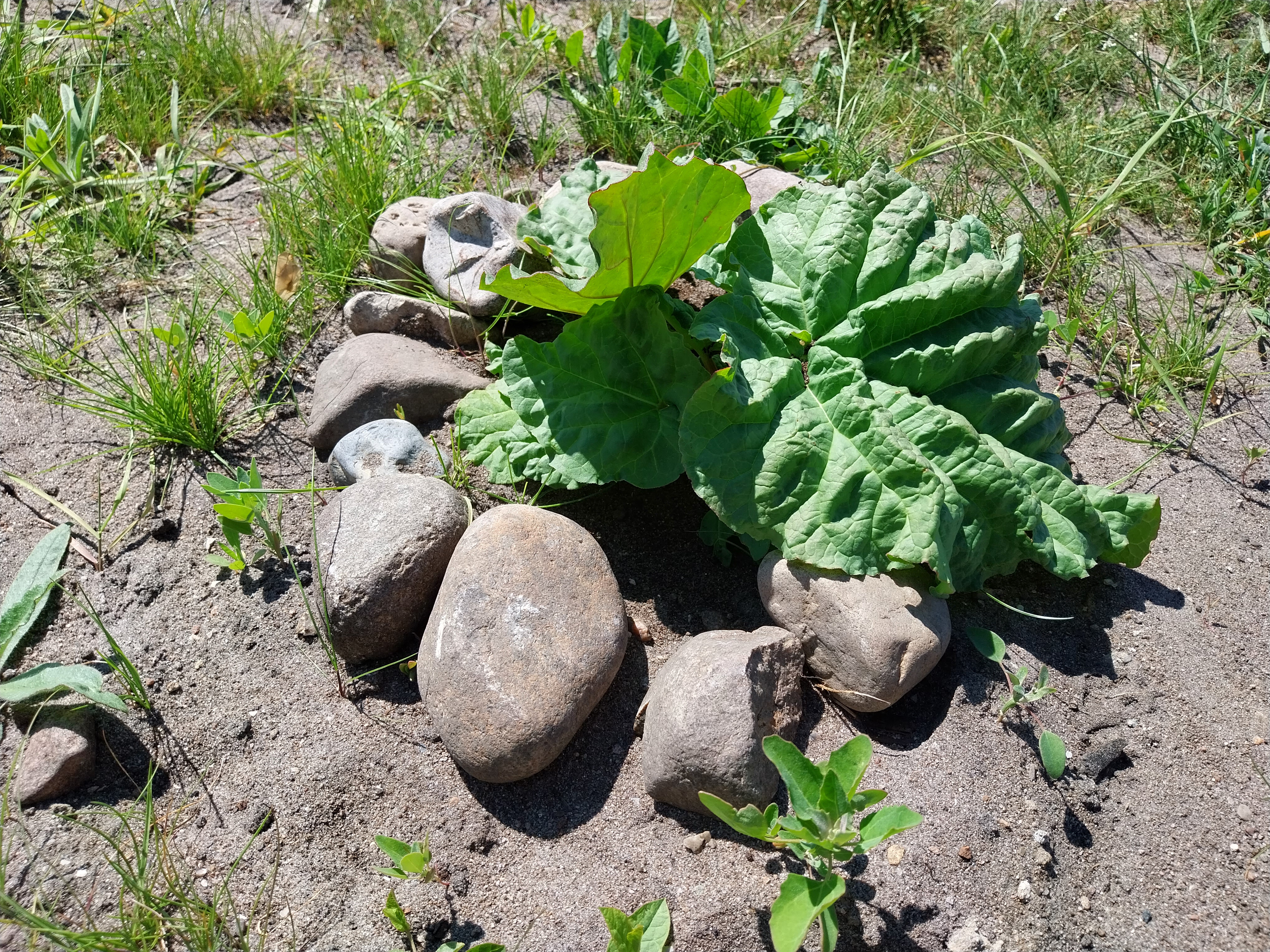
Added to that, we’re in one of the driest parts of Denmark (certainly this year) and a persistent coastal wind rapidly strips the moisture from the soil. So as we dig up or find large stones we are using them around plants to retain water and mulching with the smaller stones that we find in abundance. As yet we don’t have any rain water butts so we’re using the kitchen water from washing up to supplement the hosepipe.
It’s not easy gardening here, but we like a challenge and we’re calling in favours from friends and family to provide us with cuttings and divisions of plants from their own gardens, which should mean that they are better adapted to the local conditions than most of the shop-bought plants. We’ve also started a small vegetable and fruit patch and planted apples and pears around a paved patio that over time we will train as self-supporting espaliers.
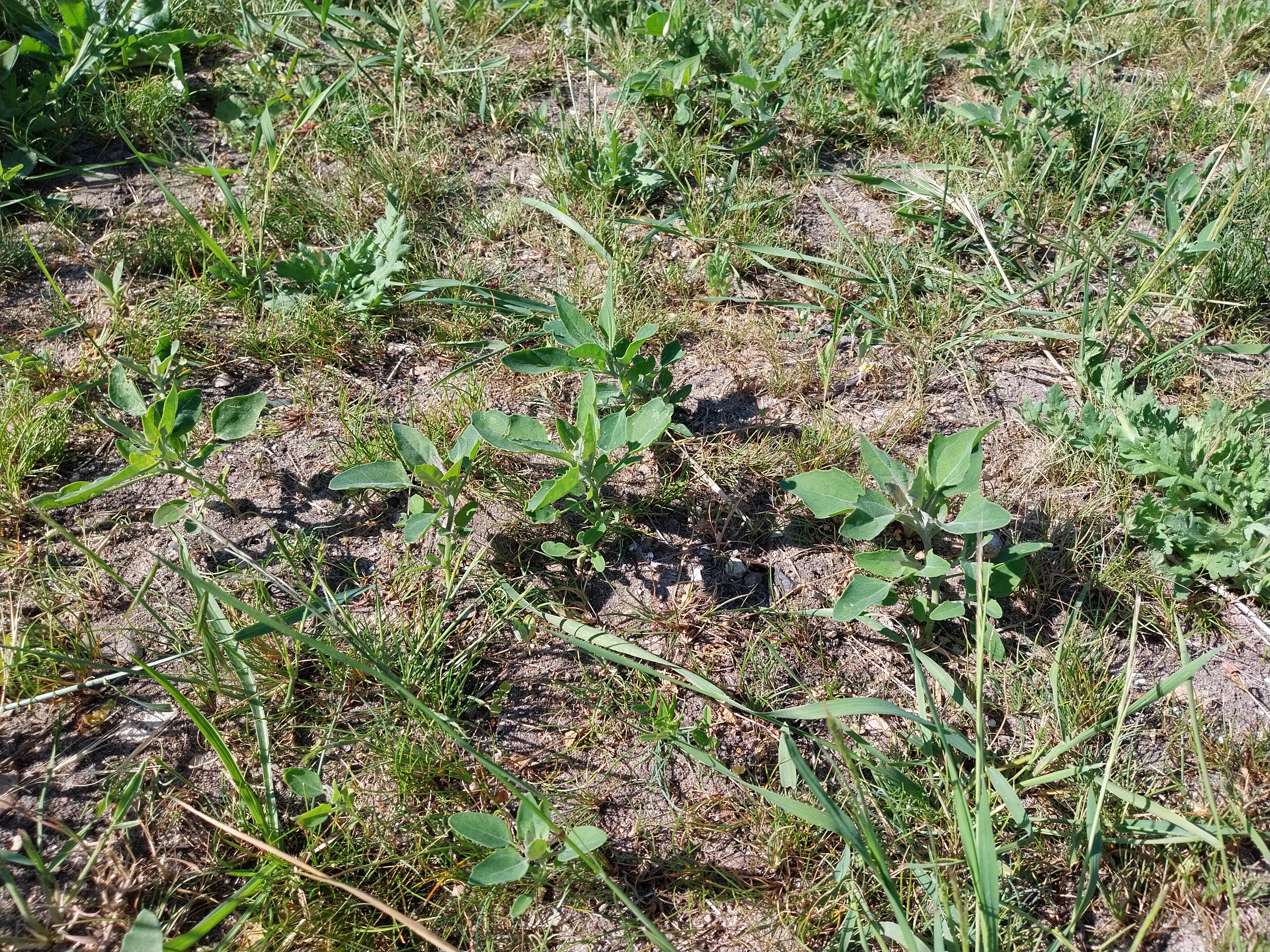
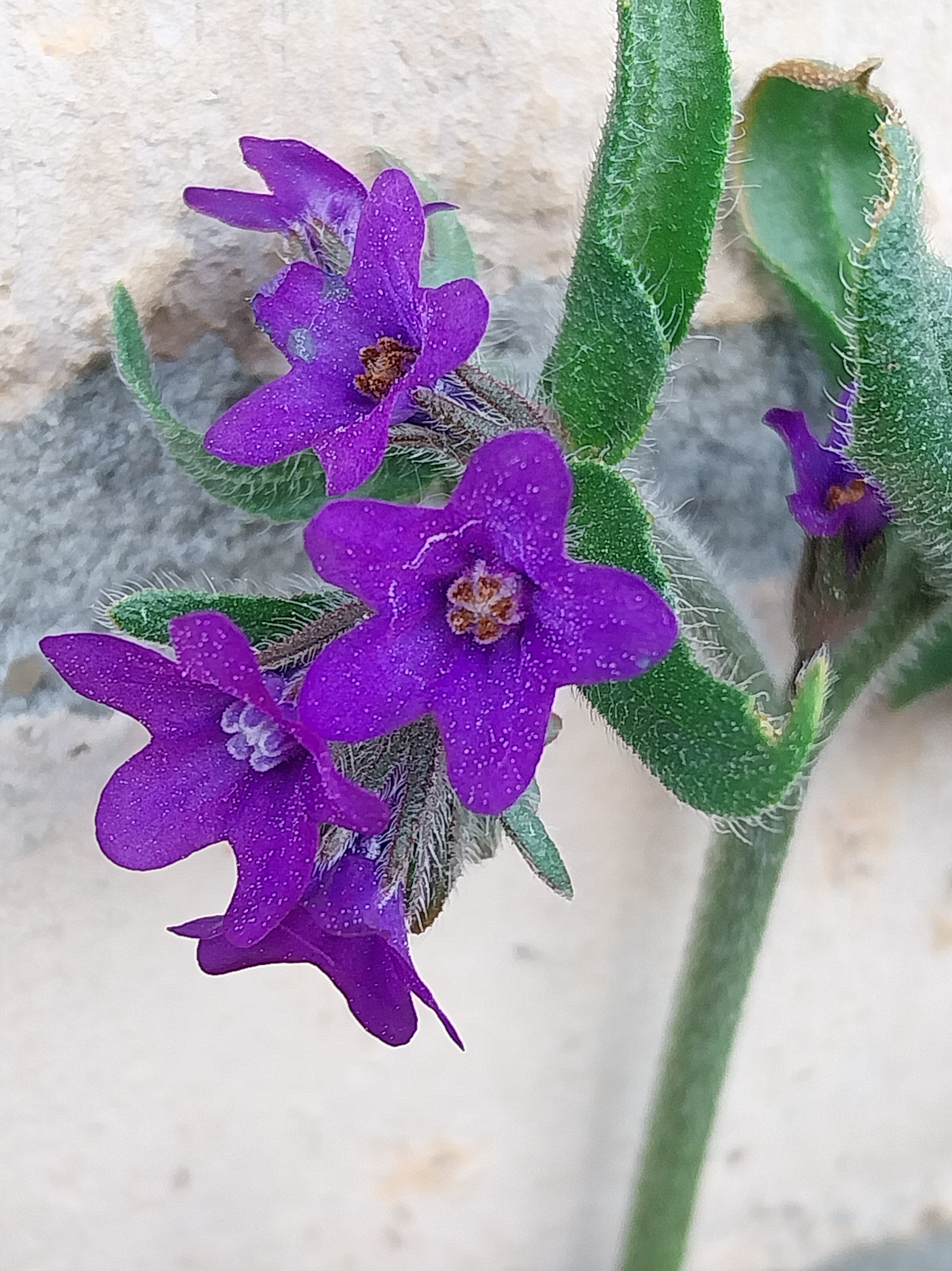
Gradually we’ll fill up the space and move things around as needed. But for now I’m also interested in seeing what plants come up spontaneously, especially the annual species that are benefitting from the disturbance. I don’t use the term “weed” to refer to these: weeds are just plants in the wrong place at the wrong time. Many such plants are ecologically important, especially as nectar and pollen sources for bees and other insects. This includes Common Bugloss (Anchusa officinalis) with its richly purple, velvet-textured flowers.
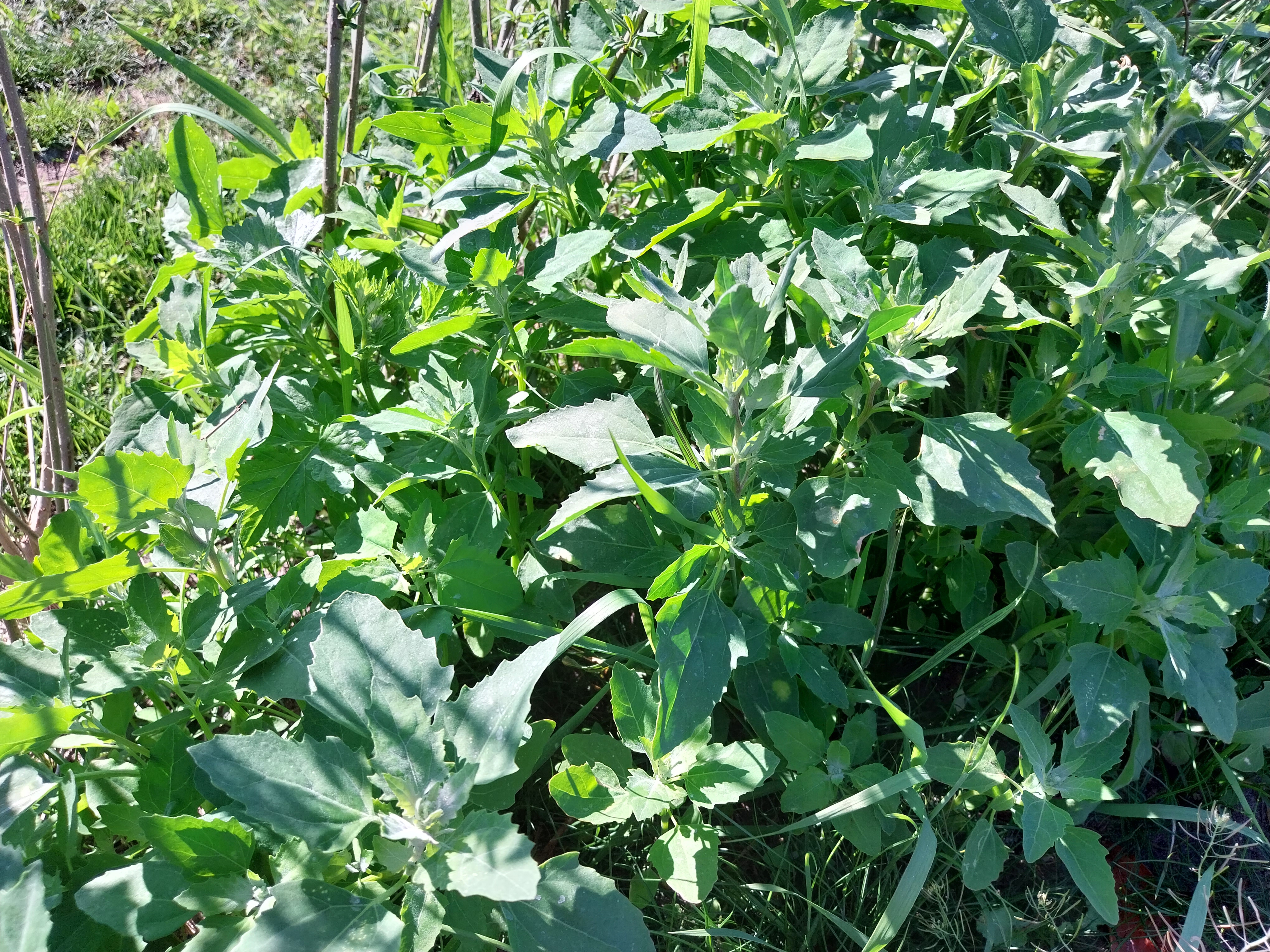
Another plant that we are tolerating is a fast-growing relative of spinach that’s variously called Goosefoot or Fat Hen (Chenopodium album). I’d long known that it was edible (it’s grown as a crop in parts of Asia) but until last night I’d not cooked with it.
In fact it’s delicious! I threw some roughly chopped leaves and stems into a mushroom omelette and I have to say that it was better than any commercial spinach I’ve bought or grown. In particular, the texture is much nicer as the leaves are very water-repellant which mean that they don’t absorb as much moisture during cooking. Highly recommended as an alternative to spinach but make sure you correctly identify the plant before you try it – there’s some good advice on this website: https://www.wildfooduk.com/edible-wild-plants/fat-hen/.
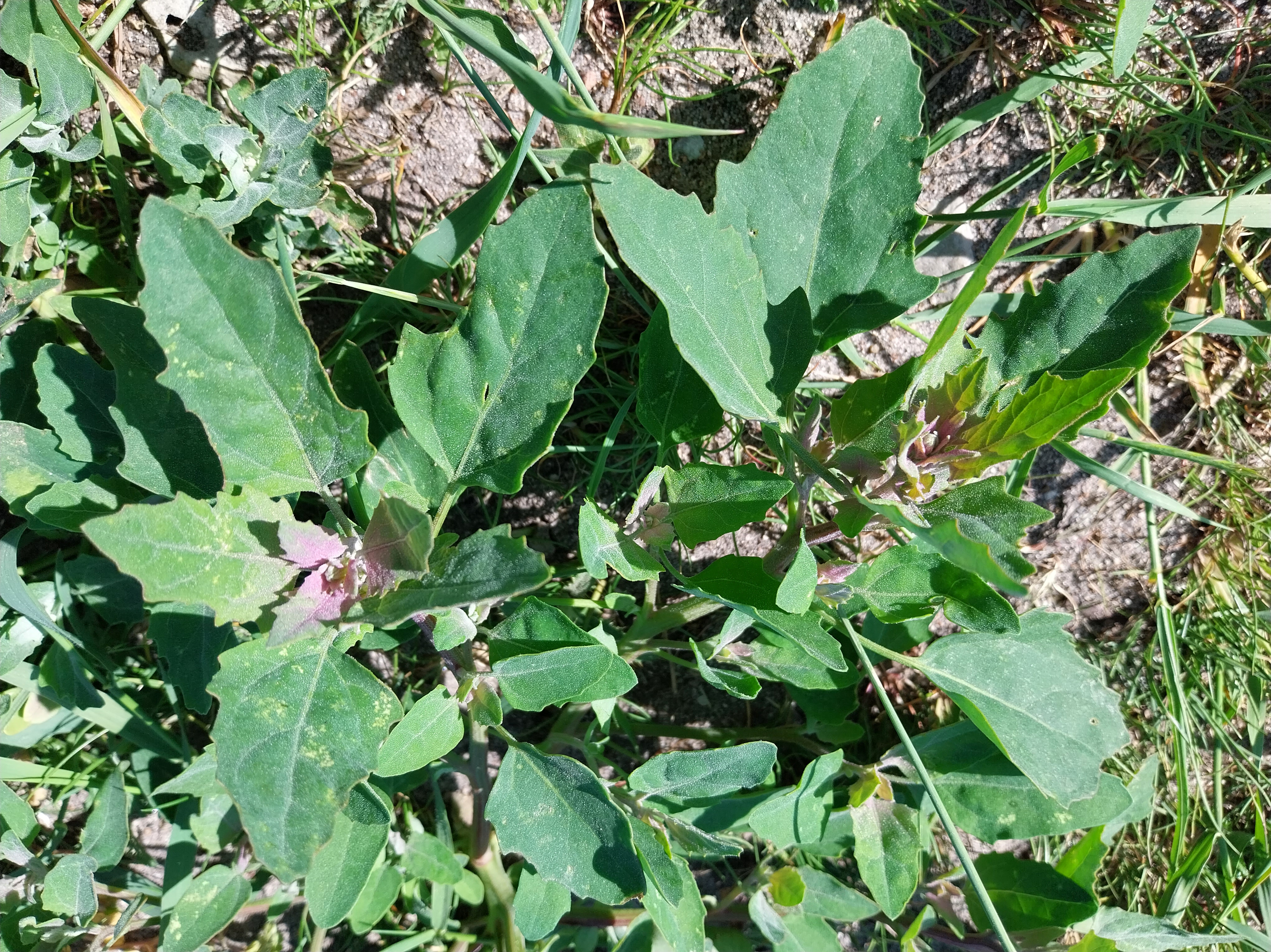
As well as Fat Hen we also have the close relative Tree Spinach (Chenopodium giganteum), with it’s beautiful magenta-tinged leaves, coming up in the garden. I’m looking forward to trying that too:
I’ll try to post more as the garden progresses, if I have time. But as I mentioned yesterday, even though the manuscript is complete and submitted to the publisher, there’s still lots to do on my next book! Have a good weekend.
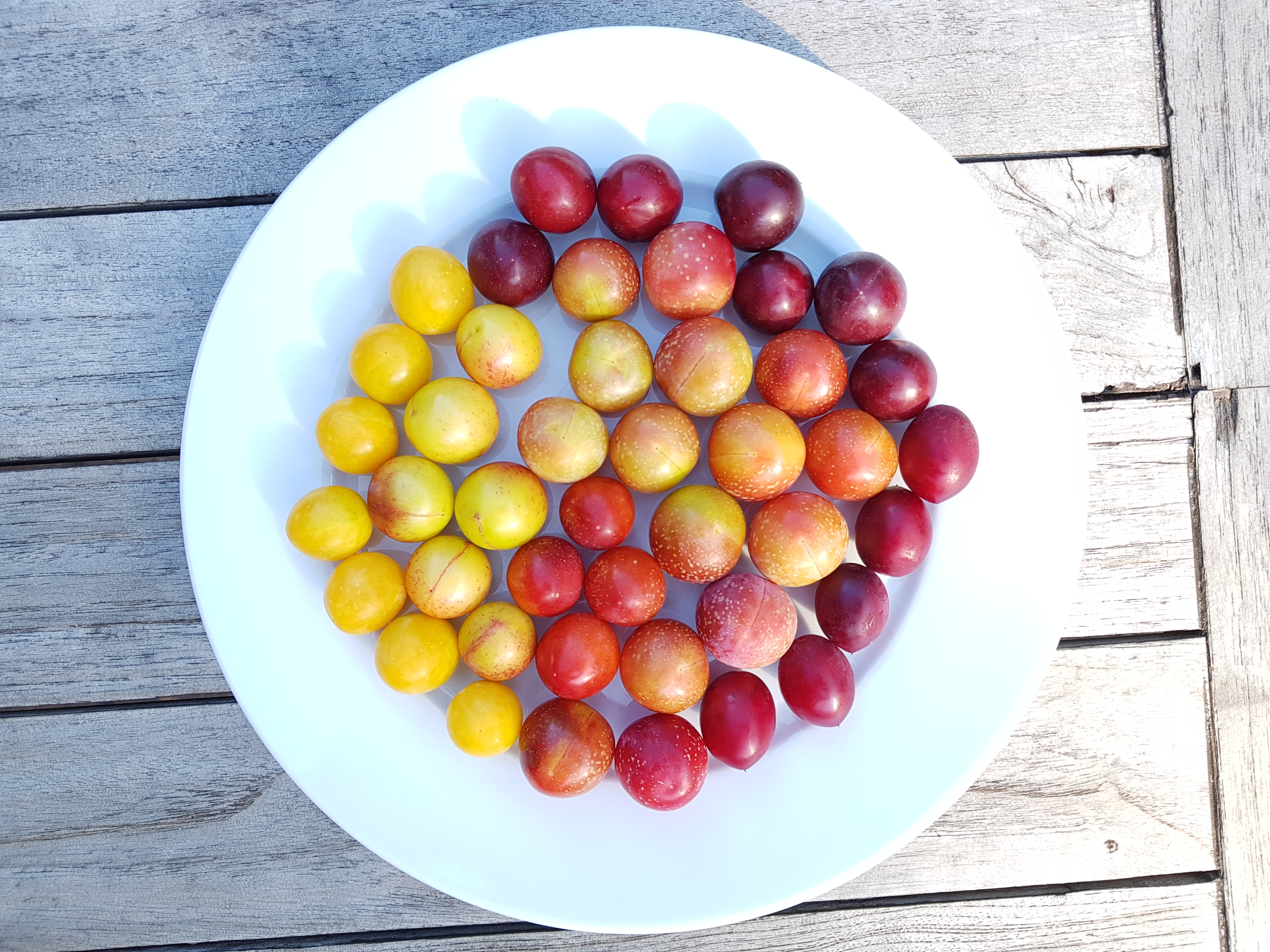
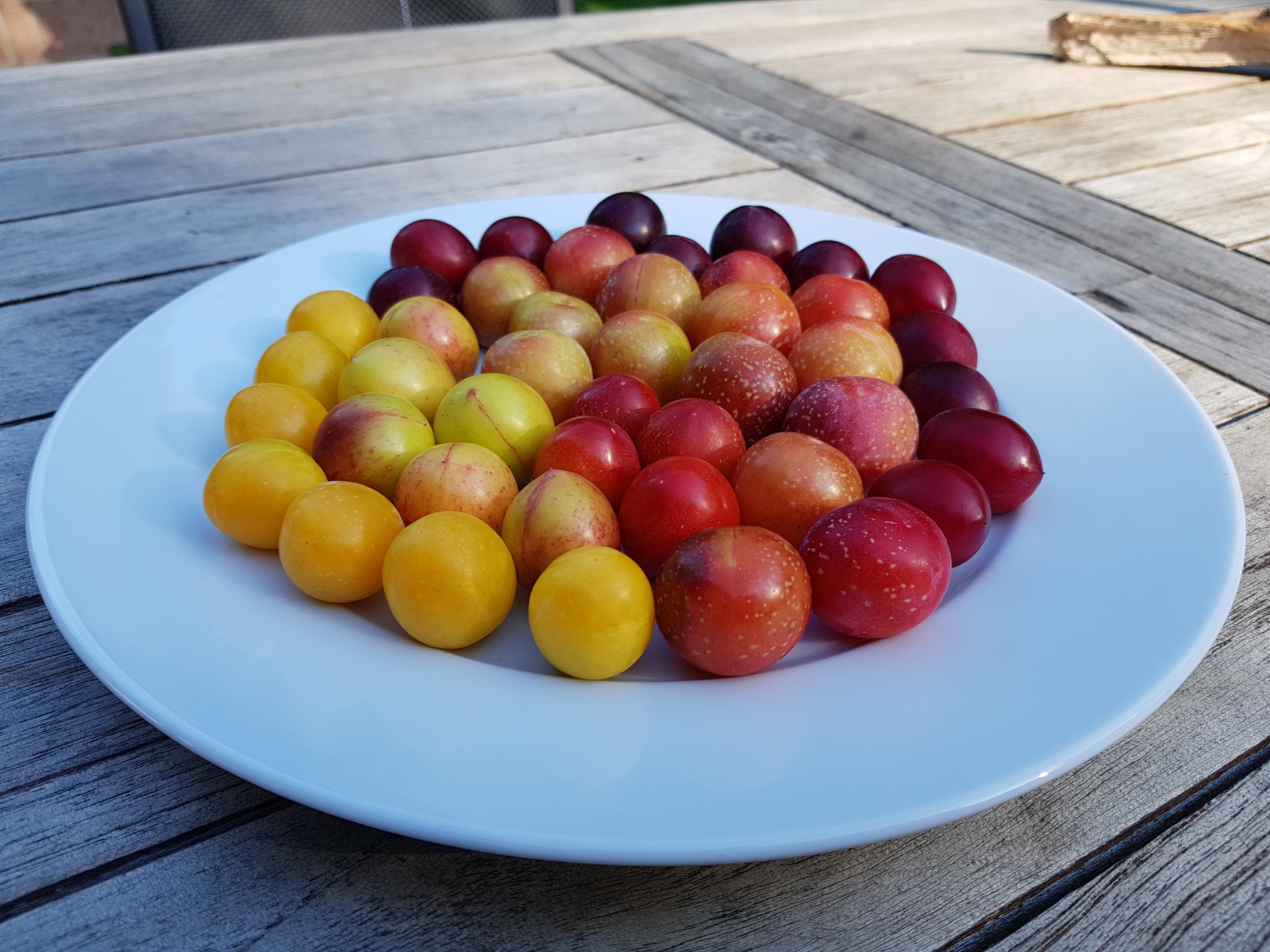
Cycling back from town this afternoon, Karin and I passed a hedgerow that was bursting with wild myrobalan or (cherry) plums (Prunus cerasifera). We had to stop and collect some, and soon filled a bag. What’s always intrigued me about these small, tart little plums is just how diverse they are: the image above shows the plums from six different trees. All of these are, in theory, the same species; but clearly there’s a lot of genetic diversity. In colour, the ripe fruits range from golden yellow through to dark purple, and vary in the amount of dark-contrasting streaking, lighter speckling, and waxy bloom. They are also variable in size, shape and taste.
All of this variation probably reflects the long history of cultivation of this European archaeophyte. The species is originally native to southeast Europe and western Asia, and was likely spread throughout Europe by the Romans. The local deer population is very fond of the fruit and we’re seeing a lot of deer droppings that are packed with seeds. We don’t usually think of these large mammals as seed dispersers, but I suspect that they are very successful in that ecological role.
As well as being a great source of wild fruit, for humans and wildlife alike, at the other end of the year these trees are important for pollinating insects. As I pointed out in my book Pollinators & Pollination: Nature and Society, Prunus cerasifera is one of the earliest flowering woody plants in northern Europe, and its flowers are an important nectar and pollen source for early emerging bumblebee queens, hoverflies, and honey bees.
Delicious, abundant fruit combined with a valuable role for pollinators: what’s not to like?



 Prof. Jeff Ollerton - ecological scientist and author