Tag Archives: Cooking

Get more out of your fruit and veg: eat the parts we often throw away!

There’s a frequently cited statistic that one third of the food produced for human consumption is wasted every year. That waste occurs for a variety of reasons, including spoilage, over-production and inefficient processing methods. This has clear environmental (and therefore human) consequences, for example in terms of increased carbon dioxide and other greenhouse gas production; excessive use of fertilisers and pesticides; unsustainable water extraction; and conversion of natural habitats to farmland.

Much of the wastage occurs before the food ever reaches shops and markets, so individual consumers have little control over the waste, other than to try to pressure business and political leadership into action. However, we can all do our bit when it comes to reducing food waste in our home, which has positive impacts on our health and our bank balance.

When it comes to fruit and vegetables, we in the west often throw away perfectly edible parts, I suspect because it doesn’t fit with our expectations of what the food “should” look like. A good example is radishes (Raphanus raphanistrum subsp. sativus) where it’s not uncommon to discard the perfectly edible leaves. People who grow them often pull out plants that have flowered, despite the fact that the seed pods are delicious and arguably nicer than the roots, as I discussed in this blog post from a few years ago.

There’s lots of other examples like this, one of my favourites being the crunchy central pith that you find in the thick stems of broccoli (Brassica oleracea var. italica). I love it raw and it has a flavour quite distinct from the normal part that we consume.

It was only quite recently that Karin introduced me to the fact that the mature pods of peas (Pisum sativum) are also edible, if you know how to process them correctly. If you eat the pod as it is, the texture is tough and stringy and not very pleasant. But if you carefully peel away and discard the thin inner membrane of the pod, the remaining flesh is sweet and delicious. It’s fiddly and takes a bit of practice. The easiest way is to gently snap one corner of the half-pod and peel from there – see the example third from the top in the accompanying photograph. Below that in the photo is the thin membrane, which can be put into your food waste or composted, and below that the edible portion of the pod.

Karin and I just eat this raw, but no doubt you could add the pod flesh to any number of dishes. If you have children or grandkids, set them the task of removing the membrane in one piece – it’s not easy!

Please leave a comment below and let me know your favourite bits of edible fruit and veg that are normally discarded.
A “weed” that you should be eating and an introduction to our new garden

It’s been a rather nomadic couple of years. After Karin and I sold our house in Northampton, we travelled around in the UK and then in Denmark, renting places as we needed them, plus we spent a month in Kenya. We’ve now become more settled in Sjælland and, after some deliberation about whether to buy a house or continue renting, we’ve reached a compromise and bought into an andelsbolig, one of the many Danish cooperative housing schemes – see this article in The Guardian for more details.

The development of twenty-eight small properties has been newly built to the highest standards of insulation and is plugged into the district heating system which uses a combination of solar warming and gas (in part using methane generated from food waste).

It’s nice to have a garden again. I hadn’t realised how much I’d missed having a space in which to plant and potter. All gardens present challenges, of course, and this one is no exception. Until about 600 years ago the area was under the shallow Kattegat sea. It’s now above sea level due to post-glacial rebound and in fact this whole region of Odsherred is a UNESCO Global Geopark because of the postglacial landscape.

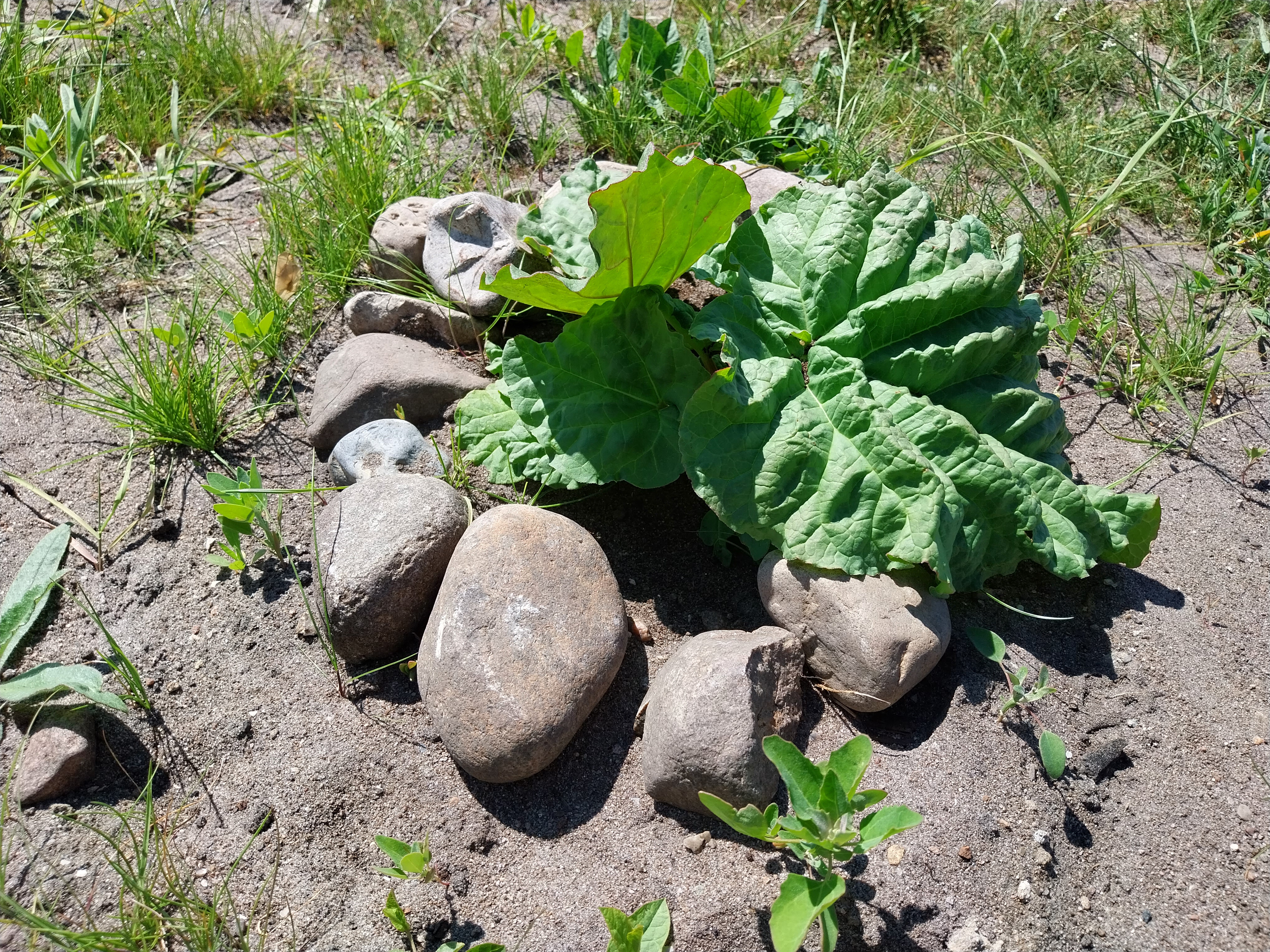
What this means for us is that we are gardening on “soil” which has a very high sand content and is filled with stones, large and small.

Added to that, we’re in one of the driest parts of Denmark (certainly this year) and a persistent coastal wind rapidly strips the moisture from the soil. So as we dig up or find large stones we are using them around plants to retain water and mulching with the smaller stones that we find in abundance. As yet we don’t have any rain water butts so we’re using the kitchen water from washing up to supplement the hosepipe.

It’s not easy gardening here, but we like a challenge and we’re calling in favours from friends and family to provide us with cuttings and divisions of plants from their own gardens, which should mean that they are better adapted to the local conditions than most of the shop-bought plants. We’ve also started a small vegetable and fruit patch and planted apples and pears around a paved patio that over time we will train as self-supporting espaliers.

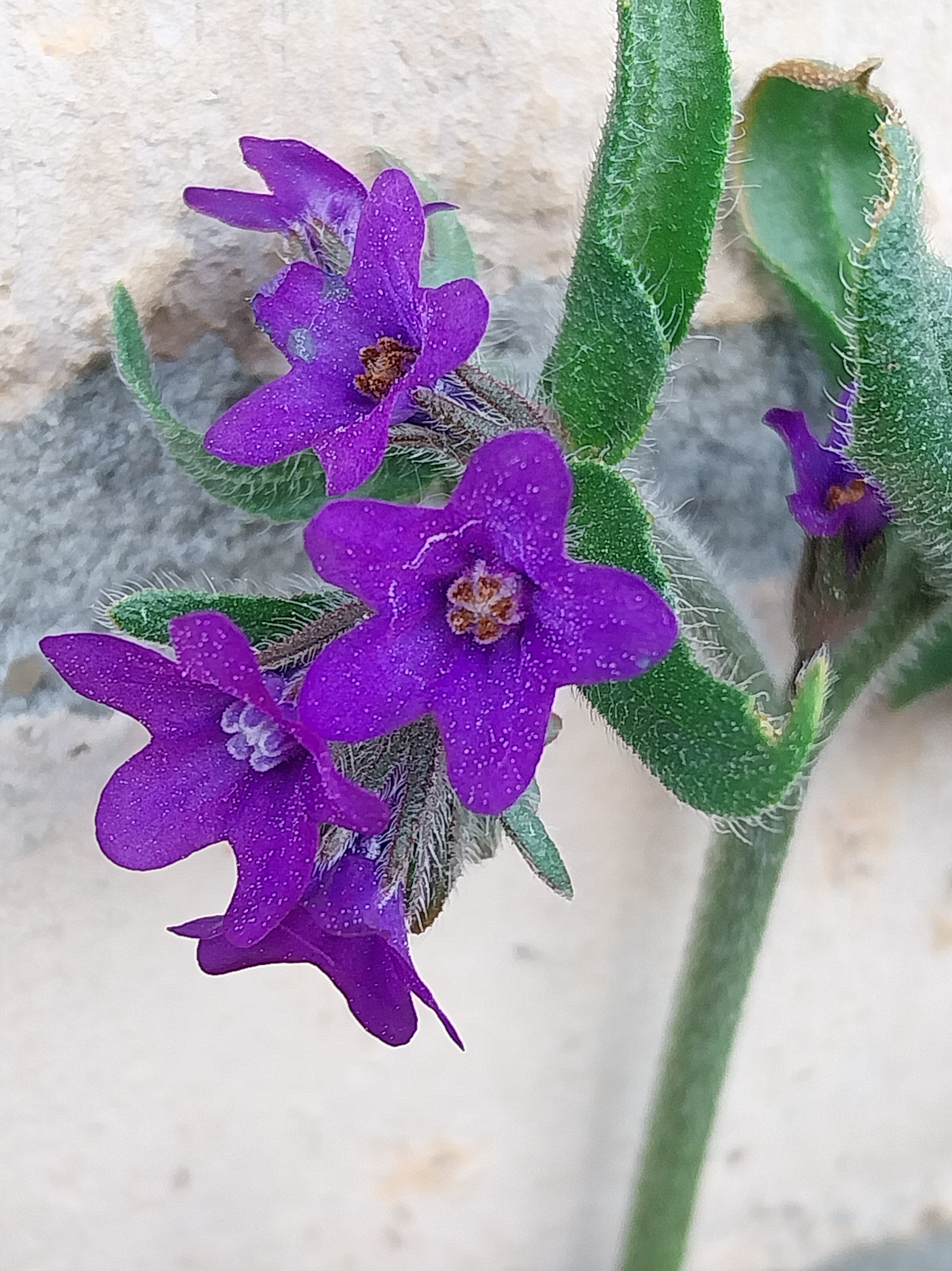
Gradually we’ll fill up the space and move things around as needed. But for now I’m also interested in seeing what plants come up spontaneously, especially the annual species that are benefitting from the disturbance. I don’t use the term “weed” to refer to these: weeds are just plants in the wrong place at the wrong time. Many such plants are ecologically important, especially as nectar and pollen sources for bees and other insects. This includes Common Bugloss (Anchusa officinalis) with its richly purple, velvet-textured flowers.

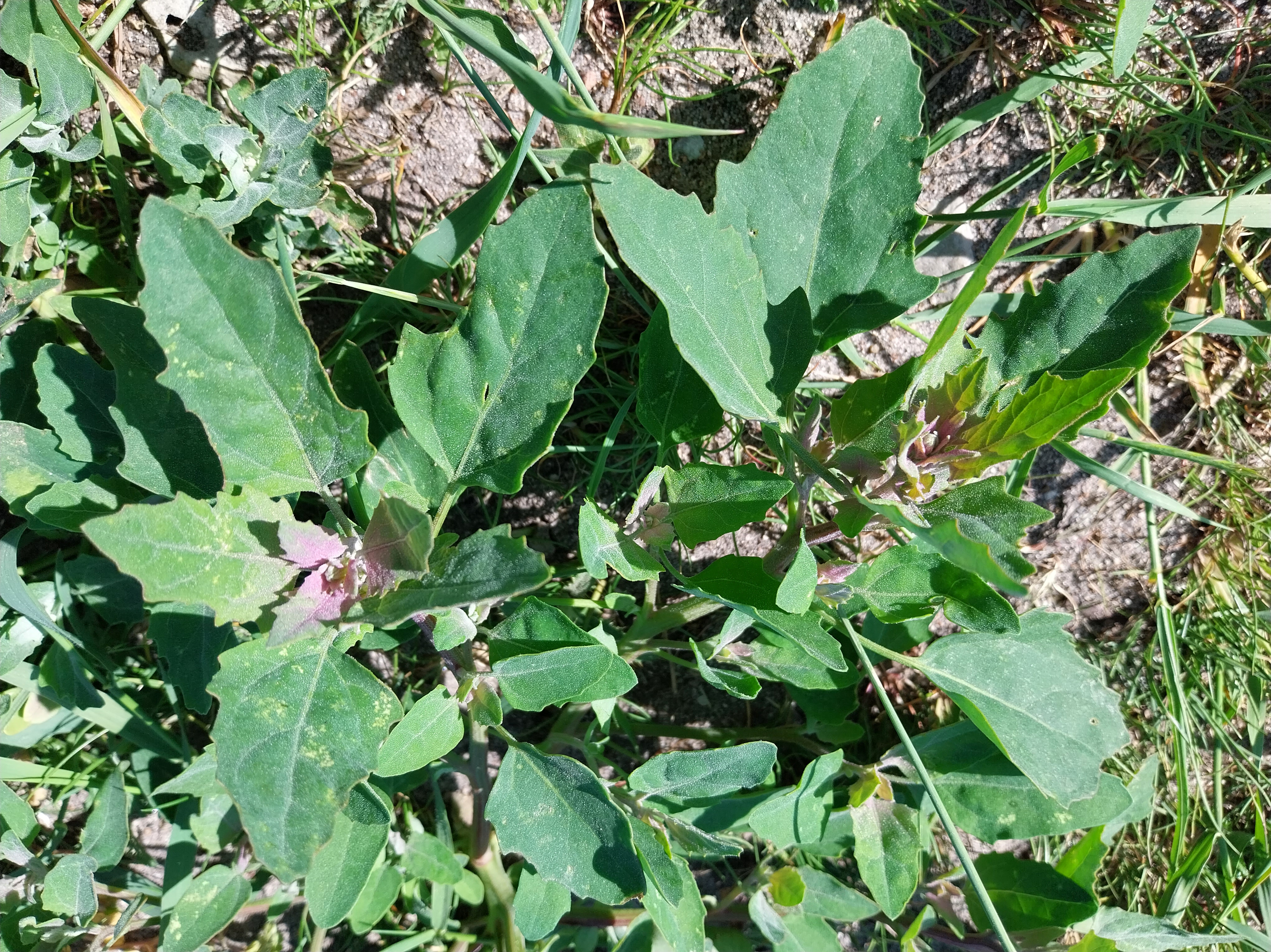
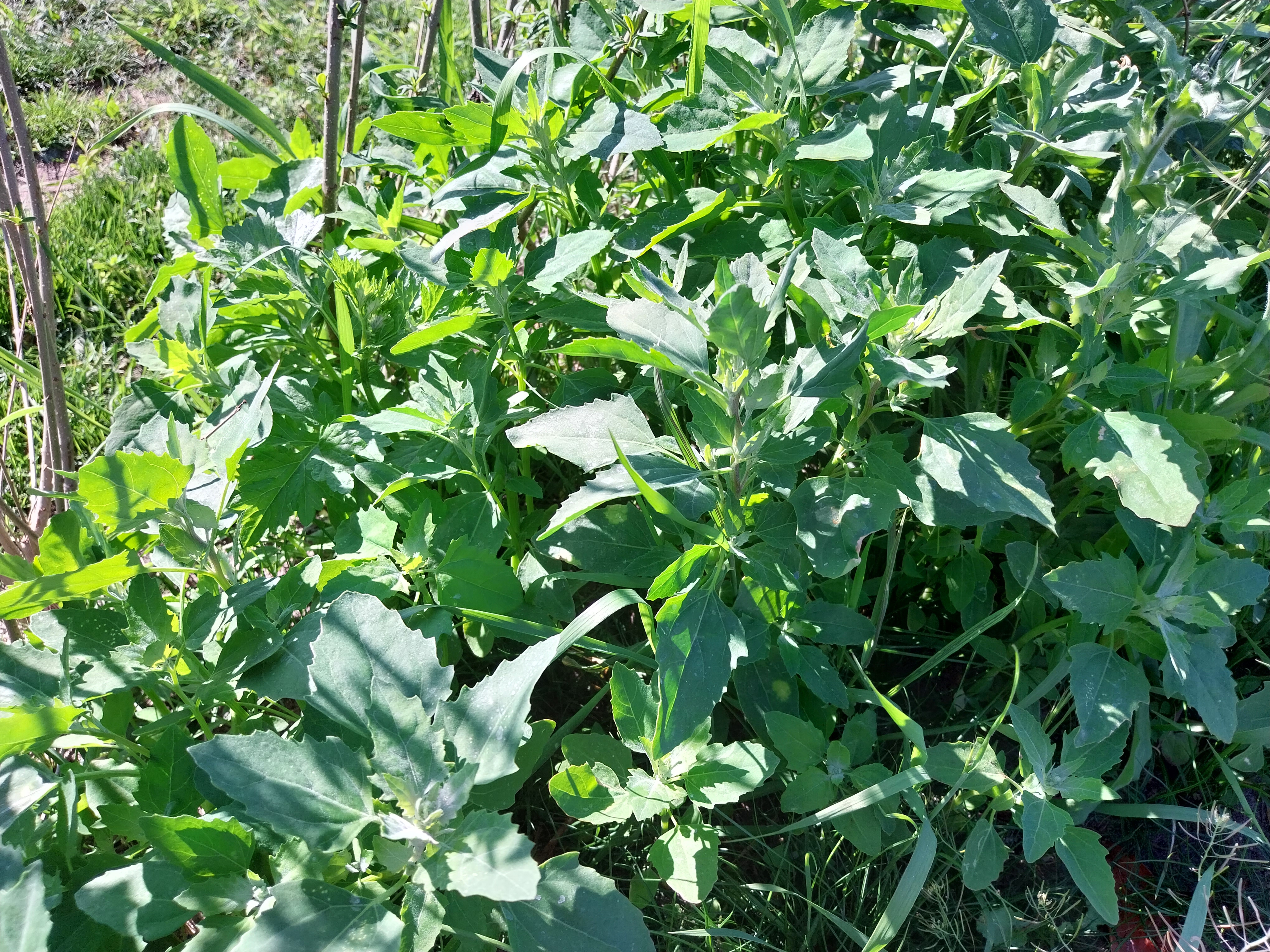
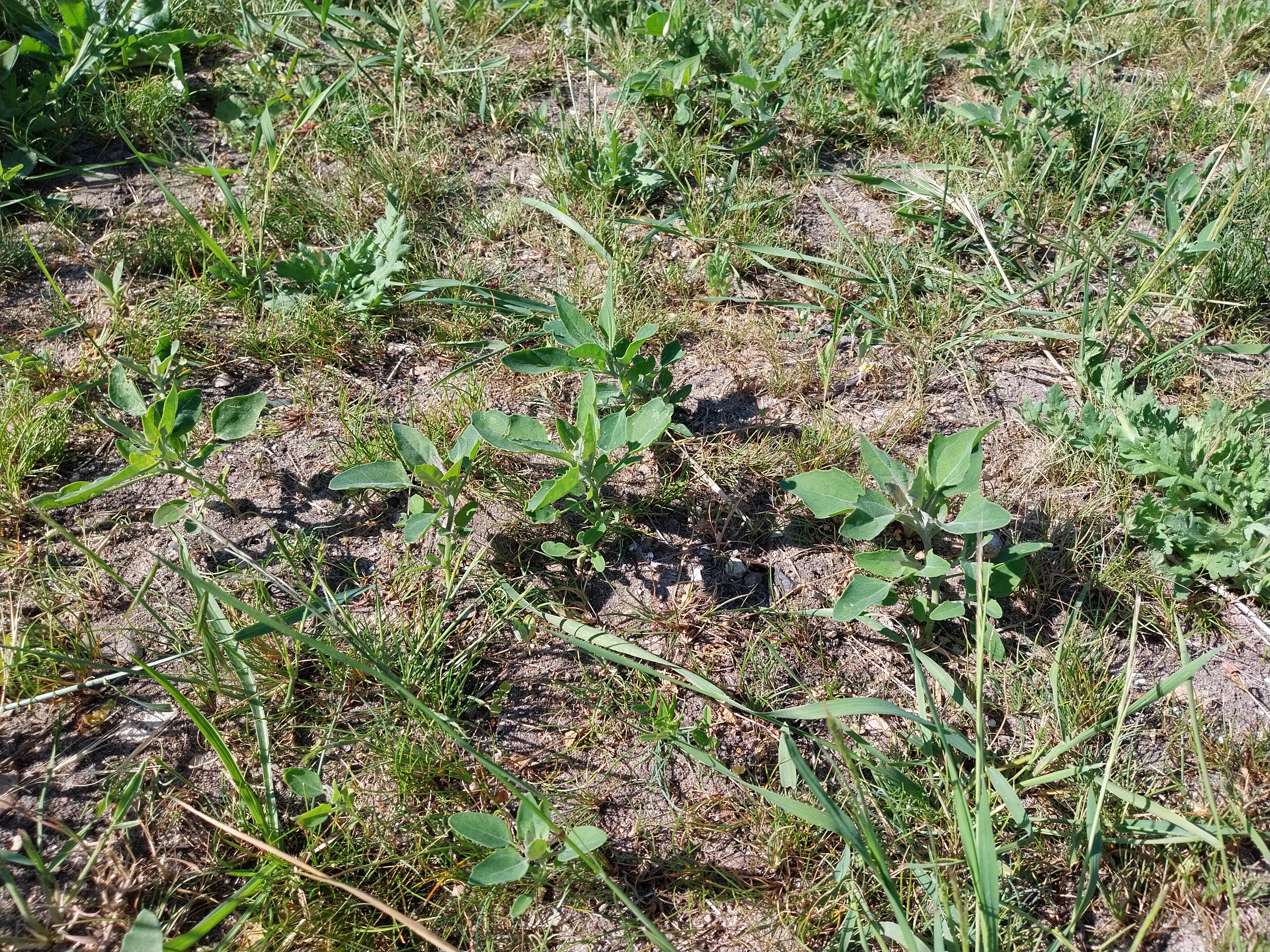
Another plant that we are tolerating is a fast-growing relative of spinach that’s variously called Goosefoot or Fat Hen (Chenopodium album). I’d long known that it was edible (it’s grown as a crop in parts of Asia) but until last night I’d not cooked with it.

In fact it’s delicious! I threw some roughly chopped leaves and stems into a mushroom omelette and I have to say that it was better than any commercial spinach I’ve bought or grown. In particular, the texture is much nicer as the leaves are very water-repellant which mean that they don’t absorb as much moisture during cooking. Highly recommended as an alternative to spinach but make sure you correctly identify the plant before you try it – there’s some good advice on this website: https://www.wildfooduk.com/edible-wild-plants/fat-hen/.

As well as Fat Hen we also have the close relative Tree Spinach (Chenopodium giganteum), with it’s beautiful magenta-tinged leaves, coming up in the garden. I’m looking forward to trying that too:

I’ll try to post more as the garden progresses, if I have time. But as I mentioned yesterday, even though the manuscript is complete and submitted to the publisher, there’s still lots to do on my next book! Have a good weekend.

Why conservation is like paella: thoughts and photos from our Tenerife field trip


A couple of days ago I posted a photograph on Facebook with a comment that “after a hot day of collecting data there’s nothing better than a nice big Tenerife paella!”:

Karin and the paella.jpg

My wife Karin and I had ended up in the small town of Candelaria, tired and hungry after sweating our way through the Malpais de Guimar  counting and measuring plants.  Big plates of hot food were just what we needed!

After I posted the image a Spanish colleague commented that the dish was “closer to being an arroz con cosas than a paella”.  The term translates as “rice with things” and is used to convey the fact that the original Valencian dish of paella has been bastardised and changed across the Spanish-speaking world, and no longer reflects its culinary tradition.  Knowing nothing of that culinary tradition I took a look at the Wikipedia entry for paella.  It makes for interesting reading, not least the fact that in the original dish one of the main ingredients was the meat of water voles and that the dish was cooked on an open fire fuelled by wood from orange and pine trees to give a distinctive smoky flavour.  There was also a lot of geographic variation in the dish, so what constitutes an authentic paella is debatable.

Although there was no sign of rodent flesh or naked flames in the dish that we ate, it was certainly delicious!  But the comment about arroz con cosas got me thinking about shifting baselines in cooking and conservation.

The idea of a shifting baseline is that expectations of what is “correct” or “normal” or “natural” change over time depending upon what each generation has experienced.  It’s been mainly applied in conservation; for example, the Lake District of England is seen by many as a “natural” landscape of rolling hills and low mountains, but originally it would have been covered in deciduous forest.  Likewise large parts of Tenerife contain a high proportion of alien plants (such as agave and prickly pear) but local people and visitors see this as natural.  The baseline of “naturalness” has shifted for people.  Returning these landscapes to their original condition would mean a drastic shift in the composition of the vegetation.  And what point do we return that condition to?  One hundred years ago?  One thousand?  Ten thousand?  It’s an issue that is widely debated in the conservation literature, especially in relation to rewilding.

Likewise, over time paella has evolved and been adapted by different chefs, and what is currently cooked in restaurants only partially reflects how the dish was originally cooked.  Other than for epicurean purists, our culinary expectations have changed.  There’s been a shift in the paella baseline.

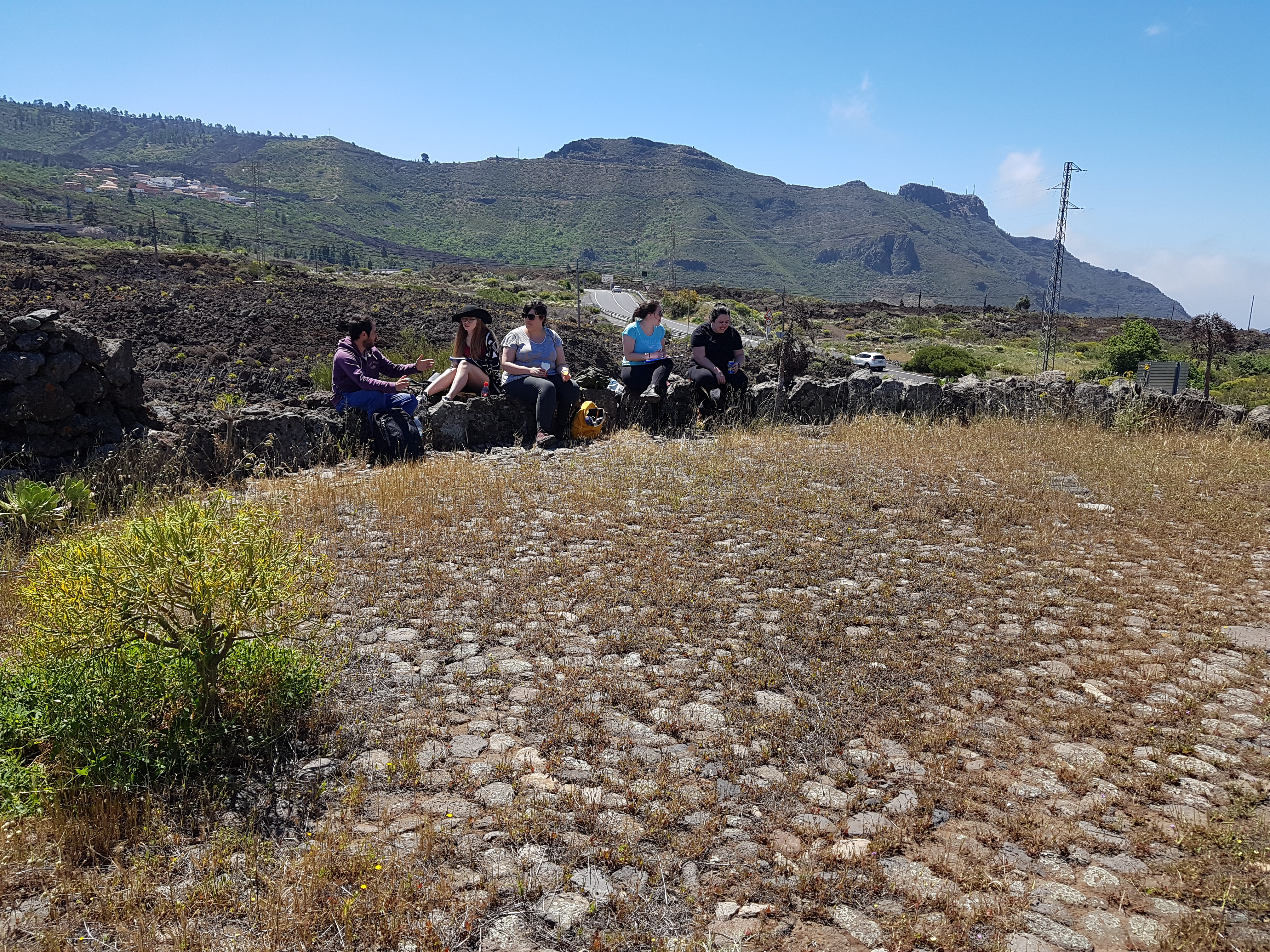
Anyway, enough metaphorising, here are some photographs from our trip.  To set the context, University of Northampton students and staff, including Pablo Gorostiague who is visiting from Argentina, and colleagues from the University of Sussex (Maria Clara Castellanos and Chris Mackin), were out with us last week.  Then we bade them farewell on Sunday before moving on to do some field work.

Field work on the lava fields at Santiago del Teide:

Santiago del Teide 2018-04-28 11.21.30.jpg

Santiago del Teide 2018-04-28 11.23.30.jpg

Santiago del Teide 2018-04-28 12.20.48.jpg

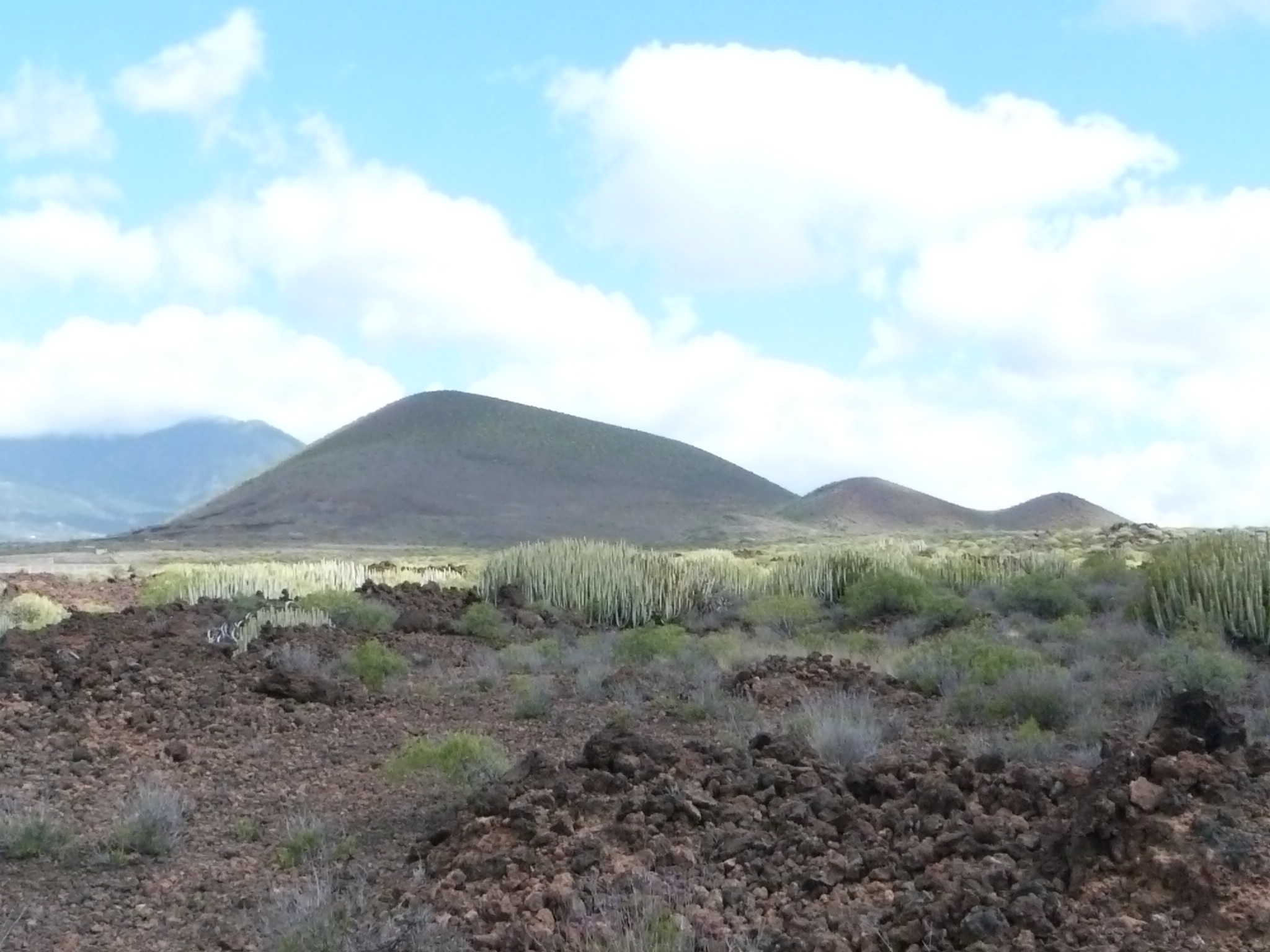
The landscape of Malpais de Guimar, which actually probably hasn’t changed much in the last 10,000 years:

P1040129


How many people can you fit around Pino Gordo, the largest Pinus canariensis on the island:

Pino Gordo 2018-04-24 12.10.41.jpg

Pino Gordo 2018-04-24 12.10.50.jpg

Pino Gordo 2018-04-24 12.11.09.jpg

The endemic Tenerife Blue Chaffinch:

P1040195.JPG

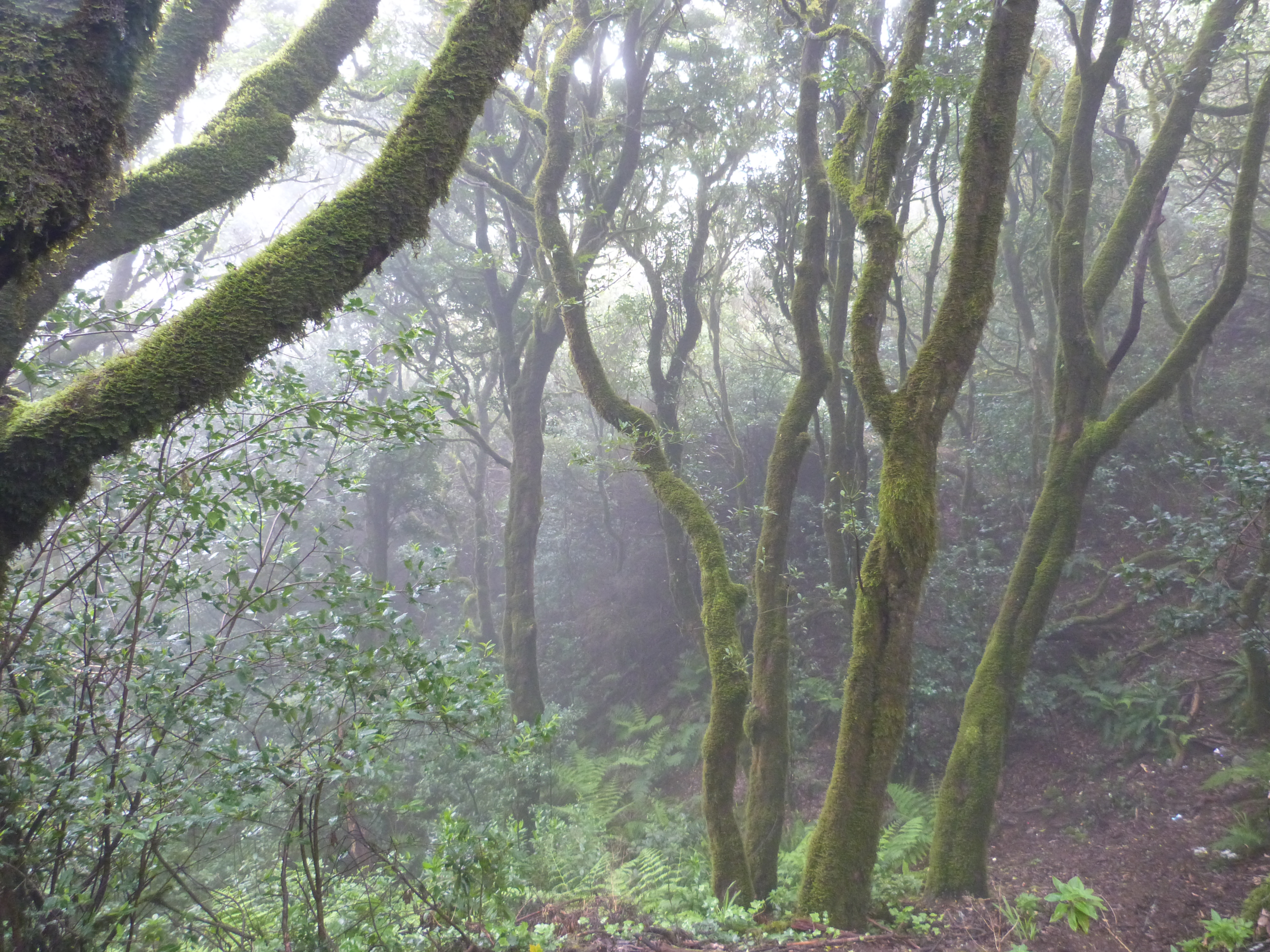
The cold, damp laurel forest:

P1040222.JPG

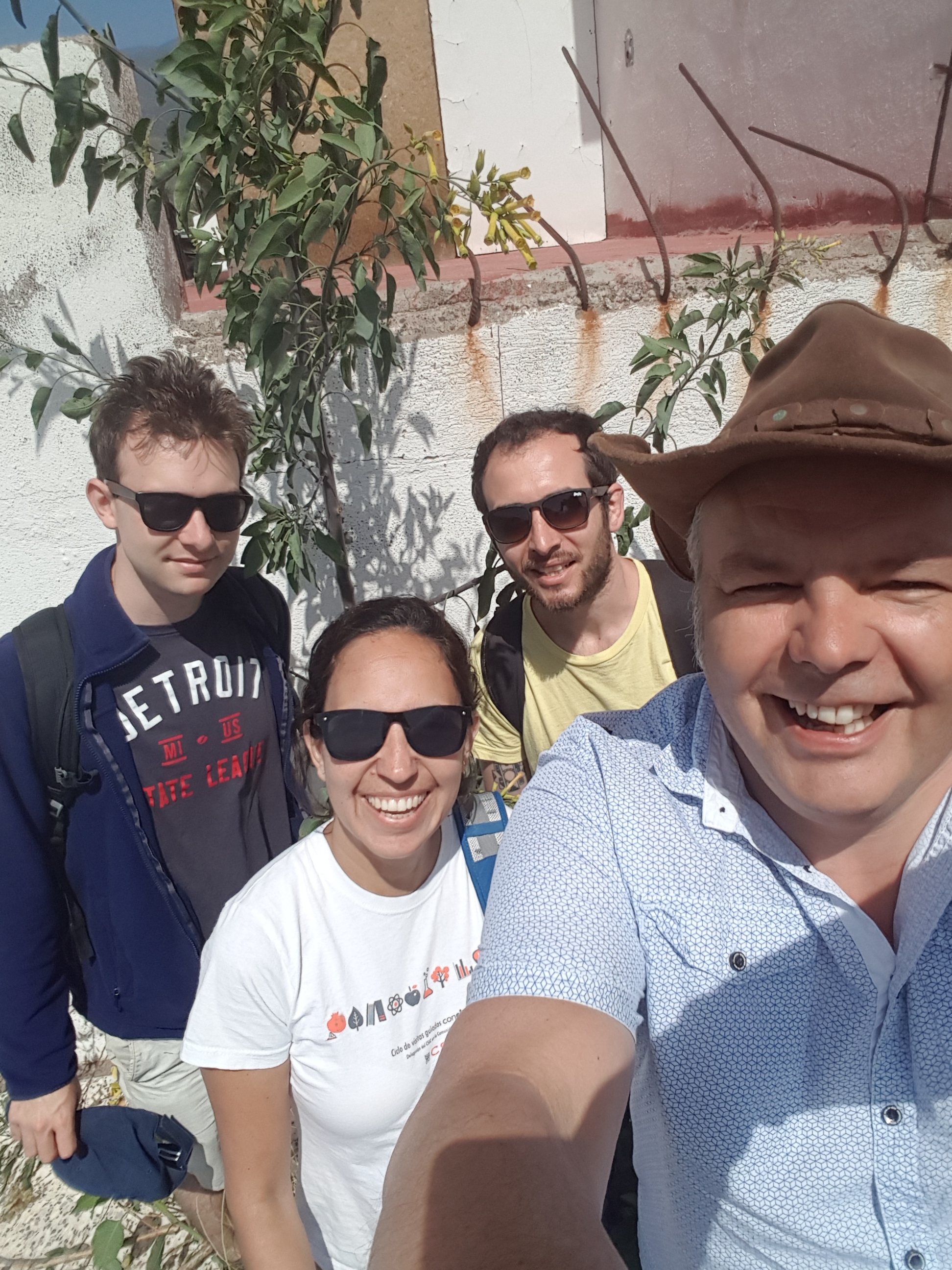
Team Nicotiana!  Helping Chris with locating Tree Tobacco populations for his PhD work:

Team Nicotiana - 2018-04-27 11.52.15.jpg

Team Nicotiana 2018-04-26 10.13.13.jpg

Pablito takes a break:

P1040235.JPG