
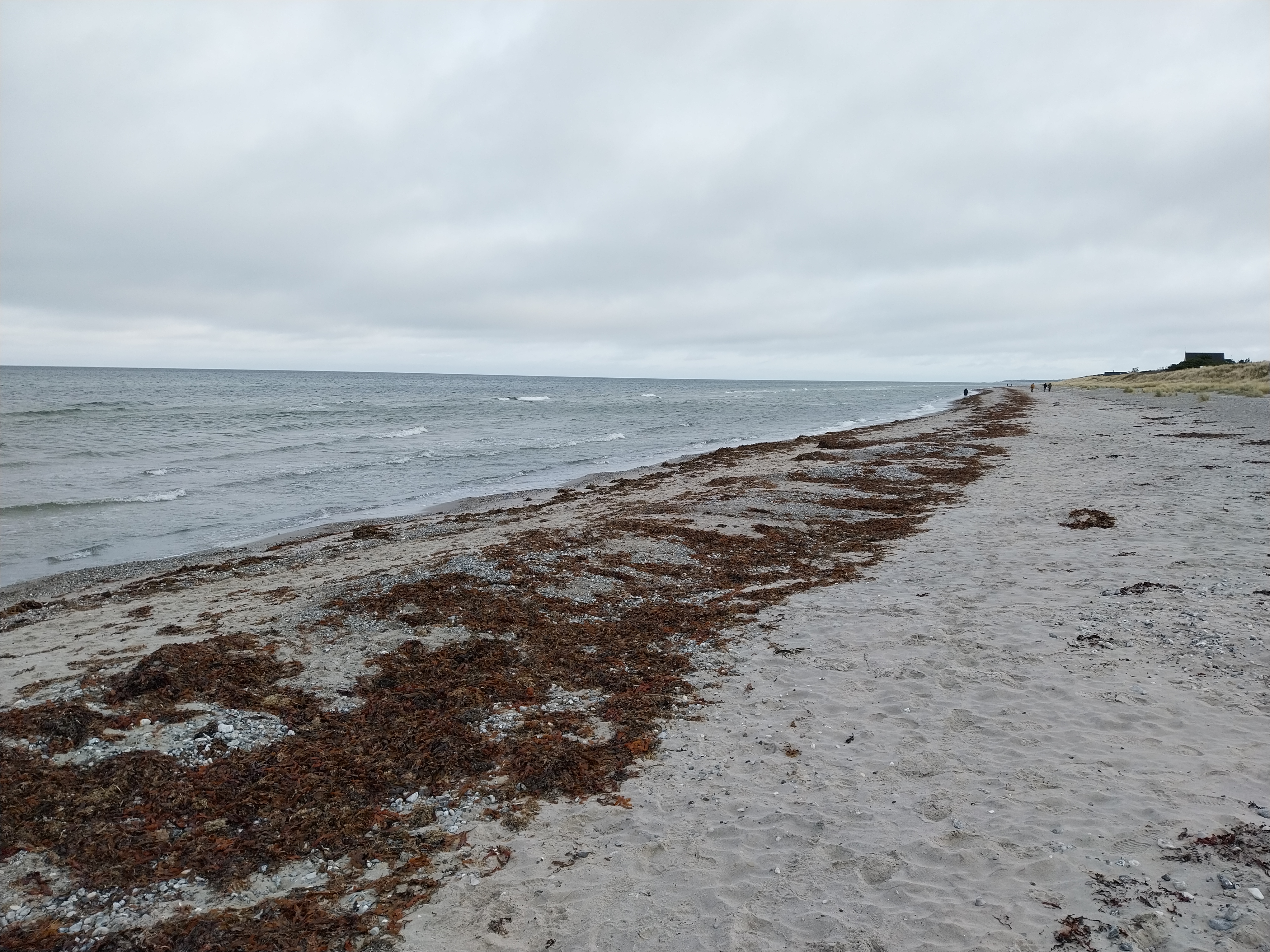
On Sunday Karin and I rode our bicycles down to the local beach at Nordstrand. It was a chilly day, maybe 4C, with a raw coastal wind that made it feel that much colder. Our local bit of shallow ocean – the Kattegat – is normally quite calm but there was a swell bringing in seaweed and the (very) occasional item of rubbish. I collected a golf ball but otherwise the beach was free of plastic. That’s the usual state of affairs here, despite it being a popular tourist destination in the summer. If only beaches elsewhere in the world were as clean.
As we walked Karin and I chatted about some of our plans for the coming year. We’re both working on our next books and relishing the process of swapping chapters to read out loud to the writer. The occasional hardy soul, also enjoying being out in the elements, passed us by and we nodded in acknowledgement. Above us the gulls were wheeling and calling, a constant reminder that they were here before us and will remain when we are gone. Moving from the strand line into the sand dunes we found a convenient bench to sit, drink from our water bottles, scoff some nuts and raisins, and admire the view until the cold wind won the argument and moved us on.
Walking back to the bikes we paused to look at the verdant moss growing on the steep faces of the dunes. Small seedlings had germinated in these planty blankets, a promise of growth and flowers during the year to come. Here and there birds had torn out sections in their constant search for insect larvae. Life goes on even in these cold days.
On our ride back through the neat summerhouses that are settled within the nearby pine woodland, male Great Tits were voicing their claims to territory. Spring is surely just round the corner, we hope.
 Prof. Jeff Ollerton - ecological scientist and author
Jeff:
Dunes so stable that mosses grow on them are a big surprise. What are the dominant grasses or shrubs holding the sand? Do they plant the Japanese salt spray rose (Rosa rugosa) as on the public beaches of New York and parts of the colder American Eastern shore lines? These roses are polymorphic for petal colours (red, white, or pink) producing lots of seeds that naturalize on the dunes.
There’s two dominant grasses on the foredunes – Ammophila arenaria and Leymus arenarius – in addition to a range of halophytic herbacious species. Then further back you get shrubs like Salix repens and
Prunus spinosa, plus small trees. It’s a very species rich area: I’ve listed over 50 flowering plants occurring on the beach plus dunes plus dune slacks. Then there’s ferns and mosses and a lot of lichens.
Rosa rugosa is common but it’s all self-seeded and they’re trying to get rid of it.